REVIEW · REYKJAVIK
6-Day Around Iceland Small-Group Tour from Reykjavik with Accomm
Book on Viator →Operated by Arctic Adventures · Bookable on Viator
Iceland in six days can feel like a highlight reel. This small-group tour is built to help you hit the big-name sights without having to plan every turn, and it adds real adventure days like Vatnajökull glacier hiking. I especially like the way the route balances famous stops with “how is this real?” scenery, and I’ve seen guides like Tom, Vjeran, Bjorn, and Karl praised for storytelling plus smart problem-solving when weather shifts.
Two things I really like: the included Reykjavik pickup and drop-off (so you’re not hunting meeting points after a long flight), and the steady rhythm of organized stops plus onboard Wi-Fi and live commentary. One drawback to consider: the days are full, so some viewpoints get short time windows—great for checking boxes, but not ideal if you want long, slow wandering.
In This Review
- Quick key points
- Six days around Iceland’s biggest wow-factors from a Reykjavik starting point
- Pickup, small-group comfort, and the rhythm of a 19-seat reality
- Day 1: Þingvellir rift drama, Gullfoss roar, and waterfalls you can walk behind
- Day 2: Reynisfjara black sand, Vík cliffs, and a real glacier hike on Vatnajökull
- Day 3: Djúpivogur eggs, Hengifoss layers, and a night in the wilderness
- Day 4: Dettifoss thunder, Mývatn geothermal stops, and Godafoss elegance
- Day 4 add-on you’ll actually want: Myvatn’s geothermal baths stop
- Day 5: Akureyri, whale watching odds, and the Troll Peninsula night
- Day 6: Borgarfjörður crater hike, Hraunfossar lava water, Reykholt sagas, and Deildartunguhver heat
- Price and what you’re really paying for at about $2,543 per person
- Who should book this (and who should adjust expectations)
- Should you book this 6-day Iceland small-group tour?
- FAQ
- What’s included in the tour price?
- Is Wi-Fi available during the tour?
- Do I have to pay for Myvatn Nature Baths?
- How big is the group?
- What kind of activity level should I expect?
- How does pickup work in Reykjavik?
Quick key points
- Maximum 19 people keeps it small enough for an actual group vibe without feeling cramped.
- Onboard Wi-Fi + live commentary turns long drives into something you’ll look forward to.
- Glacier hiking (and ice-cave option seasonally) gives you more than photo stops.
- Mývatn Nature Baths are a stop with optional entrance—you can choose the soak level.
- Eyjafjörður whale watching is planned as a dedicated 3-hour outing, not a quick roadside stop.
- Guides often handle weather changes smoothly, with named guide/driver performances (like heiðdis, Gunnar, Almar, and Adolf) showing up repeatedly in feedback.
Six days around Iceland’s biggest wow-factors from a Reykjavik starting point
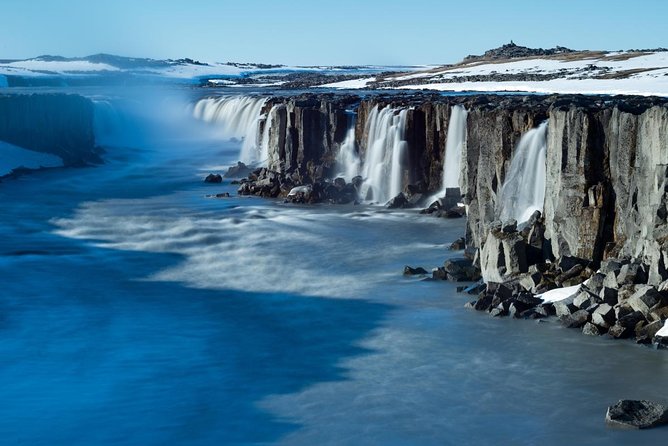
If you’re coming to Iceland with limited time, the biggest question isn’t whether Iceland is beautiful. You already know it is. The real question is how to fit in the classics—Þingvellir, the Golden Circle waterfalls, black sand beaches, glacier ice, Mývatn geothermal areas, and whale watching—without doing all the driving stress yourself.
That’s where this tour earns its keep. You sleep in a sequence of cozy hotels for 5 nights, and the schedule stitches together major regions of the Ring Road in 6 days. You get breakfasts included (5), a professional guide, and park fees covered for the national-park style stops. Translation: you’re paying for logistics done for you, so you can spend your mental energy on the views and the walks.
The small-group size matters, too. With up to 19 people, you’re not fighting a crowd for photos at every waterfall. You also have a better chance of hearing explanations during the drive, which can turn a 30-minute stop into something you remember later.
You can also read our reviews of more tours and experiences in Reykjavik
Pickup, small-group comfort, and the rhythm of a 19-seat reality
This starts with convenience: Reykjavik pickup and drop-off with an 8:00 am start time. The key detail is that pickup works only from a defined list of authorized locations. If you’re staying in the city center at a hotel that’s not on the list (or in a private AirBnB), you’ll need to use the closest pickup point. The upside is that the operator avoids road chaos and time-killers.
On the bus, plan for the nature of Iceland travel: windy weather, frequent photo stops, and days where you’ll be outside more than you think. The tour includes live commentary and on-board Wi-Fi, which helps on long stretches—especially on days when you want to get your bearings fast and still keep your phone battery alive.
Also, bring the right mindset. This is called a small-group adventure tour, and the itinerary uses lots of short “see it now” windows. That can feel efficient—in a good way—until you notice you’re doing a lot of walking. You’re not getting a passive tour where everything is a single viewpoint and then done.
Day 1: Þingvellir rift drama, Gullfoss roar, and waterfalls you can walk behind
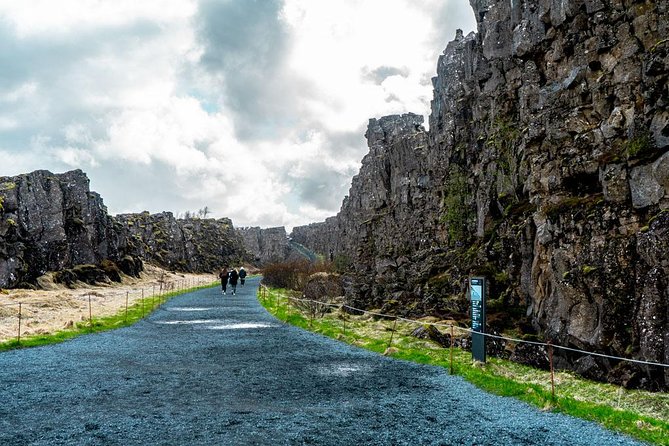
Day 1 is a smart opener because it hits Iceland’s “big idea” right away: Þingvellir National Park, a UNESCO World Heritage Site tied to Iceland’s earliest parliament, the Althing, and the geology of a tectonic rift. Seeing the land split between the North American and Eurasian plates puts Iceland’s volcano-and-glacier story into a real-world framework.
Then the tour loops through the classics in a way that’s easy to remember:
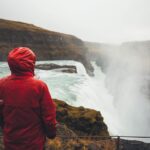
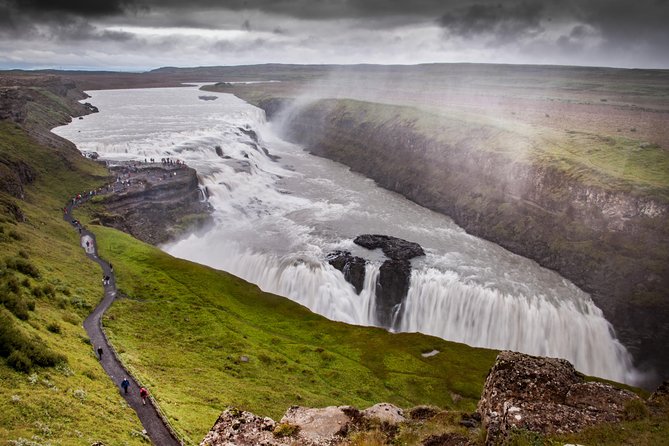
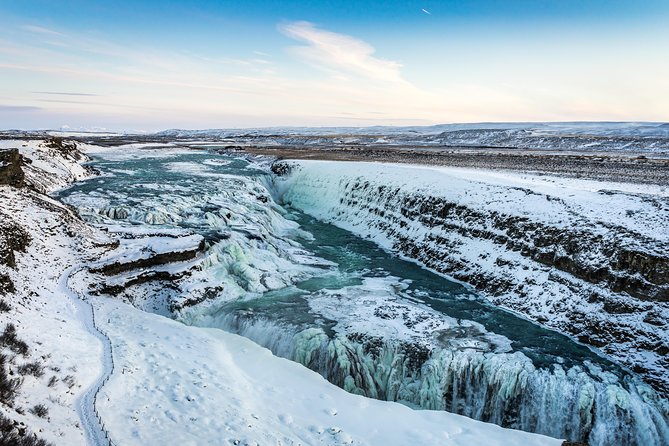
- Gullfoss: a powerful waterfall dropping into a deep canyon.
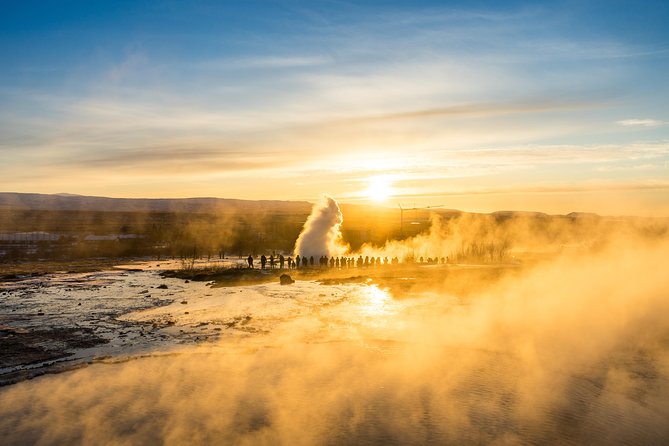
- Geysir: geothermal activity where you’re watching hot water and steam cycles in action.
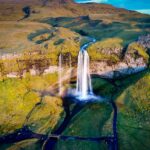
- Seljalandsfoss: the famous one you can walk behind. This is where you feel the spray on your jacket and realize why rain gear is worth packing.
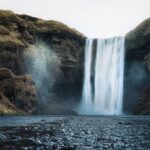
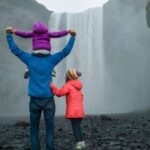
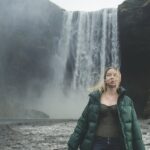
- Skógafoss: one of Iceland’s bigger waterfalls, with a dramatic fall and wide drop.
What you’ll love: the variety in one day—tectonics, geothermal energy, and three waterfall styles, each with a different vibe. What to watch: the time per stop is short (often around 30 minutes), so you’ll want to treat this as a “must-see sweep” rather than a long hike day.
Day 2: Reynisfjara black sand, Vík cliffs, and a real glacier hike on Vatnajökull
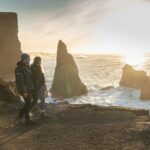
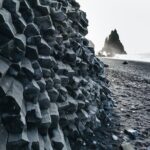
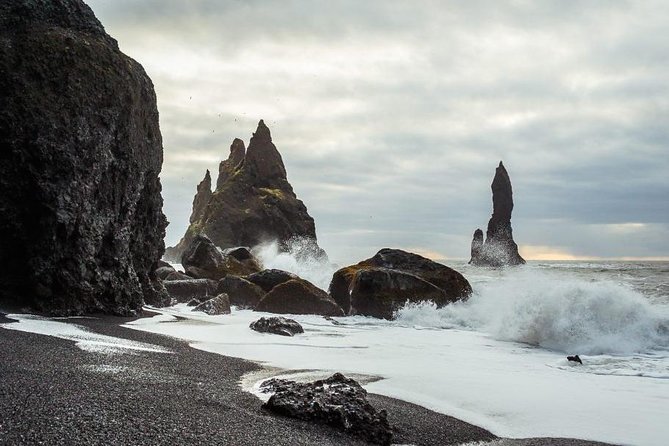
Day 2 shifts from Golden Circle-style stops to Ring Road wildness. You start with Reynisfjara, the black sand beach famous for its basalt columns and heavy Atlantic waves. It’s dramatic, and it’s also a place where conditions can change quickly—wind and swell can turn a calm moment into a cold, spray-filled one fast.
Next comes Vík, the coastal village that gives you cliffs, ocean views, and a better sense of scale. After that you pass the Mýrdalsjökull glacier, associated with the Katla volcano beneath the ice. You don’t go into Katla (and you shouldn’t expect to), but passing by it helps you understand how Iceland’s hazards sit under the most beautiful surfaces.
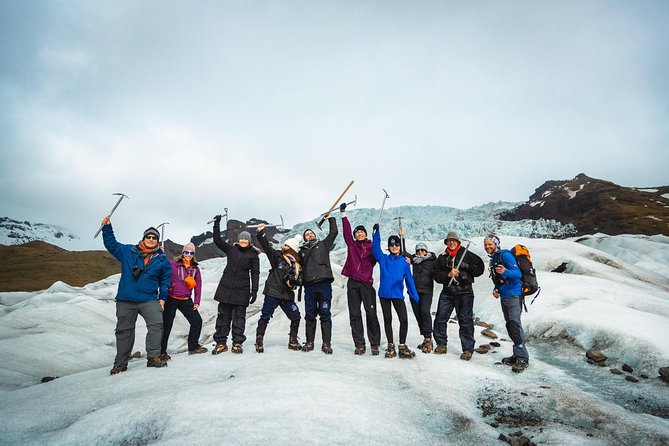
The star of Day 2 is the glacier day. You’ll go into Skaftafell National Park, then take part in a 3-hour glacier hike led by an expert guide on an outlet glacier of Vatnajökull, Europe’s largest glacier. If you travel in November through March, the hike is replaced with a tour inside an ice cave within the glacier. Either way, this is not just sightseeing. You’ll be on ice, moving carefully, and learning what “glacier terrain” actually feels like under your boots.
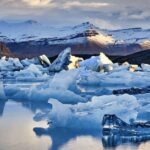
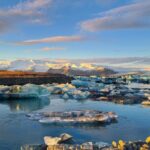
You finish the day with Jökulsárlón Glacier Lagoon and the nearby Diamond Beach. Seeing icebergs floating in the lagoon is one of those “photo doesn’t do it justice” moments. Then the black sand beach with scattered ice chunks turns into a second show—blue and white ice against dark sand.
Main consideration: Day 2 is long and physical. The glacier hike requires warm layers, waterproof outerwear, and hiking boots with good traction. Even if the tour is described as moderate, your legs will notice after a day like this.
Day 3: Djúpivogur eggs, Hengifoss layers, and a night in the wilderness
Day 3 is where the route becomes more human-scale. You visit Djúpivogur, a traditional fishing village with a famous sculpture: Eggin í Gleðivík (The Eggs of Merry Bay). It’s quirky, easy to stop for, and it adds character compared to the more monumental natural stops.
Then you hike to Hengifoss, the second highest waterfall at 128 meters, with a trail that shows colorful layers tied to older volcanic activity. The walk is 3 hours, and it’s a key day for anyone who likes real trail time instead of only boardwalk viewpoints.
You also stop for Litlanesfoss, a waterfall framed by tall hexagonal basalt columns. If you like geology, this kind of detail is why Iceland travel feels different from, say, a “single feature” destination.
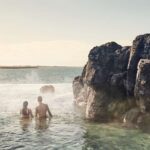
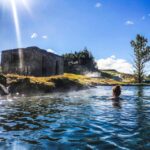
In the evening, the tour keeps it interesting by moving beyond a normal hotel night. After time in the larger base area around Egilsstaðir, you’ll head about 40 minutes to a Wilderness Center for an overnight stay. One part you’ll feel right away: free hot pots (so yes, there’s a reason to wear clean socks in the morning). You can also explore a museum there.
What you’ll like: it breaks up the long driving days with a slower, nature-focused night. What to prepare for: it’s still a day built around walking and outdoor weather, so keep your layers tight and your expectations flexible.
Day 4: Dettifoss thunder, Mývatn geothermal stops, and Godafoss elegance
Day 4 starts with a big punch: Dettifoss, often described as Europe’s most powerful waterfall. It doesn’t just look strong—it sounds strong. This stop is a good reminder that Iceland’s “water” is often moving with geological force behind it.
From there, you explore the Mývatn area for volcanic formations and birdlife, then hit the geothermal zone at Námaskarð. You’ll see boiling hot springs, bubbling mud pots, and steaming fumaroles—basically Iceland’s chemistry set in action.
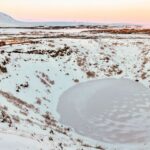
Next you visit Hverfjall crater, a near-perfect circular volcanic formation where you can explore the rim for panoramic views. Then the tour goes to Dimmuborgir, sometimes called the Dark Castles, where lava formations look like a fortress.
You wrap the day with Goðafoss (Godafoss), a wide, crescent-shaped waterfall that feels different from the earlier thunder—more graceful in shape, still powerful in sound.
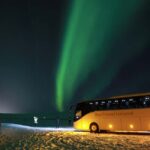
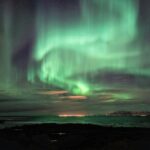
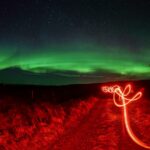
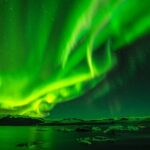
After that, you continue toward Eyjafjörður and spend the night in Akureyri. If you’re traveling between September and April, you might also get a chance to see the Northern Lights after dark, depending on the conditions.
Consideration: this is a dense day of stops. You’ll want to have your warm gear ready before you get on the bus, because once you’re out at these geothermal and waterfall areas, you’ll feel wind and cold quickly.
Day 4 add-on you’ll actually want: Myvatn’s geothermal baths stop
The tour includes a stop at Mývatn Nature Baths. The key detail: the entrance fee is optional and not included (an extra charge around 40 EUR is noted). This matters for planning your budget, especially since food and drinks in Iceland add up.
The reason this stop is worth considering is simple: after a day of Dettifoss noise and Mývatn walking, soaking in geothermal waters is a physical reset. One reason this part gets singled out by people who loved the tour is that it turns the day from “see, see, see” into “recover and breathe for a bit.”
There’s also a seasonal note: in January–March 2026, the tour indicates Forest Lagoon replaces the Mývatn Nature Baths due to renovation. If your dates fall in that window, don’t assume it will be the same facility.
Day 5: Akureyri, whale watching odds, and the Troll Peninsula night
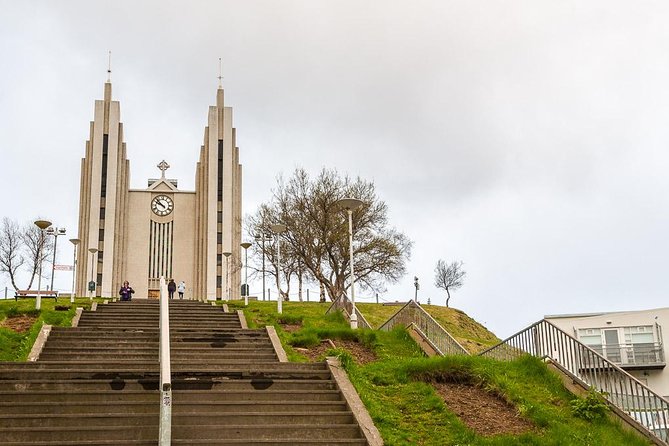
Day 5 starts in Akureyri, Iceland’s “Capital of the North.” It’s a good base town to stretch your legs a bit, then you head out to Eyjafjörður for whale watching.
This outing is a standout because it’s planned as a dedicated 3-hour adventure with a stated 98% chance of sightings. You might see humpback whales, porpoises, dolphins, and other marine animals. The boat time also gives you a change of pace—less hiking, more scanning the water and enjoying the feeling of being on the fjord.
After the whale tour, you drive to Siglufjörður, a fishing village with 20th-century herring-fishing history. Then the route crosses Tröllaskagi (the Troll Peninsula), a scenic coastal drive with small villages and known skiing spots. It’s the kind of day where the scenery keeps shifting as the road curves and the sea shows up in new angles.
You end at a cozy hotel in the Laugarbakki region. If you’re there in winter nights, you can step outside and look for Northern Lights when skies cooperate.
Practical note: whale watching is weather-dependent. Even with high odds, it’s still the ocean—so keep your sense of humor and have warm layers ready. Wind plus water air can be brutally cold.
Day 6: Borgarfjörður crater hike, Hraunfossar lava water, Reykholt sagas, and Deildartunguhver heat
Day 6 is more “Iceland beyond the poster.” You start in Borgarfjörður, an area listed by Lonely Planet as one of the best destinations in 2016. The day begins with a short hike up to Grábrók, a volcanic crater viewpoint. It’s a smaller hike than the glacier day, but it gives you that classic crater perspective—standing on a rim and realizing Iceland’s terrain is still actively being shaped.
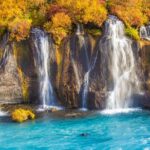
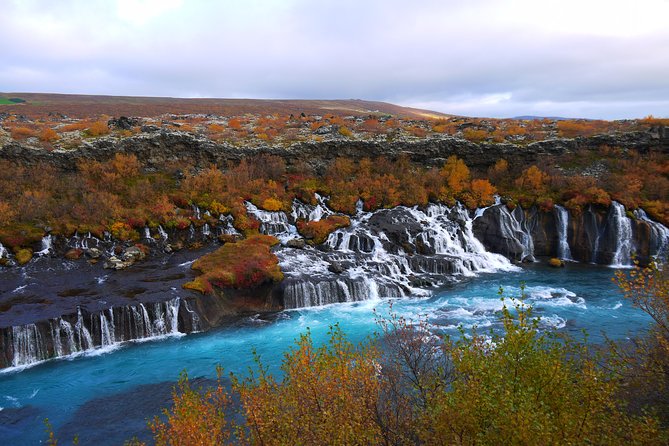
Next is Hraunfossar, the waterfall where icy-cold water flows gently out of lava fields. This one is different because it’s not only a roaring drop; it’s water emerging through a lava channel system, which gives it a unique “where did that water come from?” feel.
Then you visit Reykholt, known for medieval Icelandic history. The stop includes Snorralaug, a historic hot spring pool named after Snorri Sturluson, a scholar, lawyer, historian, and saga writer from the 12th/13th century.
On the drive back toward Reykjavik, you pass Hvalfjörður (Whale Fjord)—named for the whales that can appear in the area. Finally, you stop at Deildartunguhver Thermal Spring, described as Europe’s most powerful hot spring, for about 40 minutes.
What you’ll like: the tour ends with heat, water, and stories in a clean arc—crater views, lava-fed waterfalls, saga-era culture, then geothermal power. What to watch: you’ll likely be tired by Day 6. Plan to take breaks when you can and don’t treat every stop like a sprint.
Price and what you’re really paying for at about $2,543 per person
At around $2,543 per person for a 6-day tour, the big question is whether you’re paying for experiences or for transport time.
Here’s what you’re getting that reduces your own planning work:
- 5 nights of accommodation included
- National park fees covered
- Professional guide (and the driving)
- Reykjavik pickup and drop-off
- Glacier hiking as a structured activity
- Whale watching with a dedicated time block
- Wi-Fi and live commentary during drives
- Breakfasts (5) included
- Myvatn baths stop (entrance optional)
The optional part—Nature Baths entrance—is a good example of how the tour lets you choose. If you want the soak, budget for it. If not, you still see the geothermal area and move on.
Also, Iceland food and drinks can be costly. This tour doesn’t bundle lunches or dinners, so you should assume extra spending beyond the main price. If you’re trying to save money, bring some snacks from Reykjavik (and pack protein bars if you have dietary needs).
Is it “cheap”? No. But it’s also not just a bus ticket to look out a window. You’re buying a tight schedule, guided adventure, and multiple included experiences that would cost extra if you booked individually.
Who should book this (and who should adjust expectations)
This is a strong fit if:
- you want a Ring Road highlight sweep without driving yourself
- you’re happy with short stop windows in exchange for seeing a lot
- you want adventure time: glacier walking plus whale watching
- you like learning from the guide while you move between regions
It might not be perfect if:
- you want long, slow hikes every day
- you’re very sensitive to cold wind and wet spray (you’ll need to dress properly)
- you need a totally flexible schedule with zero weather reroutes (the operator can change the itinerary due to weather/conditions)
Fitness-wise, it’s listed for moderate physical fitness, with hiking and outdoor time. One review note worth heeding: people said this is labeled easy hiking but still involves real walking, some uphill, and glacier terrain that can be more demanding than it sounds.
Should you book this 6-day Iceland small-group tour?
If your goal is to see the big Iceland hits—waterfalls, geothermal chaos, black sand, glacier ice, and whale watching—in one efficient week, I’d say yes, book it. The mix of included experiences (glacier hike, whale watching, geothermal stop) is where the value lives, and the small-group size makes the days feel more personal than a big coach tour.
If you’re the type who wants to linger for hours at every viewpoint, you’ll feel the time pressure. In that case, consider adding extra days in a couple of regions after the tour, or pairing this with a slower stay before or after.
My practical advice: pack like it’s going to rain and blow—because in Iceland, it often does. Bring waterproof layers and hiking boots, and treat each day like a packed agenda of “do it once, really do it.”
If you want, tell me your travel month and whether you care more about Northern Lights or glacier/ice caves. I can help you sanity-check what to prioritize with this exact route.
FAQ
What’s included in the tour price?
The package includes accommodation for 5 nights, national park fees, a professional guide, Reykjavik pickup and drop-off, whale watching in Eyjafjörður Fjord, glacier hiking, a stop at Myvatn Nature Baths, live onboard commentary, onboard Wi-Fi, and 5 breakfasts.
Is Wi-Fi available during the tour?
Yes. The tour includes Wi-Fi on board.
Do I have to pay for Myvatn Nature Baths?
Entrance to the nature baths is optional and not included. The tour notes an extra charge of about 40 EUR for entry.
How big is the group?
This is a small-group tour with a maximum of 19 travelers.
What kind of activity level should I expect?
The tour is described as requiring a moderate physical fitness level, with hiking and outdoor time. You’ll need warm outdoor clothing and appropriate footwear for walks and glacier terrain.
How does pickup work in Reykjavik?
Pickup is offered only from authorized pickup points listed by the operator. The tour notes that they can’t pick up from hotels in the city center or from private AirBnBs due to traffic restrictions, so you’ll need to use the closest listed pickup location if your hotel isn’t on the list.