REVIEW · REYKJAVIK
Iceland 3-Day Tour Golden Circle, Glacier Lagoon, & Ice Cave
Book on GetYourGuide →Operated by Arctic Adventures · Bookable on GetYourGuide
Icebergs and steam in three days? That’s the magic of this route, where you trade the usual “look-and-leave” sightseeing for real time on Iceland’s South Coast—including Jokulsarlon and a natural ice cave. I like that it’s built as a tight loop: you get the famous Golden Circle sights, then you head farther south to darker beaches, glaciers, and that frozen, cathedral-like feeling you only get in ice. One thing to plan for: the days are long and the drive is a big part of the experience.
This tour works because it keeps you moving with a small group (limited to 18), includes pickup in Reykjavik, and runs with a guided mini-bus so you spend less time figuring out connections. You also get two nights of lodging with a private bathroom and breakfast, which matters when winter light and weather can mess with schedules. If you’re hoping for lots of free time in each place on your own, you may find the itinerary fairly full.
In This Review
- Golden Circle Day: Þingvellir, Geysir, and Gullfoss, plus a couple of classic waterfalls
- South Coast Black Sand to Jokulsárlón Icebergs and Diamond Beach
- Ice Cave Planning: What changes in a natural site and what to bring
- Glacier Hiking on Vatnajökull: Crevasses, ice falls, and why a certified guide matters
- Your Two Nights in the Skaftafell Area: Shared rooms, private bathrooms, and a base for wild weather
- Price and value: Is $991 worth it for a 3-day Golden Circle plus glaciers?
- Guides, group size, and the difference between seeing and understanding
- When to choose this tour, and when you might want a different pace
- Should you book the Iceland 3-Day Golden Circle, Glacier Lagoon, and Ice Cave tour?
- FAQ
- What is the maximum group size?
- Where do they pick up and drop off?
- What kind of accommodation is included?
- Are lunch or dinner included?
- Is the ice cave guaranteed to be the same one?
- What tour activities are guided?
- What should I bring for the trip?
- What time will I return to Reykjavik on the final day?
Golden Circle Day: Þingvellir, Geysir, and Gullfoss, plus a couple of classic waterfalls
Your first day starts with pickup in Reykjavik and a drive onto the Golden Circle, Iceland’s greatest hits loop. If you’re new to the country, this is a smart way to get your bearings fast: geology, steam, and power all packed into one day.
Þingvellir (Thingvellir) National Park is where you get the “wait, this is happening right now” feeling. Two tectonic plates are pulling apart here, and you can actually see the landscape shaped by that movement. On top of that, it’s tied to Iceland’s long civic story through the Alþingi, often described as the oldest continuously operating parliament. Even if you don’t read every sign, the scale and setting do the work.
From Þingvellir, you head to Geysir Hot Spring Area. The star is Strokkur, which shoots water up to about 25 meters. Timing helps here. Even if you don’t catch an eruption on the first try, the pattern is frequent enough that you usually get a few looks before you move on. I like that the guide frames what you’re seeing so it doesn’t turn into just “hot water spouts,” but instead feels like a living system.
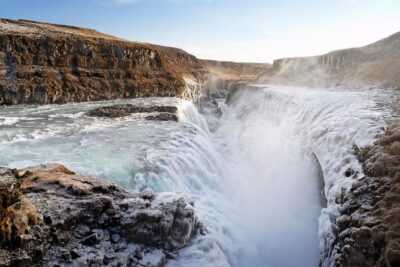
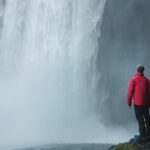
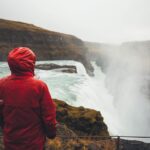
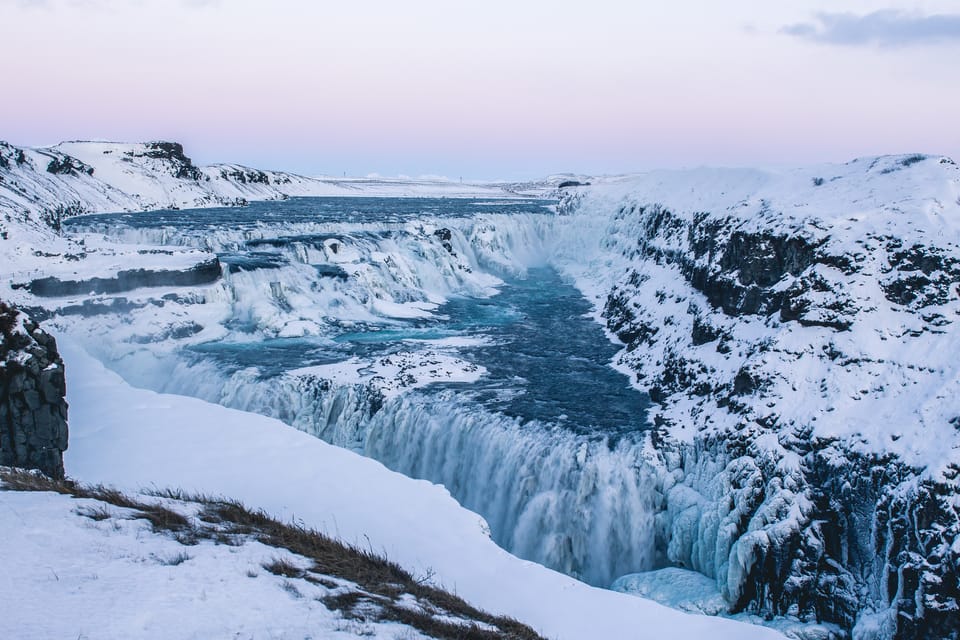
Then comes Gullfoss, the one that makes people understand why Iceland attracts poets and engineers alike. It drops roughly 32 meters into a rugged canyon. When wind and mist move across the viewing point, the falls can feel louder than you expected. It’s the kind of stop where you’ll want a jacket that actually blocks wind, not just warmth.
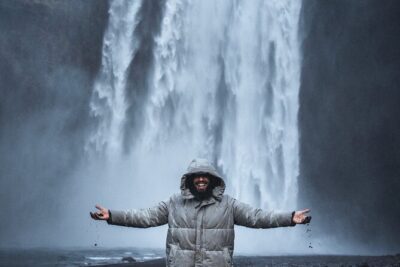
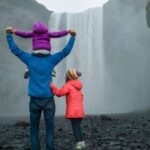
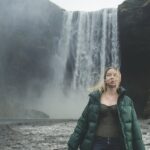
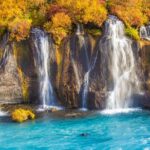
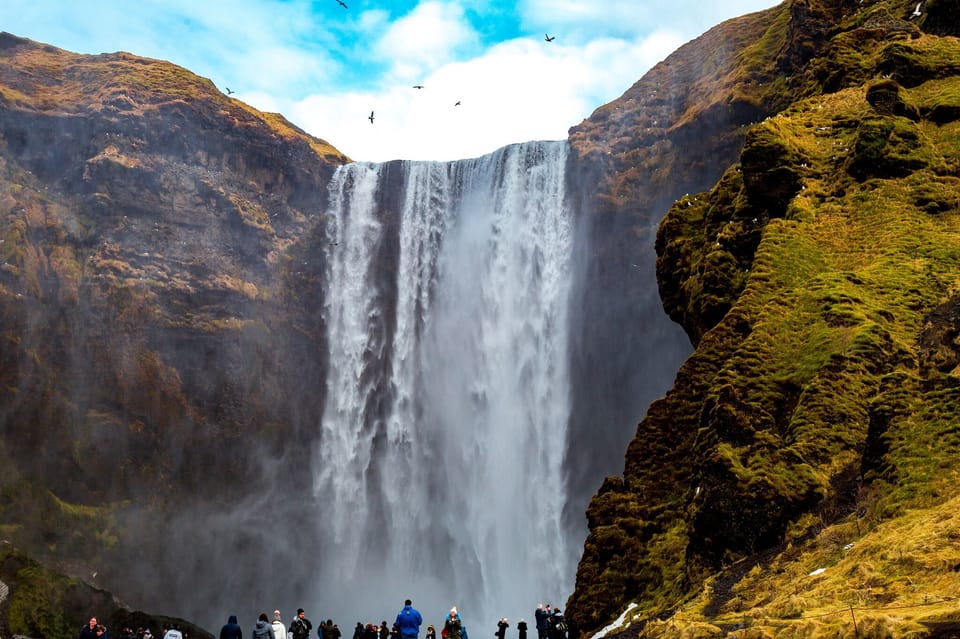
On the way south for the night, you also stop at Skógafoss and Seljalandsfoss. These aren’t required “checklists”—they’re photo-and-walk waterfalls with personality. Skógafoss gives you big, bold flow; Seljalandsfoss is special because you can get closer to the water and feel the spray. The only drawback is simple: you’re stacking multiple waterfall stops in one day, so wear grippy shoes and accept that you’ll be on your feet for stretches.
South Coast Black Sand to Jokulsárlón Icebergs and Diamond Beach
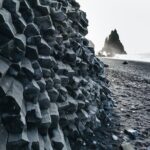
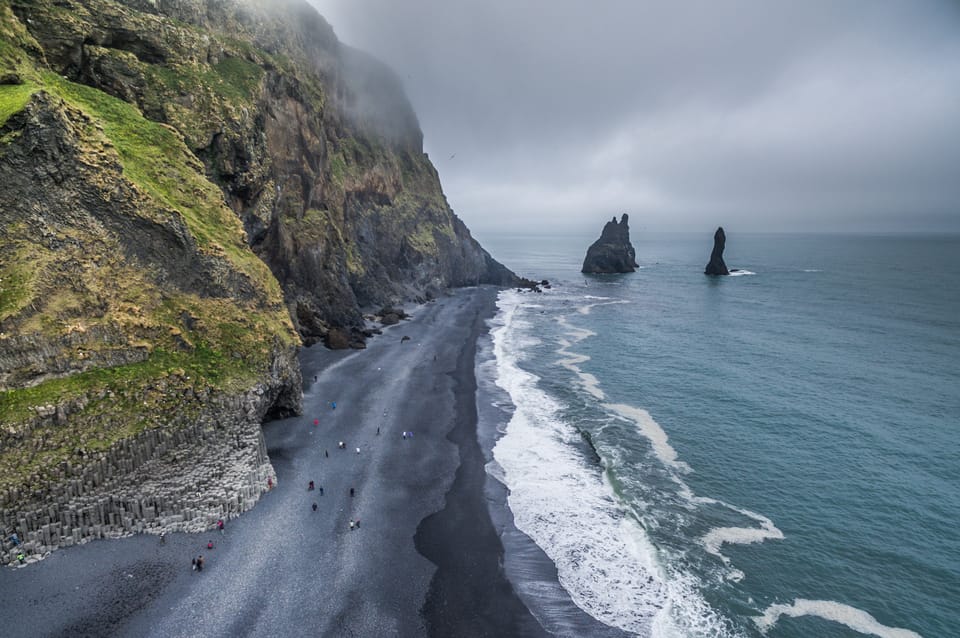
Day two flips the mood from steaming interiors to ocean edge drama. After breakfast, you head toward Reynisfjara, the famous black sand beach. The first thing you notice is the color contrast: dark sand against grey sea and sharp rock. Then you start seeing the basalt features—especially the basalt column formations and the sea stacks near Reynisdragar rising from the water. It’s one of those places where the geology looks staged, but it’s all natural and time-built.
This is also where guides usually bring up the safety reality of South Coast beaches. The surf can be rough and waves can behave unpredictably around rock formations. The tour format keeps you with the group and a guide, which is exactly what you want in places like this where standing in the wrong spot can be the difference between a photo and a problem.
Next you pass through Vík and continue toward Vatnajökull National Park. That transition matters. As you drive, you start trading “coastal views” for “glacier views.” And by the time you reach Jökulsárlón Glacier Lagoon, it feels like the scenery finally admits what it’s been promising.
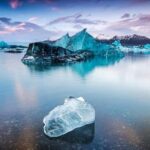
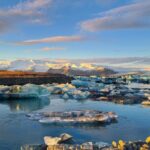
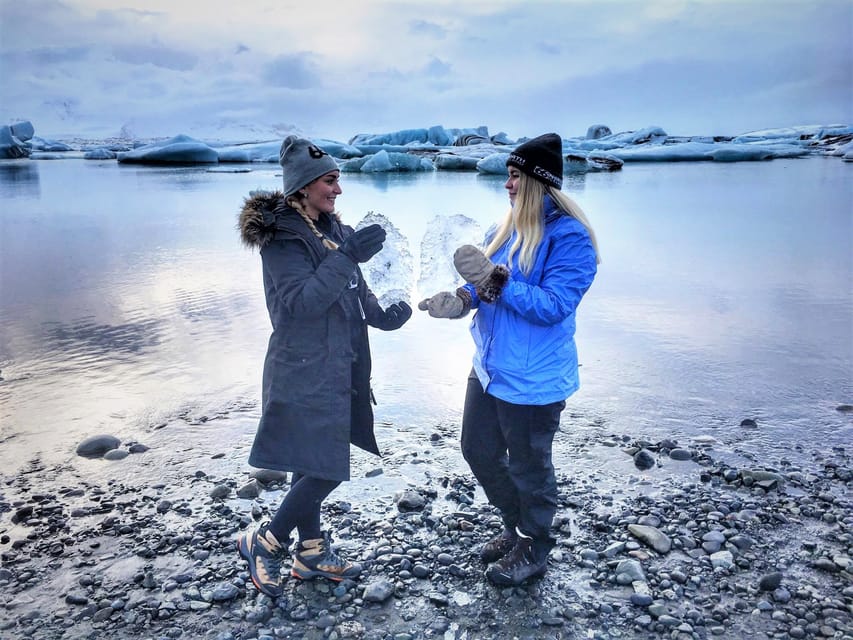
Jökulsárlón is filled with icebergs floating in a slow procession. The shapes are the real show: some pieces look like broken windows, others like thick blocks, and others like thin blue-edged ghosts. I love that this stop is timed for seeing the ice from multiple angles around the lagoon area. If you’re photographing, go easy on overshooting—keep a few frames for later, then put your phone away for a few minutes. The stillness is part of the experience.
After the lagoon, you visit Diamond Beach, the nearby shore where ice pieces wash up on black sand. It’s the same iceberg idea, but in a different visual layout: scattered, grounded, and sparkling when the light hits right. If you’ve ever wanted that iconic Iceland image, this is the moment.
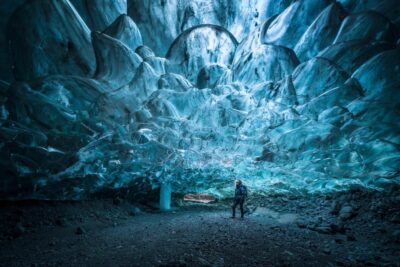
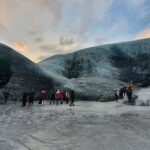
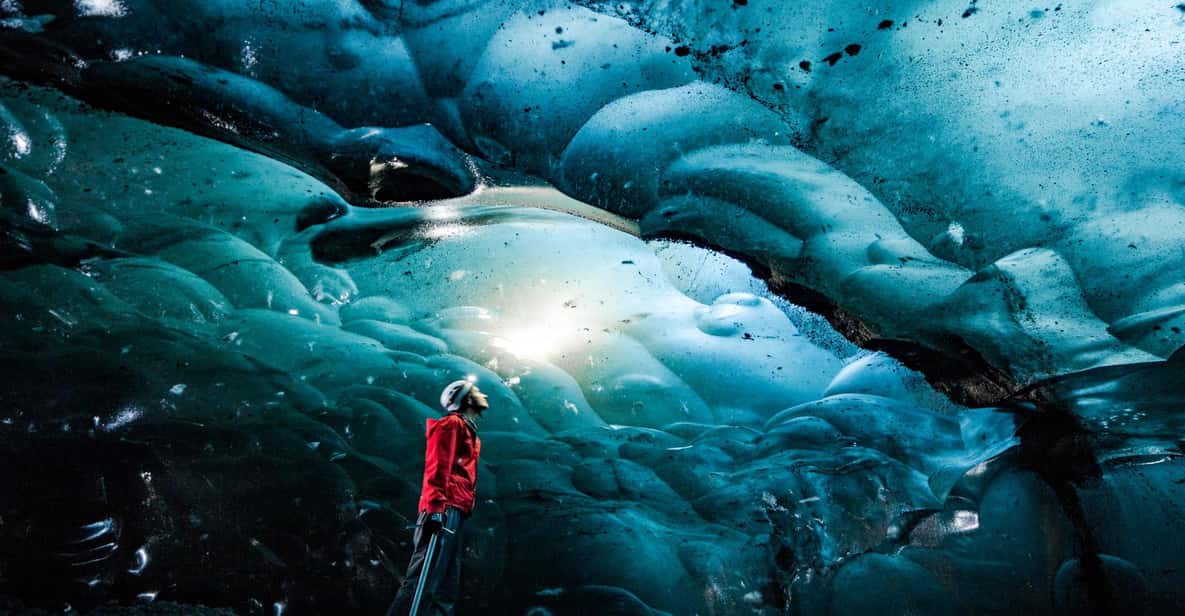
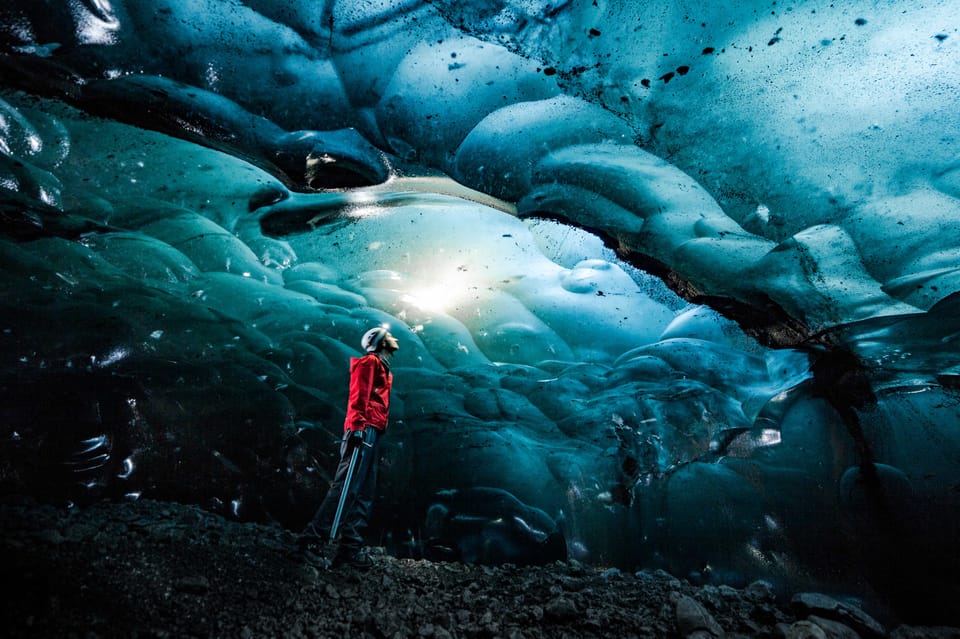
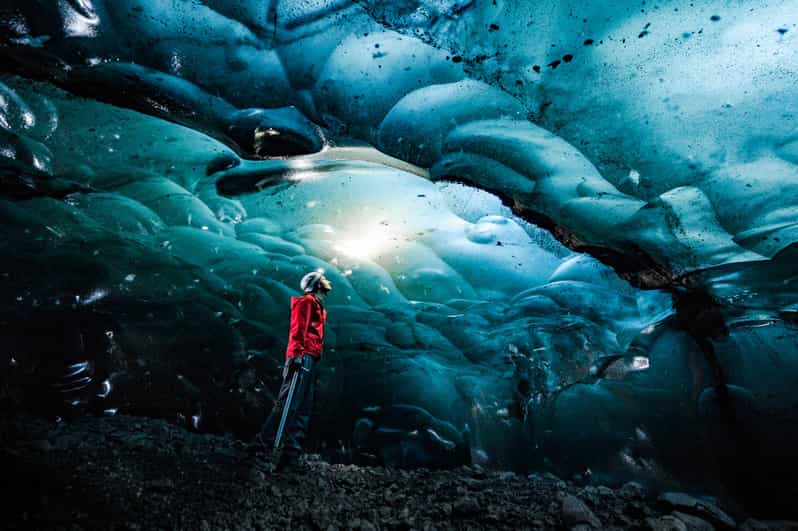
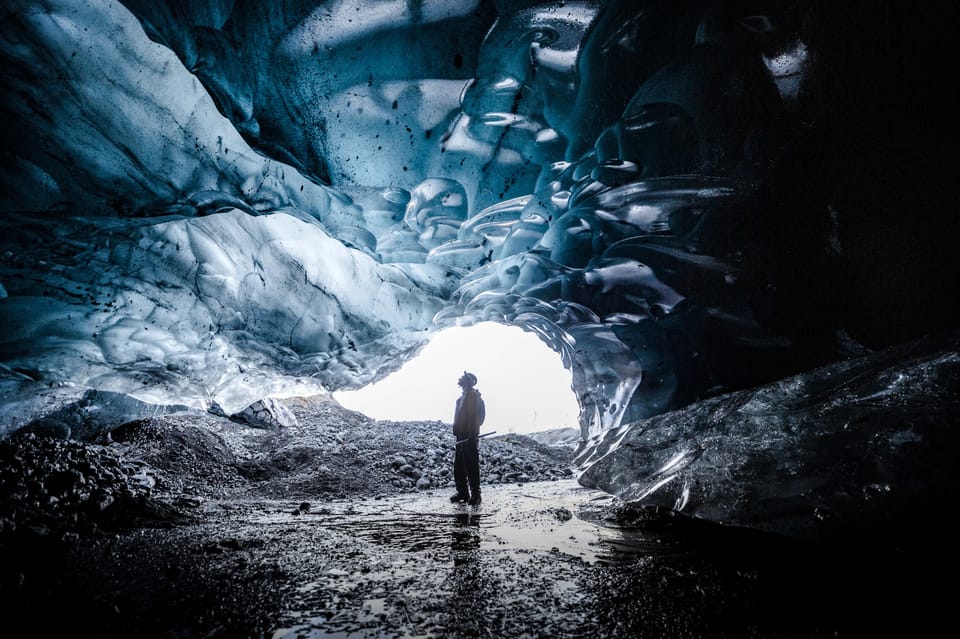
Finally, the day ends with an ice cave exploration. This is where your day shifts from “pretty and powerful” into “weird and unreal.” You’re walking into a natural space where the colors and textures are all shaped by movement and melting over time.
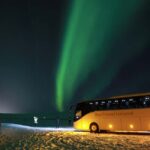
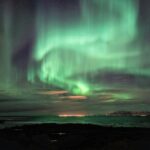
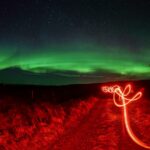
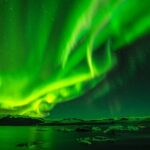
Your accommodation for the night is in the Skaftafell area, which is also a good base for winter Northern Lights chances when conditions cooperate. The long light-free evenings here can make stargazing feel more possible, and staying two nights in the region means you’re not rushing out after sunset.
You can also read our reviews of more tours and experiences in Reykjavik
Ice Cave Planning: What changes in a natural site and what to bring
Ice caves are special, but they’re not a theme-park product. The tour is clear on this: the exact cave you visit depends on conditions and a safety assessment, because ice caves change as the glacier shifts and melts.
That unpredictability is a double-edged sword. On one hand, you can’t “count” on the same cave each time. On the other hand, that’s exactly why you’re seeing the experience at all. I’d rather face some uncertainty and get real ice than commit to a scripted version that never reacts to weather and safety.
What you should do is prepare for cold, wet, and lots of traction needs. The tour’s packing list is practical:
- Warm clothing and thermal layers
- Gloves
- A head covering or kippah
- Hiking shoes with grip
- A day bag, plus up to 20 kg luggage per person
Also keep in mind that the itinerary order can shift with weather. In Iceland, that’s normal. If you show up with the right layers and flexible expectations, schedule changes feel less annoying and more like adapting to real conditions.
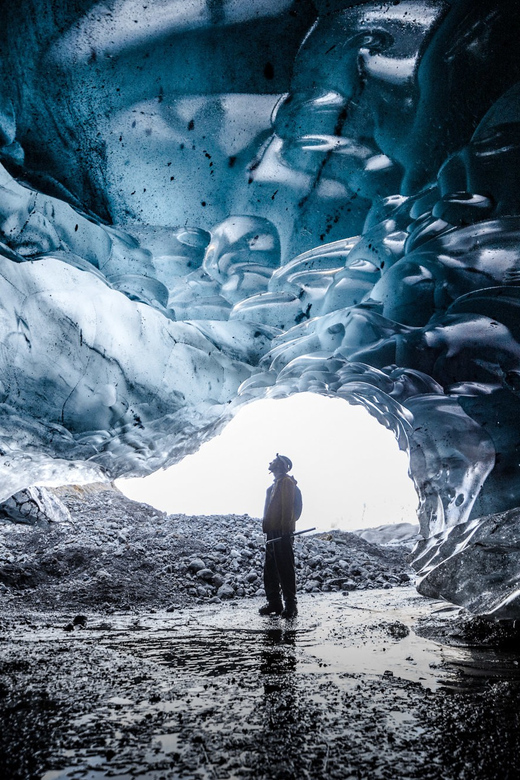
Inside the ice cave, your job is simple: follow the guide’s instructions, keep steady footing, and give your eyes time to adjust. Ice looks bright and then suddenly dark; shadows make the dome and walls feel even closer. You’re not just taking photos—you’re stepping into a changing natural structure.
Glacier Hiking on Vatnajökull: Crevasses, ice falls, and why a certified guide matters
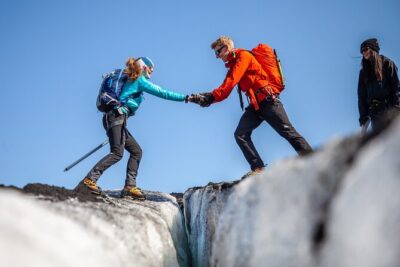
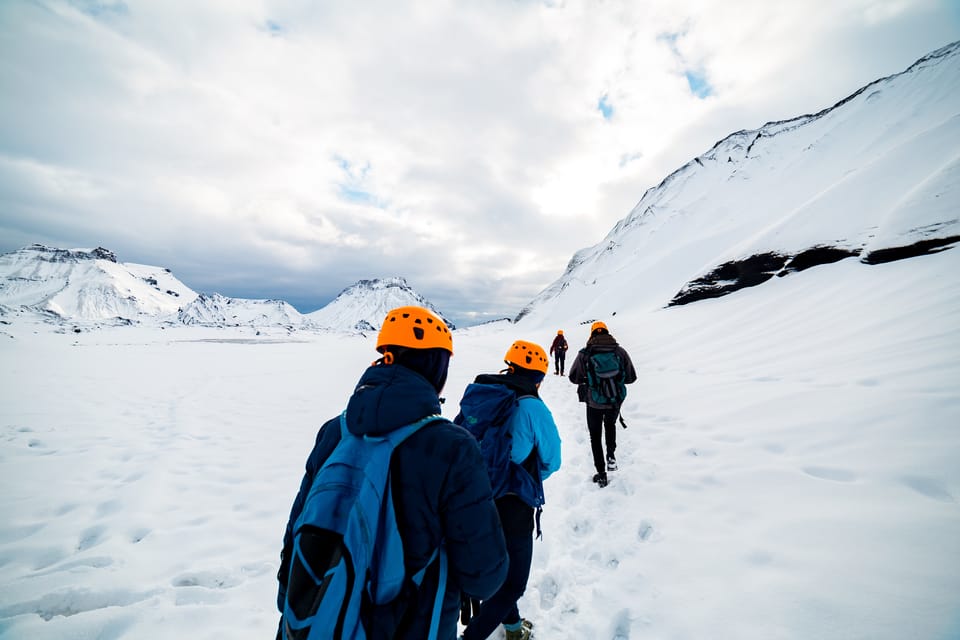
Day three is for glaciers, and it’s the kind of activity that feels more meaningful when someone explains it while you’re there. You go on a glacier hiking tour with a certified glacier guide, exploring an outlet glacier from Vatnajökull.
Icelandic glaciers are always moving and changing, so what you see today won’t look exactly the same next week. The guide helps you notice what’s happening on the surface and what the terms mean in real life: crevasses (cracks and deep openings) and ice falls (sections where the glacier flows and breaks). You get both the “what” and the “why,” which turns the hike from a workout into a lesson you can feel.
This also helps with safety. Glacier hiking is not like a normal trail. Even with good weather, the ground can shift in perception—white-on-white surfaces, hidden textures, and uneven ice. A guided tour keeps you moving as a group and gives you the knowledge to interpret what you’re looking at.
One reason this day is often described as unforgettable is that it forces you to slow down just enough to understand scale. You’re standing on a moving mass of ice. That changes how you view everything around it, from the lagoon you saw yesterday to the road you drive today.
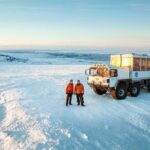
You’ll hike, then return to the bus for a scenic drive back to Reykjavik. The expected arrival time is between 16:00 and 19:00, depending on conditions.
Your Two Nights in the Skaftafell Area: Shared rooms, private bathrooms, and a base for wild weather
The tour includes two nights of accommodation in a shared double or twin room with a private bathroom and breakfast. This setup is common for guided Iceland routes because it balances cost and comfort on remote legs of the itinerary.
The practical upside: you’re not traveling after a full day of walking or driving. You wake up in the region you need for glacier-and-coast days, and breakfast means you start with fuel before the road time ramps up again. The private bathroom is a meaningful upgrade from some older budget group setups, especially in winter when everyone is wet and layered up.
There is one “read the fine print” consideration. Rooms are typically shared. If you’re a solo traveler and you don’t want to share, you can contact the operator to upgrade to a single room. If you’re sensitive to room-sharing, plan that early so you don’t leave it to chance.
In colder months, staying here can also make evenings more atmospheric for stargazing—some guides on this route have steered groups toward quiet night-sky moments when conditions allowed, which is a nice bonus when you’re already in the right part of Iceland.
Price and value: Is $991 worth it for a 3-day Golden Circle plus glaciers?
At $991 per person, this isn’t a bargain-basement trip. But it’s also not just transportation and entry tickets in disguise. You’re paying for three big cost drivers that add up quickly in Iceland:
- Two nights of lodging with breakfast
- Guided transport (including pickup/drop-off in Reykjavik and Wi-Fi on board)
- A guided glacier hike (the kind of activity that requires certified staffing and specialized planning)
Plus, you’re covering two major regions in a short time: Golden Circle sights plus South Coast glacier country with Jökulsárlón and an ice cave. If you tried to self-drive or stitch together separate day tours, you’d likely spend more in fuel, booking time, and last-minute availability—especially in winter.
What’s not included is also important. Lunch and dinner are on your own, and that means budget for meals daily. The good news is that this keeps the tour flexible for your personal food preferences and timing, as long as you eat enough before each long driving block.
So is it worth it? If you value time, planning help, and not having to coordinate multiple providers, then yes. If you hate sharing rooms or want long stretches of free time, you might feel the price more sharply.
Guides, group size, and the difference between seeing and understanding
This tour keeps the group small (up to 18). That matters more than it sounds. With a smaller bus group, you usually get better pacing, easier meeting points, and less “everyone rushes, nobody learns” energy.
The guide experience is also part of the value. In past groups, guides have been praised for strong storytelling and for connecting what you see to bigger picture themes—history, film culture, local beliefs, and the everyday realities of Iceland life. Some guides have also mixed humor into explanations, which helps when you’re out in cold air and your body is just trying to stay warm.
If you’re the type who loves facts, you’ll probably enjoy how guides talk through the route. If you’re not a trivia person, humor and practical safety reminders are still worth it. Good guidance keeps you safe at the beach and comfortable during the glacier hike, and it helps you make sense of what otherwise could feel like a checklist.
When to choose this tour, and when you might want a different pace
This is a strong fit if:
- You’re visiting Iceland for the first time and want a structured route with big stars.
- You want Golden Circle highlights without planning every stop.
- You’re happy to spend time in a mini-bus for the payoff of seeing glaciers and an ice cave.
- You like guided activities with clear explanations, especially for the glacier hike.
You might want a different format if:
- You prefer lots of quiet, self-paced wandering.
- You know you’re sensitive to winter driving conditions and long days.
- You strongly dislike shared accommodation.
Also, if you’re traveling in winter, keep expectations realistic. Weather can affect what you see and the order of stops. The tour handles this with rerouting and safety decisions around ice caves, but your attitude matters too: dress warm, keep the schedule loose in your mind, and you’ll enjoy it more.
Should you book the Iceland 3-Day Golden Circle, Glacier Lagoon, and Ice Cave tour?
I’d book it if your priority is a full, efficient Iceland hit-list that still includes real guided time on glaciers and ice. The combination of Jökulsárlón, Diamond Beach, and an ice cave visit gives you a rare mix of ocean and glacier worlds, and the glacier hike is the kind of activity that actually changes how you see the place.
But book it with open eyes. You’re paying for guidance and logistics, not solitude. You’ll be in motion most days, and you’ll need to be prepared for cold and changing conditions—especially around the ice cave.
If that sounds like your style, this is a very good way to see southern Iceland without turning your trip into a second job.
FAQ
What is the maximum group size?
The tour is a small group with a limit of 18 participants.
Where do they pick up and drop off?
Pickup and drop-off are included in Reykjavik at selected locations.
What kind of accommodation is included?
You get accommodation for two nights in a double or twin room with a private bathroom and breakfast.
Are lunch or dinner included?
No. Lunch or dinner is not included.
Is the ice cave guaranteed to be the same one?
No. The ice cave is based on current conditions and a safety assessment, since ice caves are always changing.
What tour activities are guided?
The Golden Circle and South Coast sightseeing is guided, and the glacier hiking tour is guided by a certified glacier guide.
What should I bring for the trip?
Bring warm clothing, thermal clothing, gloves, hiking shoes, and a head covering (or kippah). You can also bring a day bag, and luggage is limited to 20 kg per person.
What time will I return to Reykjavik on the final day?
You can expect to be back in Reykjavik between 16:00 and 19:00.