REVIEW · REYKJAVIK
Iceland’s south coast G spots
Book on Viator →Operated by G spot Iceland · Bookable on Viator
Iceland’s south coast hits hard. This small-group day tour mixes black-sand drama, glacier ice, and waterfalls that feel loud enough to rattle your ribs, all starting with easy Reykjavik-area pickup. I love the max-of-four feel, because you get room to ask questions and actually hear the answers. I also love how the pace stays thoughtful, with enough time to walk, look, and take photos without turning your day into a stopwatch game.
One thing to consider: it’s a long outing—about 9 to 10 hours—and several stops are around 30 minutes each, so you’ll want to dress fast, move quickly, and accept that you can’t linger at every viewpoint.
In This Review
- Key highlights you’ll care about
- Why this south coast day feels wilder than the Golden Circle
- Small-group comfort with Reykjavik pickup (and why it matters)
- The full south-coast rhythm: a realistic 9–10 hour day
- Reynisfjara black sand and basalt: where the ocean flexes
- Dyrhólaey’s volcanic viewpoint and puffin season odds
- Solheimajokull glacier: short time, real climate context
- Skógafoss: the big waterfall that shows how Iceland is built
- Seljalandsfoss: a waterfall you can walk behind
- Þórsmörk valley: the interior gateway with flood power
- Price and value: what $350 really covers
- The guide factor: pacing, conversation, and tailoring
- Who should book this south coast G spots style tour
- Should you book it?
- FAQ
- What time does the tour start?
- How long is the day trip?
- How big is the group?
- Do you get pickup from Reykjavik-area accommodations?
- Are admissions included?
- What’s the pricing?
- Can I cancel for a full refund?
- Is confirmation provided immediately after booking?
Key highlights you’ll care about
- Small group (max 4) for a more personal, conversational day
- Pickup from Reykjavik-area accommodations so you lose less time figuring transit out
- Reynisfjara + basalt formations with real black-sand power, not just a quick look
- Solheimajokull glacier context—a climate glacier that has retreated nearly 1 km since 1930
- Two major waterfall stops: Skógafoss and Seljalandsfoss, including the chance to view from behind
- Þórsmörk valley as a gateway into Iceland’s interior, between active volcanic terrain
Why this south coast day feels wilder than the Golden Circle
If you’ve done the Golden Circle already, you know the drill: pretty, classic, and often crowded. This is different. The vibe here is more raw—wind, waves, basalt, ice, and volcano country all packed into one day. You start on black sand with ocean muscle, then you work your way toward big waterfall thunder and finish with a valley carved by volcanic forces.
What makes this trip especially valuable is the way it threads the story together. You’re not just collecting icons. You’re moving through places shaped by glaciers, eruptions, and changing sea level. Even when a stop is short, the variety keeps your attention locked in.
And yes, you’re paying for convenience and access: a guided day with pickup and a tight group. That matters in Iceland, where weather changes fast and “self-drive and hope” can turn into “self-drive and stress.”
You can also read our reviews of more tours and experiences in Reykjavik.

Small-group comfort with Reykjavik pickup (and why it matters)
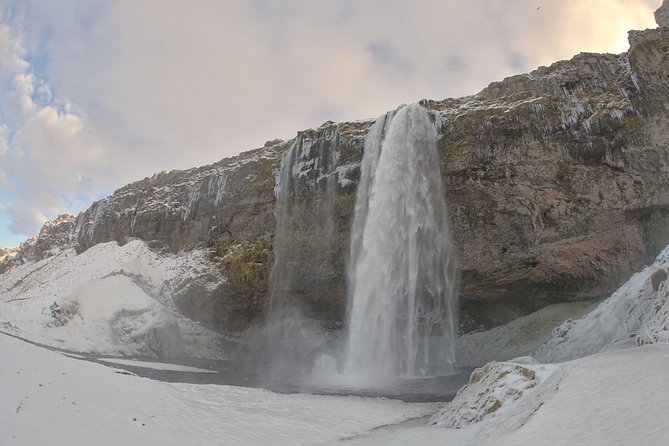
This tour is built around an intimate group size—maximum four travelers. In practice, that means you’re less likely to feel like you’re getting shepherded. It also makes it easier for your guide to adjust the route or timing to what the group is seeing and how your day is going.
Pickup is offered from your Reykjavik-area accommodation, which is a big deal for a long day. You don’t have to manage parking, buses, or the timing chaos that comes with public transport connections. You just show up, get briefed, and go.
You’ll also get a mobile ticket, which is handy when you’re juggling cold gloves, phone battery, and changing plans. Little things add up when you’re out for 9 to 10 hours.
The full south-coast rhythm: a realistic 9–10 hour day
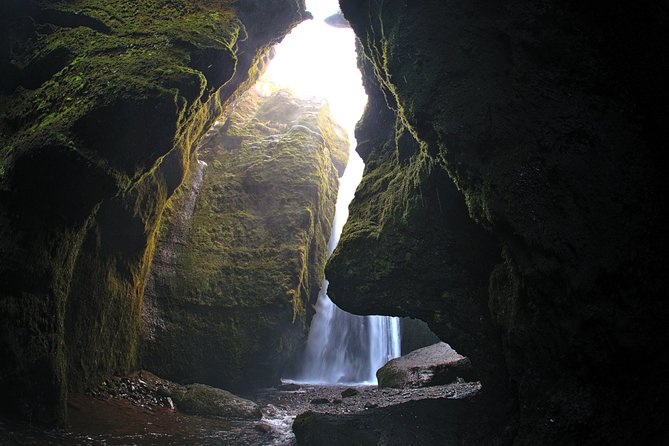
Start time is 8:30 am, and the itinerary keeps a steady cadence: several stops, each around 30 minutes. Some places include admission; Seljalandsfoss is listed as free. The important thing isn’t the exact minutes—it’s how that timing shapes your expectations.
Here’s how to make it work for you:
- Plan to move at a steady pace once you arrive.
- Use your time early at each stop for the best photo angles and a quick walk.
- Bring warm layers you can put on fast. Wind on the coast doesn’t care about your schedule.
If you’re the kind of traveler who wants hours at one viewpoint, this may feel too structured. If you’re happy to see a lot of ground and you like a guided flow, it’s a smart format.
Reynisfjara black sand and basalt: where the ocean flexes
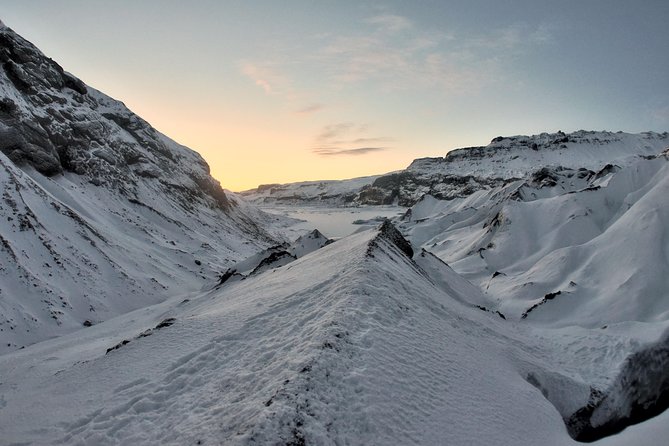
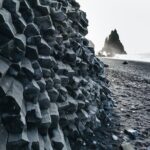
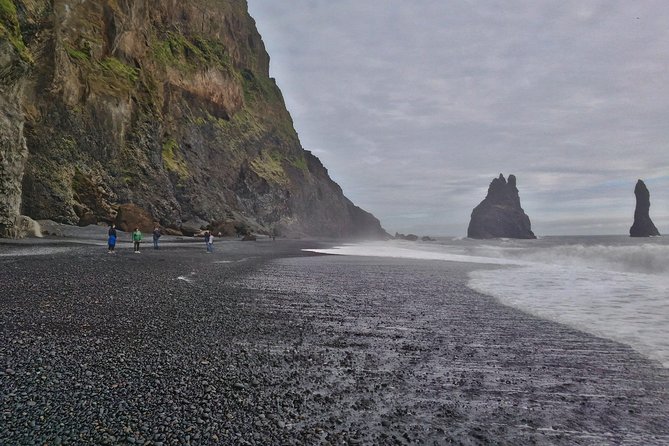
Your first major stop is Reynisfjara Beach, one of the best-known black-sand stretches in Iceland. The beauty here is obvious, but the real lesson is the ocean power. This is a place where waves don’t feel polite. They’re forceful, loud, and dramatic—paired with basalt formations that make the coastline look sculpted and ancient at the same time.
What I like about starting here is that it resets your senses. Before you’re even thinking about glaciers and waterfalls, you’ve already seen how volcanic rock and ocean energy shape the coastline.
How to enjoy it:
- Expect serious wind and spray.
- Give yourself a moment to let your eyes adjust to the dark sand and contrast-rich rocks.
- Keep an eye on wave behavior and stick to safer areas if conditions feel rough.
Dyrhólaey’s volcanic viewpoint and puffin season odds
Next up: Dyrhólaey. This spot was once a volcanic island, and that clue helps you understand what you’re looking at. The terrain is shaped by volcanic leftovers and shifting sea levels over long stretches of time.
You get strong views over black sand from here, and in summer you may see puffins. Even if you don’t, the place still works because the geology is the show—headlands, coastal edges, and that strong Iceland sense of open sky.
A practical note: this is the kind of location where weather can change fast. If visibility is poor, you can still find value by focusing on close-by rock textures and coastline shapes rather than trying to see far distances.
Solheimajokull glacier: short time, real climate context
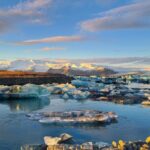
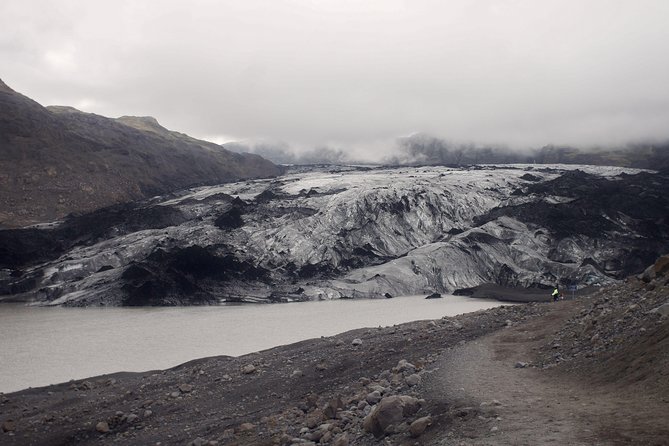
Then comes Solheimajokull Glacier, part of the larger Mýrdalsjökull system. This is labeled as a climate glacier—meaning it responds quickly to climate changes. Since 1930, it has retreated almost 1 km, which gives you a sobering perspective as you look at the ice.
Even though you’re only there around 30 minutes, that context makes the stop hit harder. You’re not just snapping a glacier photo. You’re seeing a moving target. Ice here isn’t a statue. It’s a changing landscape, shaped by temperature swings and time.
What helps most on a glacier visit:
- Wear layers and gloves. Even when it looks mild on the bus, it can feel colder on ice edges.
- Keep your walk simple—this isn’t the time for extra-long detours.
- Bring water-resistant footwear if you have it. Ice country gets wet.
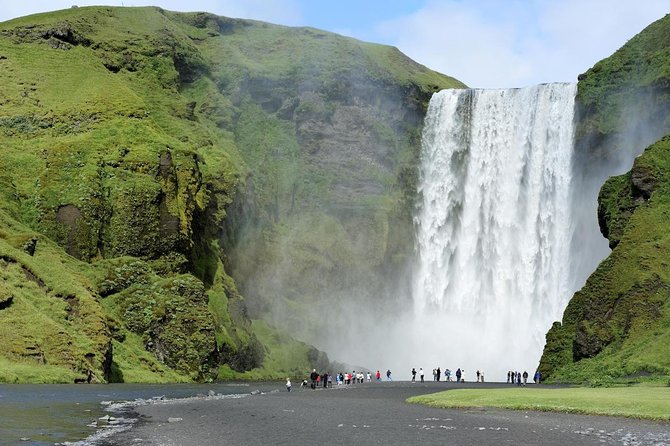
Skógafoss: the big waterfall that shows how Iceland is built
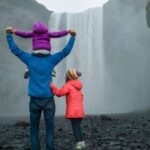
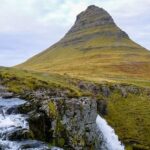
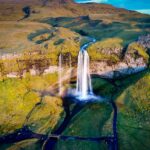
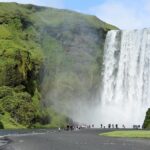
Skógafoss is one of Iceland’s best-known waterfalls, and for good reason. It drops straight from a cliff edge, and that cliff is connected to the coastline story. The route here gives you a chance to think about how volcanoes and glaciers shaped Iceland over time.
There’s also a fun pop-culture detail: it’s a filming location for many movies and shows. Even if you don’t chase that angle, the waterfall still delivers on scale and sound.
In a guided format, your time matters:
- Get your best view early.
- Take a moment to look for different angles, because the spray and water flow create changing textures.
- Use the stop for the science chat. The guide can connect what you see to glacier effects and volcanic ground.
Seljalandsfoss: a waterfall you can walk behind
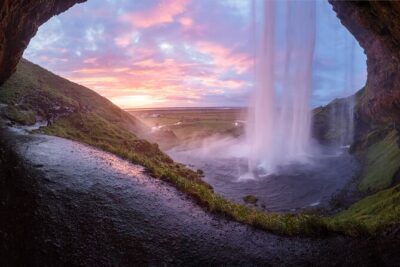
Then you hit Seljalandsfoss, where the big trick is literal: you walk the path behind the waterfall. The falls are listed at about 60 meters tall, and that behind-the-water perspective changes everything. Instead of watching from a safe front row, you get a behind-the-scenes view—standing where the water reorients your whole sense of direction.
This stop is listed as free for admission, which makes it a great payoff moment in the day. It’s also especially popular around sunset, so if the timing lines up with your day, you’ll often get better light and a moodier vibe.
Practical reality check: bring a hooded layer or something that can handle spray. The experience is worth it, but you will likely get wet.
Þórsmörk valley: the interior gateway with flood power
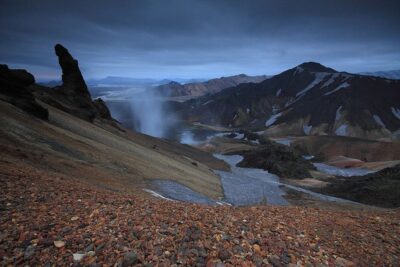
Finishing at Þórsmörk (Thorsmörk) is a smart move because it feels like the day’s climax. This valley sits between volcanoes and acts as a gateway toward Iceland’s interior. The terrain here feels more “in the middle of things,” less like a neat viewpoint and more like a working piece of the island’s engine.
The big detail: Þórsmörk is a place that can get powerful floods. Even when you can’t feel that danger in a dramatic way, it informs how you should interpret the area. This is not a gentle parkland. It’s volcanic country where water and weather can shift conditions quickly.
Your stop here is about 30 minutes, but the value is in what you take away. You’ve seen the coast, then the ice, then the waterfalls. Now you see a valley that helps explain how Iceland’s interior got carved and connected.
Price and value: what $350 really covers
At $350 per person, this isn’t a budget gamble. But for Iceland, it can be a fair deal depending on what you value.
Here’s what you’re buying:
- A small group (max four), which often means less time wasted and more back-and-forth with your guide
- Reykjavik-area pickup, so you don’t lose hours coordinating transport
- Multiple major stops packed into a 9–10 hour guided day
- Admission is included for most stops (and Seljalandsfoss is free per the provided details)
In other words, you’re paying for convenience plus access. If you’d otherwise need to drive yourself through long distances, manage time windows, and figure out where to park in bad weather, this price starts to look more reasonable.
Also, there’s a group discount mentioned. If you’re traveling with friends, that can improve value further.
The guide factor: pacing, conversation, and tailoring
One of the standout things I’d look for on a day like this is the guide’s sense of timing. The best version of this tour keeps you moving but not rushed. It also uses the stops to create conversation, not just deliver facts.
In one account of the experience, the guide Damian is described as wonderful and very knowledgeable, and the tour is described as private and detailed with a completely un-rushed feel. That matches what you want: time to ask questions and a route that covers the big hits plus a few smaller, more local moments.
You should still plan to be flexible. Weather can change what’s possible visually. But with a guide who can adapt and keep the day flowing, that flexibility turns from annoying to actually fun.
Who should book this south coast G spots style tour
This is a good fit if you:
- Want a one-day overview of Iceland’s south beyond the Golden Circle
- Prefer small groups over big bus tours
- Enjoy geology and the way glaciers, volcanoes, and ocean energy connect
- Are happy with a day that’s full but not frantic
You might want a different option if you:
- Hate tight stop times and need long stays
- Get stressed by long days and lots of getting in and out of a vehicle
- Want a pure glacier hiking focus over everything else
Should you book it?
If your priority is seeing a high hit-rate mix of black sand, glaciers, and major waterfalls with a small group and easy Reykjavik pickup, I think this is a strong booking. The stop variety makes the day feel more meaningful than a checklist, and the short, guided timing works well for visitors who want Iceland’s south-coast power in one go.
If you want to linger at each location for hours, you may feel shorted. But if you’re fine with 30-minute stop windows and you like a guided flow, this is the kind of day trip that tends to feel worth the money.
FAQ
What time does the tour start?
It starts at 8:30 am.
How long is the day trip?
It runs about 9 to 10 hours.
How big is the group?
It has a maximum of 4 travelers.
Do you get pickup from Reykjavik-area accommodations?
Yes, pickup is offered.
Are admissions included?
Admission tickets are included for several stops listed in the itinerary, and Seljalandsfoss is listed as free.
What’s the pricing?
The price is $350.00 per person.
Can I cancel for a full refund?
Yes. You can cancel up to 24 hours in advance for a full refund.
Is confirmation provided immediately after booking?
You receive confirmation at booking time unless you book within 12 hours of travel, in which case confirmation is provided as soon as possible based on availability.