REVIEW · REYKJAVIK
Reykjanes Peninsula Tour
Book on Viator →Operated by Oak Travel Service · Bookable on Viator
Reykjanes feels like another planet. This private 5-hour drive-by-and-walk tour throws you into Iceland’s tectonics and geothermal chaos, then caps it with optional Blue Lagoon relaxation.
I especially like how the day mixes story stops (like walking where plates meet) with hands-on, steam-and-minerals scenery at places such as Krýsuvík and Gunnuhver. I also like the hassle-free pickup from most Reykjavik hotels and the fact that the regular sightseeing stops are quick with no extra admission costs listed for them. The main consideration: Blue Lagoon entry is not included and you must pre-book, so budget for that add-on.
In This Review
- Key Highlights You’ll Care About
- Reykjanes Peninsula: the Iceland you don’t rush through
- Reykjavik Pickup and the “small group” advantage
- Stop 1: Bridge Between Continents (where two tectonic plates meet)
- Stop 2: Krýsuvík and Seltún geothermal area with boardwalk viewing
- Stop 3: Reykjanes Lighthouse (Reykjanesvíti) and quake history
- Stop 4: Kleifarvatn Lake for brave snorkelers and divers
- Stop 5: Gunnuhver Hot Springs—steam, hot mud pools, and furious fumaroles
- Blue Lagoon: the 2-hour spa stop you pay extra for
- Price and value: $929 per group + Blue Lagoon entry
- What you’ll really get from the guide (and what to expect)
- Who this tour fits best (and who should think twice)
- Should you book the Reykjanes Peninsula Tour?
- FAQ
- Is Blue Lagoon entry included in the tour price?
- How long is the tour?
- Does the tour include pickup from Reykjavik?
- Is this a private tour?
- What stops are included besides Blue Lagoon?
- What if the weather is poor?
Key Highlights You’ll Care About
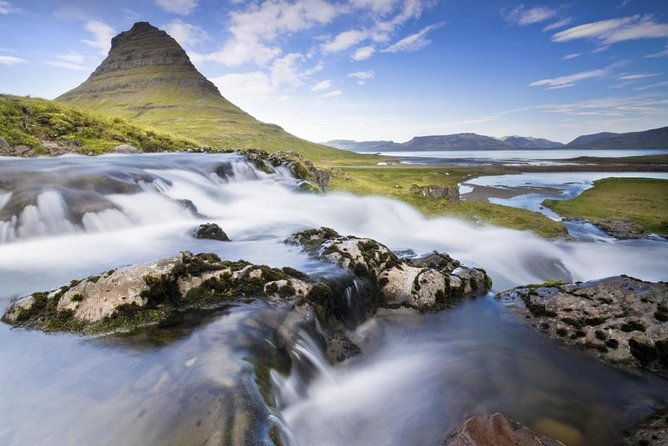
- Bridge Between Continents: walk at the spot where North America and Europe meet
- Krýsuvík + Seltún geothermal area: steaming ground, mud pots, and boardwalk viewing
- Reykjanesvíti Lighthouse: one of Iceland’s oldest lighthouses with major quake history
- Gunnuhver Hot Springs: wide, dramatic geothermal field with hot mud pools and fumaroles
- Blue Lagoon option: 2 hours in milky geothermal waters, but ticket is extra
- Limited to your group: pickup works from most Reykjavik hotels, so you don’t waste time
Reykjanes Peninsula: the Iceland you don’t rush through
If you’ve only done Iceland’s most famous road trip hits, Reykjanes Peninsula is a nice correction. Here, the geology is the main character: tectonic forces, volcanic heat, and the kind of steam that looks like it’s coming from the ground itself—not from a machine. You don’t just see cool spots. You get the “how is this even happening?” explanation while you’re moving between them.
I like that the route is built for your attention span. The sightseeing stops are short—think about 30 minutes each—which means you can enjoy each location without feeling stuck in long lines or long drives. And because it’s limited to your group, you can often tailor the pacing to what you care about most: more photo time at steam vents, a longer look at colors in the geothermal hills, or time to stand quietly where the landscape is doing its own thing.
You can also read our reviews of more tours and experiences in Reykjavik.

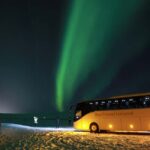
Reykjavik Pickup and the “small group” advantage
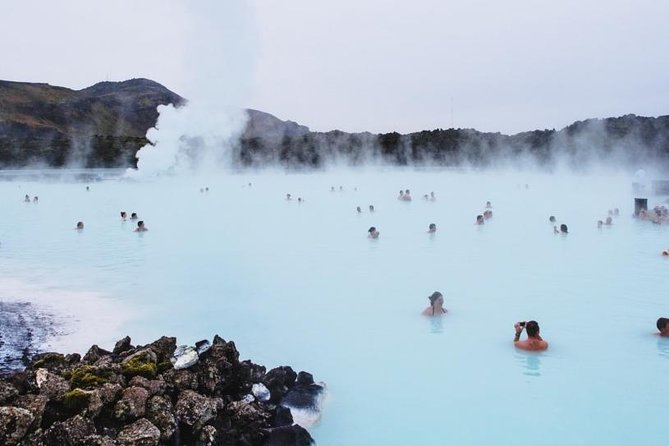
The day starts at Harpa (101 Reykjavík), and you’re met with pickup from most Reykjavik hotels. That matters more than it sounds. Reykjavik hotel days can eat time fast—waiting for your bearings, figuring out transport, and losing daylight. With a pickup, you get moving early and keep your plan intact.
This is also set up as a private experience for your party (listed as up to 3 per group). In practice, that means you’re not squeezed into a big schedule where you have to compete for time at stops. You can ask questions along the drive. You can also move a little faster when conditions are good—or slow down when a view demands it.
Language is English, and you’ll get a mobile ticket, so you’re not messing around with paper confirmations.
Stop 1: Bridge Between Continents (where two tectonic plates meet)
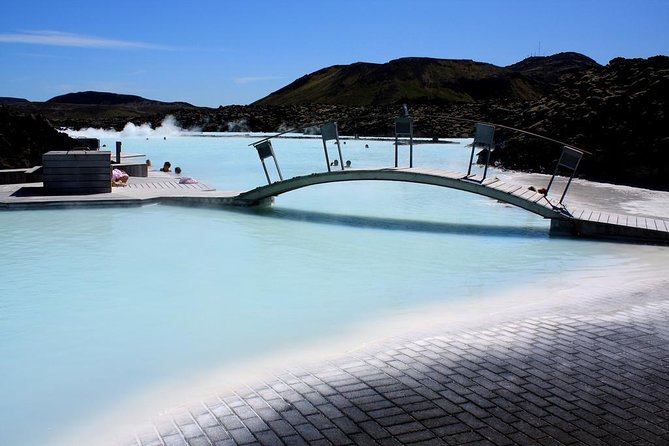
This is the stop that gives you a story you can’t fake. You get to stand where North America and Europe meet—and yes, there’s a bridge you can walk on at the point of contact. It’s one of those experiences where the scale feels odd at first, until your guide frames it with what’s actually happening below your feet.
You get about 30 minutes here, and admission is free. That makes this a good “yes, I’ll do the photo and I’ll read the explanation” stop. If you like Iceland for its scientific side (not just the scenery), you’ll enjoy how this location turns abstract plate tectonics into something you can physically reach.
A practical note: it’s out in open space. Dress for wind and cold, even if Reykjavik looked calm earlier.
Stop 2: Krýsuvík and Seltún geothermal area with boardwalk viewing
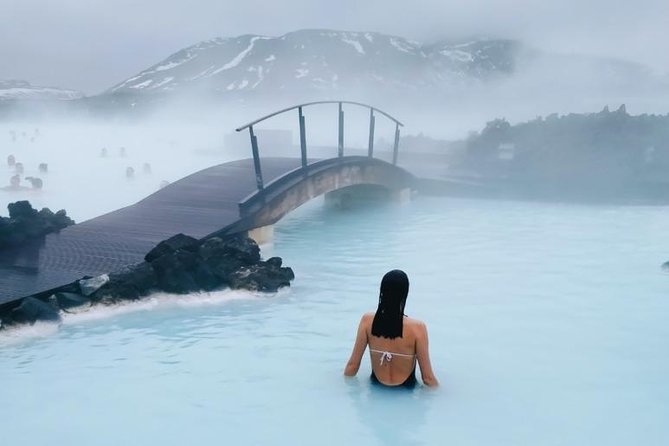
Krýsuvík and Seltún are where Reykjanes turns up the heat visually. You’ll see seething mud pots, rising steam, and fumaroles. The area is set up with a boardwalk, which is a big deal in geothermal zones. It lets you get close to the action without guessing where it’s safe.
This stop is also around 30 minutes, and admission is listed as free. That short window works well because geothermal fields are intense—once you’ve seen the steam and the mud up close, you’re ready for the next chapter.
The colors are a big part of why people remember this place. The guide’s framing helps too: groundwater gets turned into steam below, and the surrounding hills show those vivid shades that make the whole area feel unreal.
If you’re the type who likes to photograph details, bring your patience. Steam changes the scene every minute. One shot looks plain. Two minutes later, the whole boardwalk turns into something else.
Stop 3: Reykjanes Lighthouse (Reykjanesvíti) and quake history
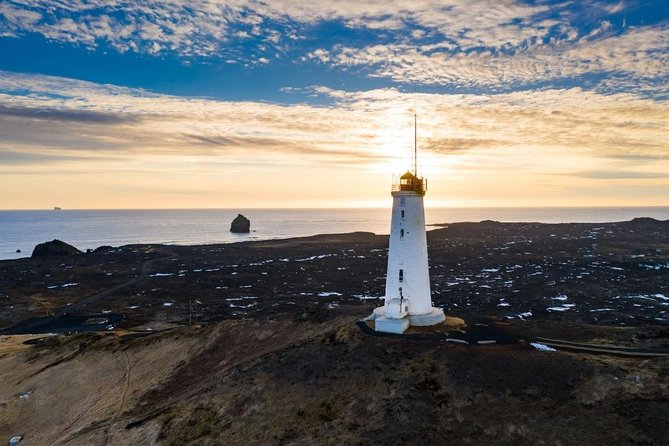
This one is more than a postcard tower. The Reykjanesvíti Lighthouse is described as one of Iceland’s oldest, built in 1878 and tall at 31 m (102 ft). It also has a story that makes you respect how geologically active the area is.
The lighthouse was severely damaged in a major earthquake in 1905, rebuilt in 1929, and then moved to a safer new location. An Icelanders’ survey also named Reykjanesvíti as Iceland’s favorite lighthouse.
You’ll have about 30 minutes at this stop. With admission listed as free, you can spend time on what you actually care about: the architecture, the coastal views, or the lesson behind the rebuilding timeline—how humans try to build lasting things on restless ground.
Stop 4: Kleifarvatn Lake for brave snorkelers and divers
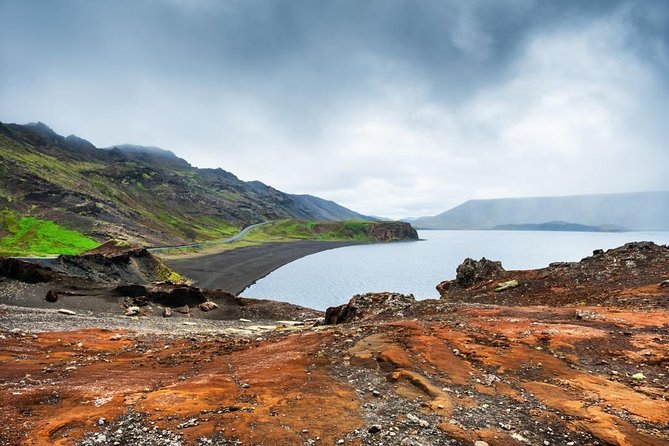
Kleifarvatn is where the tour shifts from “look at the steam” to “imagine getting in it.” The lake has become an exciting spot for diving and snorkeling, tied to the geothermal springs in the lake.
Important reality check: the tour stop here is about 30 minutes, so you should treat it as a viewing and orientation moment, not an instruction session or a guaranteed water-time activity. If you’re a snorkeler or diver, this is still a meaningful stop because you’re in the right place for the kind of conditions people come for.
There’s also local mythology attached to the area. Even if myths aren’t your thing, it adds personality to the way this region gets talked about—and it helps explain why people feel drawn to these weird, hot environments.
Stop 5: Gunnuhver Hot Springs—steam, hot mud pools, and furious fumaroles
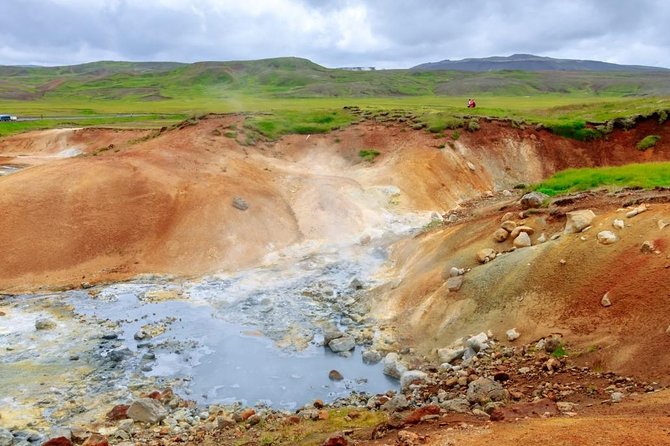
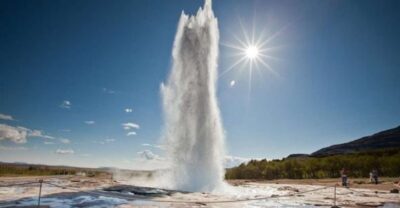
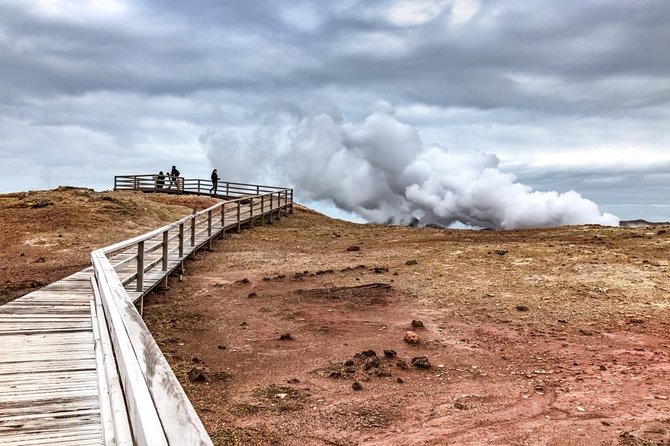
Gunnuhver is one of the biggest wow-factor stops on the Reykjanes Peninsula. It’s a geothermal field on restless ground with hot mud pools, steam vents, hot springs, and fumaroles. The description is accurate: this place can look like it’s actively repainting the air with mineral color.
You’ll spend around 30 minutes, and admission is listed as free. From a value standpoint, that’s great—this is the kind of location where an extra-entry fee would be easy to justify, yet it’s included as part of the tour stops.
What makes Gunnuhver especially compelling is the sense of scale. Steam rises in waves and you can often see signs of activity from kilometers away. Even when the ground looks barren, it’s working constantly.
If you get cold fast, this is where you’ll want to plan your clothing. Geothermal fields are exposed. Heat comes and goes depending on wind and steam flow.
Blue Lagoon: the 2-hour spa stop you pay extra for
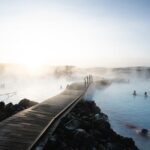
Blue Lagoon is the obvious add-on, and it’s also the part where you’ll want your budgeting to be clear. The tour includes transportation to/from Blue Lagoon, but entry is not included. You must pre-book Blue Lagoon tickets, and the listed price is $150 per person.
Time here is 2 hours. That’s enough to settle in, enjoy the hot waters, and decide what package style fits your mood. Blue Lagoon offers three packages: Basic, Comfort, and Luxury.
Now, why Blue Lagoon is worth factoring in even when it costs extra:
- The lagoon water is kept warm at 37–40°C (98–104°F).
- It’s man-made and fed from water used first in a geothermal power plant, then directed into the lagoon.
- Water comes from a depth of 2000 meters.
- The lagoon sits in an 800-year-old lava field.
- The famous color comes from silica (and mineral mixes; algae may add green in summer).
- The lagoon supply is renewed every 40 hours, and there’s a dedicated in-lagoon cave, warm waterfall, and an in-water bar.
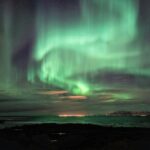
There’s also a fun seasonal angle: in wintertime, you may get the chance to see the Northern Lights while you relax.
My practical advice: if you go, go ready to slow down. This part isn’t a “quick look.” It’s a soak-and-recover moment after hours in wind and steam.
Price and value: $929 per group + Blue Lagoon entry
At $929 per group (up to 3), the pricing can look steep at first. But it’s not only “a drive with a view.” You’re paying for:
- An experienced guide
- Pickup from most Reykjavik hotels
- A structured route across multiple major Reykjanes sites
- Transfers to and from Blue Lagoon (even though the entry fee is extra)
If you’re traveling with the maximum group size of 3, the base tour works out to about $309.67 per person before Blue Lagoon. Then you add $150 per person if you choose Blue Lagoon, making the total roughly $459.67 per person for a full day that includes the key Reykjanes stops plus a major Reykjavik-adjacent spa experience.
Also worth noting: admission costs are listed as free for the non–Blue Lagoon stops. So you’re not stacking paywalls on top of the tour price.
If you’re solo, the per-person cost obviously rises because it’s per group, not per person.
What you’ll really get from the guide (and what to expect)
A good geology guide changes the experience. Instead of “we stopped at a hot spot,” you understand why the steam exists, why the ground looks painted with minerals, and why rebuilding a lighthouse after a quake made sense.
From the operator’s side, you’re in English with an experienced guide. The names I’ve seen tied to smooth planning include Thorir and Siggi—and there’s an emphasis on being responsive and adjusting if conditions change. In one case, the planning and last-minute adjustments went beyond normal tour behavior, including help arranging a cab when phones weren’t working after the tour.
Still, one fair warning: not every guide will match your preferred style. One experience I saw described a guide who felt more like a private driver than a talk-first guide. If you want heavier narration, make it clear early—ask questions the moment you meet them, and tell them you’re especially interested in geology and the reason behind the stops.
Who this tour fits best (and who should think twice)
This tour is a strong fit if you want:
- Iceland that focuses on geology and geothermal forces, not just waterfalls and glaciers
- A private setup with limited group size
- Quick, high-impact stops where you still have time to ask questions
- A “see it, then soak it” option with Blue Lagoon
It may not be the best match if:
- You want long stops at each location. The stop times are short by design.
- You hate extra ticket costs, since Blue Lagoon entry is $150 per person on top.
- You need a very talkative, lesson-style guide without doing any prompting. You’ll likely get the core facts either way, but your preference for storytelling can affect enjoyment.
Should you book the Reykjanes Peninsula Tour?
I’d book it if you want a smart, efficient way to experience the Reykjanes Peninsula’s geology and steam without fighting transport in Iceland. The private-group feel, hotel pickup, and the free admission stops make the planning easier. Plus, if Blue Lagoon is on your list, this tour builds it in with transfers and a solid 2-hour window.
If you’re not interested in Blue Lagoon at all, you might still love Reykjanes—but double-check the day’s value against your priorities. And if you care most about guided explanations, say it upfront so your guide’s style matches what you want.
Either way, plan your clothing for wind and cold, bring your camera for steam-filled color shifts, and let the geology do what it does best: make you feel like the ground is alive.
FAQ
Is Blue Lagoon entry included in the tour price?
No. Blue Lagoon entry is not included. You need to pre-book your Blue Lagoon ticket, and the listed price is $150 per person.
How long is the tour?
The tour runs about 5 hours. Blue Lagoon time is listed as 2 hours.
Does the tour include pickup from Reykjavik?
Yes. Pickup is offered from most Reykjavik hotels, with the meeting point at Harpa (101 Reykjavík).
Is this a private tour?
Yes. It’s a private tour/activity limited to your group, with a group size listed as up to 3.
What stops are included besides Blue Lagoon?
You’ll stop at the Bridge Between Continents, Krýsuvík (Seltún geothermal area), Reykjanes Lighthouse, Kleifarvatn Lake, and Gunnuhver Hot Springs. Admission is listed as free for those stops.
What if the weather is poor?
This experience requires good weather. If it’s canceled due to poor weather, you’ll be offered a different date or a full refund.