REVIEW · REYKJAVIK
Reykjavík Small group Walking Tour – by CityWalk
Book on Viator →Operated by Free walking Tour Reykjavik CityWalk · Bookable on Viator
Reykjavík makes more sense after this walk. In just about two hours, you’ll hit the landmarks that first-timers usually miss, with a guide turning street corners into stories. I especially like that it’s a small group (max 12), so you get real back-and-forth, not a lecture. You start at Hallgrímstorg and quickly land at Hallgrímkirkja, one of the city’s most recognizable buildings.
What I like next is the mix of big sights and human-scale details. You’ll pass the Rainbow Street area with galleries and shops, then move through key civic places tied to Iceland’s identity—from Ingólfur Arnarson and early settlement to modern politics at Alþingi.
One consideration: time is tight. Harpa is a highlight, but the route can shift, so you’re not guaranteed to stop there; the tour ends close enough for an easy add-on walk.
In This Review
- Key Points You’ll Care About
- A Quick Reality Check: Two Hours in Reykjavík
- Starting at Hallgrímstorg: Hallgrímkirkja Comes First
- Rainbow Street and the National Theatre: Art, Shops, and Street-Level Clues
- Arnarholl Statue and Ingólfur Arnarson: First Settlers in Plain Language
- Harpa Concert Hall: A Photo Stop That Can Shift
- Old Harbour and the Fishing Story: Why Reykjavík Grew Up Fast
- Alþingi at Parliament House: Iceland’s Politics, Explained Simply
- Reykjavík City Hall by Tjörnin: Warm Indoors and a Map Moment
- Guides Make or Break It: What You Can Expect About the Tone
- Walking Pace and Distance: When Short Feels Good
- Who This Tour Is Best For (and Who Might Want More)
- Price and Value: Is $53.21 Worth It?
- Should You Book This Reykjavík CityWalk Walking Tour?
- FAQ
- How long is the Reykjavík Small Group Walking Tour?
- What’s the group size for this tour?
- Where does the tour start and end?
- Is the tour offered in English?
- Is admission included for the stops?
- Is hotel pickup or drop-off included?
- Does the tour run in bad weather?
- Will I stop at Harpa Concert Hall?
- What is included in the ticket price?
- Can I cancel for a full refund?
Key Points You’ll Care About
- Small group size (up to 12) for a more personal pace and easier questions
- Hallgrímkirkja gets you oriented fast, right at the start
- Stories for major landmarks—not just photos, but why each place matters
- Harpa may vary depending on routing, though you finish within walking reach
- Indoor warm-up at City Hall if the weather turns cold and nasty
A Quick Reality Check: Two Hours in Reykjavík
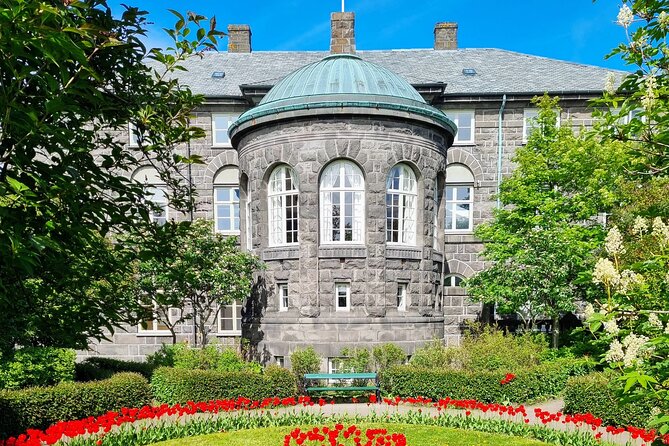
If you’re landing in Reykjavík and want to feel like you can navigate by day two, this tour hits the sweet spot. It’s short enough to fit into almost any first-day plan, yet packed with the kinds of stops that make the rest of your trip easier. You’ll walk from Hallgrímstorg toward the older center, ending near Austurvöllur or by the lake at Tjörnin for City Hall.
The price—$53.21 for about 2 hours—feels fair when you consider what you get: a local professional guide and multiple major landmarks in one compact route. This is the kind of activity that saves you time the first day. Instead of guessing what to prioritize, you get a guided framework for where you are and what you’re looking at.
Group size matters here. With a maximum of 12 travelers, you’re more likely to hear your guide clearly and ask questions without waiting your turn.
You can also read our reviews of more walking tours in Reykjavik


Starting at Hallgrímstorg: Hallgrímkirkja Comes First
Your tour begins at Hallgrímstorg 1 (101 Reykjavík). From there, the first real anchor is Hallgrímkirkja, a landmark church designed by Guðjón Samúelsson. The stop is about 15 minutes, with free admission listed for the church area tied to the experience.
Why I like this as a starting point: Hallgrímkirkja is a visual compass. Even if you’ve never been to Reykjavík before, you’ll recognize it later when you’re walking on your own. It’s also a perfect intro to the Icelandic habit of building big public identity into structures you can see from far away.
Practical tip: dress for wind and cold. Even during decent weather, the church area can feel exposed. The good news is that the tour continues to move you along, so you’re not stuck in one place.
Rainbow Street and the National Theatre: Art, Shops, and Street-Level Clues
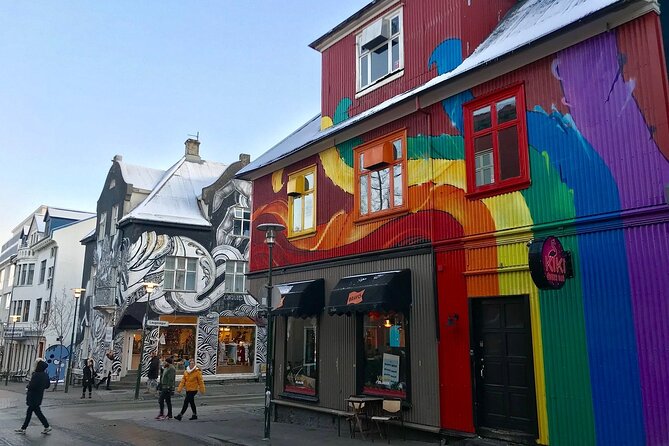
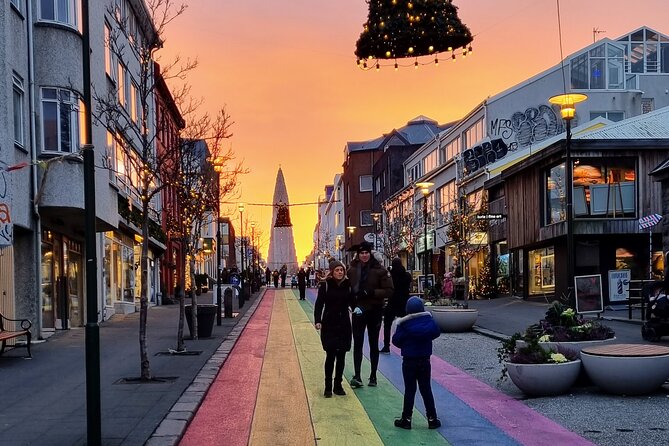
After Hallgrímkirkja, you’ll head toward the Rainbow Street area. This is less about one single building and more about the texture of the neighborhood: galleries and shops, the kind of place where you’ll want to slow down and browse later.
You’ll also get a stop near the National Theatre of Iceland, designed by Guðjón Samúelsson. This matters because it connects the city’s cultural life with the same designer name you saw at Hallgrímkirkja. In other words, you’re not just collecting random stops. You’re learning how certain people shaped Reykjavík’s look.
The drawback here is simple: you’re outside. If it’s windy or rainy, photos take patience and quick decisions. Still, this segment works well because you’re walking between points instead of waiting for a bus or doing a long transfer.
Arnarholl Statue and Ingólfur Arnarson: First Settlers in Plain Language
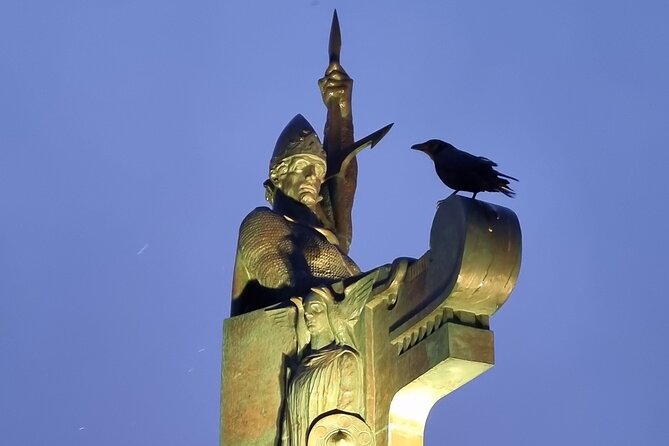
One of the most memorable parts of Reykjavík for first-timers is the sense that the city is young, yet deeply mythic. That’s why the Arnarholl statue stop feels like more than a photo moment. The experience centers on the famous Viking Ingólfur Arnarson, tied to Iceland’s first settlers.
You’ll spend about 10 minutes here, and the visit is listed as free for the stop. The guide’s job is to turn a name you might see on a sign into an actual beginning story—why settlement happened, what it meant, and how that origin still echoes in the way Reykjavík thinks about itself.
If you care about history but don’t want a textbook, this is a good balance. It’s not a marathon. It’s a quick, well-placed context boost you can carry through the rest of your day.
Harpa Concert Hall: A Photo Stop That Can Shift
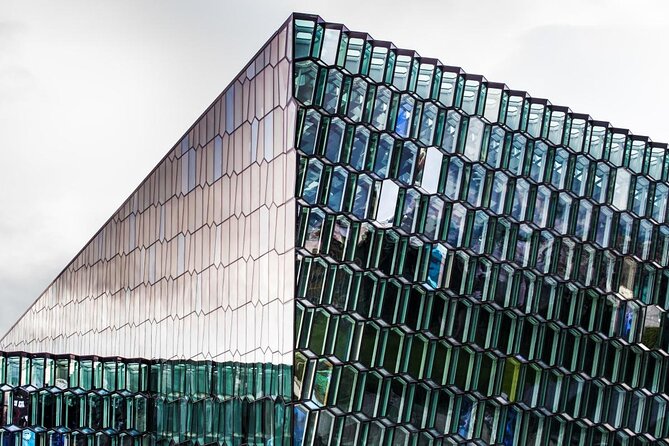
Harpa Concert Hall and Conference Centre is one of the most striking modern buildings in Reykjavík. It’s designed with strong artistic branding tied to Ólafur Elíasson and a Danish–Icelandic architectural mix. The stop is listed at 10 minutes, and admission is marked as free.
Here’s the key detail: the route sometimes changes, so you cannot count on a guaranteed stop at Harpa. Instead, you should think of Harpa as a likely highlight and then plan a quick self-guided walk nearby if it doesn’t happen as a formal stop.
In practice, this flexibility is a fair trade in cold weather. Guides can adjust when conditions change or when timing gets tight. The tour still ends at a place where Harpa is within walking distance, so you’re not left stranded.
Photo tip: Harpa is great for architecture shots, but it also rewards eye-level walking. If you’re bundled up, take your gloves off for the lens moments and put them back on fast.





Old Harbour and the Fishing Story: Why Reykjavík Grew Up Fast
Next up is Old Harbour, where the tour focuses on the history of the old harbor and the fishing industry. You’ll get about 10 minutes here, and the stop is marked as free.
This segment is valuable because it explains Reykjavík’s practical roots. People often arrive thinking the city is all modern culture and design. The harbor angle reminds you that the economy, everyday life, and even neighborhood layouts grew from fishing and maritime work.
If you want to understand why certain areas feel built for movement—loading, loading, loading—this is your clue. Later, when you’re exploring on your own, you’ll notice how the city connects to its coastline history.
Alþingi at Parliament House: Iceland’s Politics, Explained Simply
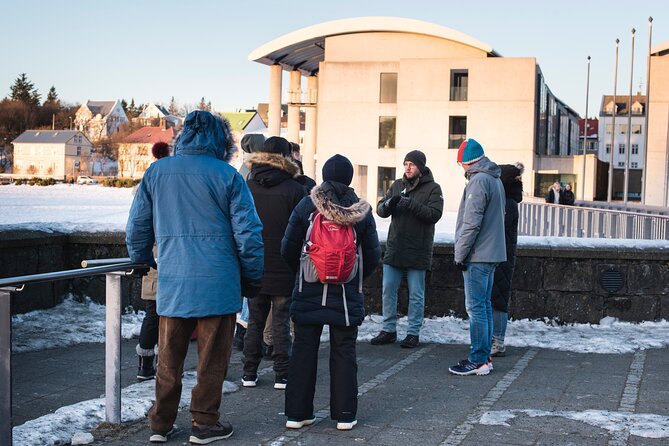
The tour then moves to Parliament House (Althingishus). This is another 10-minute stop with free admission listed, and it’s where you’ll learn about Iceland’s politics and key historical background.
This part can go two ways on walking tours: either it turns into dates and names, or it becomes a story about power and independence. The best guides keep it conversational. The goal is that you come away understanding what Alþingi represents in Iceland’s national identity—not just that it exists.
What helps here: you’re walking through the city center while the guide connects past decisions to present-day Reykjavík. It’s easier to remember politics when it has a location attached.
Reykjavík City Hall by Tjörnin: Warm Indoors and a Map Moment
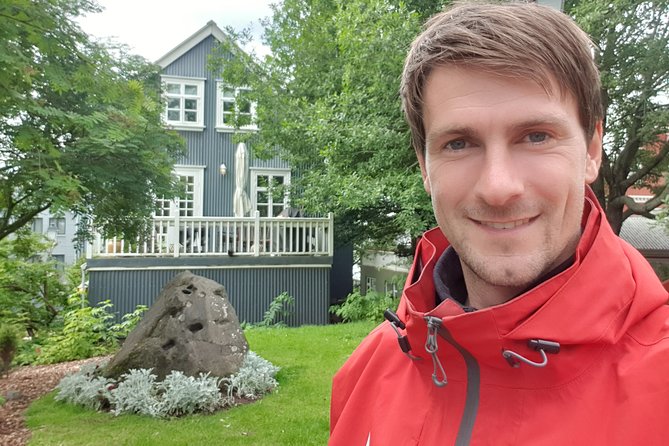
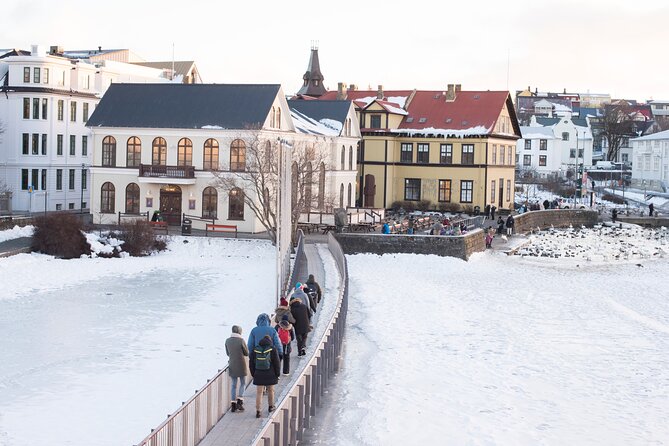
Near the end, you’ll reach Reykjavík City Hall. The building sits by the lake area at Tjörnin, and the tour is set up to include a photo stop and, in cold weather, an indoor stop. This stop is listed at about 10 minutes with free admission, and the experience notes that inside you’ll find a big map of Iceland.
This is one of the smart parts of the tour. Outdoors in Iceland can be brutal. City Hall gives you a chance to warm up, and the map is a practical visual tool for your broader Iceland plan. You can look at the country, not just the city, and start mentally placing what you want to see next.
Your tour ends either in the main square Austurvöllur or by the lake Tjörnin where City Hall is located. Either ending point is convenient for continuing your day on foot.
Guides Make or Break It: What You Can Expect About the Tone
The tour lives and dies by the guide’s delivery. The best feedback highlights guides like Ryan, Martyn, Barbara, Martin, Asta (pronounced like Ousta in at least one review), Edda, Eric, Ari, Vill, and Thomas. The common thread: humor, flexible pacing, and a willingness to answer questions.
There’s also a practical approach that shows up in how guides operate. Guides may check in directly for questions and comments. If you want more detail on settlement history, architecture, or what to do next, this is your chance to steer the story.
If you prefer a quieter walk with minimal interaction, this may feel a bit more “chatty” than you expect. On the other hand, if you love asking why something matters, this tour is set up for that style.
Walking Pace and Distance: When Short Feels Good
The tour is billed as a walking tour, but don’t expect a long hike. It’s a compact city-center circuit. Some people describe the total walking distance as relatively short—roughly around a mile in total—because the emphasis is on stops and explanations rather than covering ground.
What that means for you: you’ll come away oriented, not exhausted. This is ideal if you’re arriving from a flight, dealing with jet lag, or simply want to stay warm and efficient.
Also, you’ll spend time at locations that matter most for sightseeing flow: church first, then central cultural streets, then harbor history, then civic and political anchors.
Who This Tour Is Best For (and Who Might Want More)
This tour is a strong fit for:
- First-time visitors to Reykjavík who want to get bearings fast
- Travelers who like architectural and civic context, not just big photo spots
- People traveling in a small group or with kids who still want the day to feel structured
You might want something else if:
- You’ve already toured the city center in depth and want deeper neighborhoods outside the core
- You want Harpa as a guaranteed formal stop no matter what (the route can change)
- You’re hoping for a long walking marathon with lots of ground covered
Price and Value: Is $53.21 Worth It?
At $53.21 per person for about two hours, the math works best if you treat the tour as an orientation tool. You’re paying for a local professional guide and for time savings.
In practical terms, here’s what you buy with your ticket:
- Multiple major Reykjavík landmarks in one outing
- A guided explanation of why each place matters
- A small-group environment where questions are realistic
- At least one indoor warm-up option at City Hall if the weather is cold
If you plan to explore the city center anyway, this tour can function like a shortcut. You’ll likely feel more confident picking the next places to visit on your own, because you’ll understand what you’re looking at.
Should You Book This Reykjavík CityWalk Walking Tour?
I’d book it if you want a first-day plan that’s easy to execute, helps you understand Reykjavík quickly, and keeps the pacing friendly. The small group size, the lineup of iconic stops, and the chance to get inside City Hall when it’s cold make it a smart use of limited time.
Book it early in your trip planning window if you can. The experience is commonly reserved well ahead, and you don’t want to arrive and find no convenient time slots.
One final tip: bring warm layers, and if you own a lopi sweater, wear it. Iceland weather doesn’t care about your itinerary, but good clothing lets you enjoy every stop instead of rushing through them.
If Harpa is your top priority, don’t stress. Even when the formal stop shifts, you’ll still finish close enough to handle a quick self-guided photo session.
FAQ
How long is the Reykjavík Small Group Walking Tour?
It lasts about 2 hours.
What’s the group size for this tour?
The maximum group size is 12 travelers.
Where does the tour start and end?
It starts at Hallgrímstorg 1, 101 Reykjavík. It ends in the main square Austurvöllur or near Tjörnin by Reykjavík City Hall.
Is the tour offered in English?
Yes, it is offered in English.
Is admission included for the stops?
Admission is listed as free for the stops included in the experience.
Is hotel pickup or drop-off included?
No. Hotel pickup and drop-off are not included.
Does the tour run in bad weather?
Yes. It operates in all weather conditions, so you should dress appropriately.
Will I stop at Harpa Concert Hall?
The route can change, so a stop at Harpa isn’t guaranteed, though the tour ends within walking distance of Harpa.
What is included in the ticket price?
A local professional guide is included.
Can I cancel for a full refund?
Yes, you can cancel for a full refund up to 24 hours in advance of the experience start time.