REVIEW · THINGVELLIR NATIONAL PARK
Thingvellir: Silfra Freedive Adevnture with a Guide
Book on GetYourGuide →Operated by Freedive Iceland · Bookable on GetYourGuide
Cold water, clear mind, big views.
At Thingvellir National Park, this guided Silfra free-breath-hold session takes you into water with 100-meter visibility between North America and Europe, with a 7mm wetsuit so you can focus on the experience instead of the cold. The place is famous for a reason: it’s a crack in the earth you can actually move through, calmly, under world-class clarity.
Two things I really like: the expert guide who keeps you moving at a safe pace, and the chance to float/swim in a fissure where you get both the science and the wow-factor. Even with a busy site, your small group setup means the water time feels more personal than you’d expect.
One consideration: this is physical. You need to be in physically good condition, comfortable in the water, and able to swim, and it’s not suitable for people with certain health issues or mobility limits.
In This Review
- Key things to know before you go
- Silfra: Where Two Continents Split Under Your Feet
- Getting Geared Up at Thingvellir’s P5 Parking Lot
- The 3-Hour Flow: From Safety Brief to Silfra Fissure
- What 100-Meter Visibility Looks Like in the Real World
- Price and Value: $227 for Gear, Entry, and a Warm Finish
- Who This Guided Silfra Session Is Best For (and Who Should Skip It)
- Practical Tips for First-Timers Who Know How to Swim
- Should You Book a Guided Silfra Breath-Hold Session?
- FAQ
- Where is the meeting point?
- How long is the tour?
- What’s included in the price?
- What should I bring?
- Who is this tour not suitable for?
- Is there a cancellation option?
Key things to know before you go
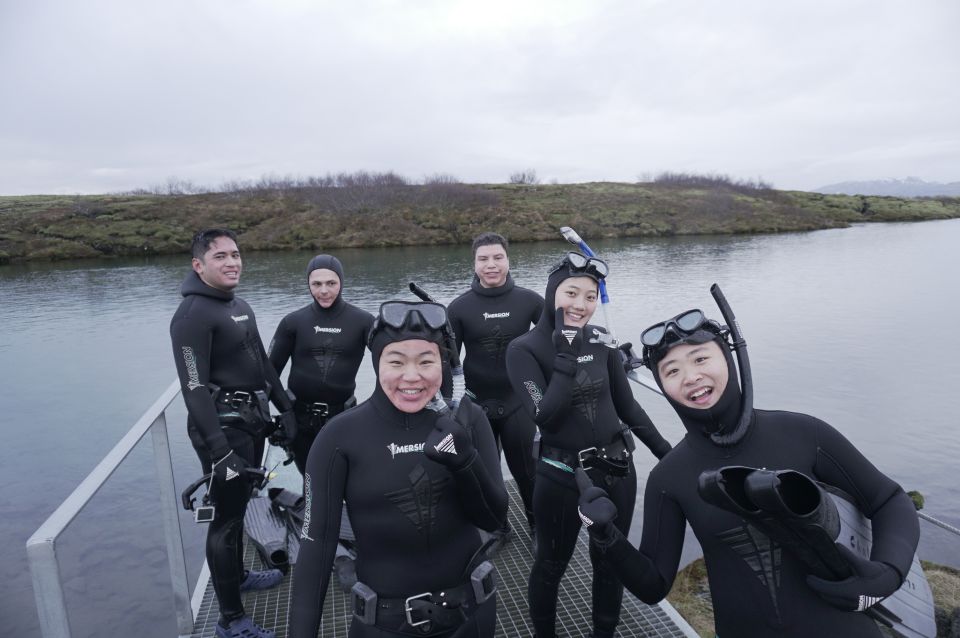
- Small group size (max 6) helps you feel like you’ve got more space once you’re on the water
- 100+ meter visibility makes the tectonic-plate setting look almost unreal
- 7mm open-cell wetsuit + dryrobe overcoat keeps you warm during and between sessions
- Guide-led safety and pacing lets beginners manage breath-hold comfort
- Hot chocolate at the end is a simple, practical reward after the cold water time
Silfra: Where Two Continents Split Under Your Feet
Silfra sits inside Thingvellir National Park, and the whole setting is about tectonic plates. One side of you belongs to North America’s plate. The other side belongs to Europe’s. In the water, that “split” turns into something you can see and move alongside, which is a rare feeling. You’re not just looking at a map—you’re in the same natural structure people come to study.
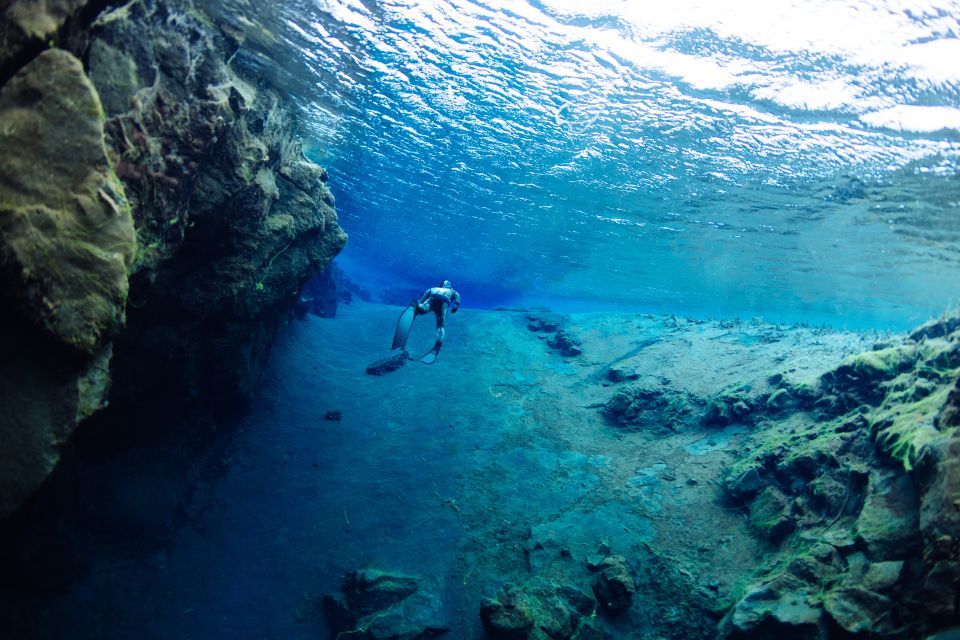
What makes this experience especially memorable is the clarity. You’re told to expect visibility over 100 meters, and that clarity changes everything. Instead of muddy silhouettes, you get sharp underwater lines, walls, and depth cues. It’s the kind of view where you can understand the space you’re in, which helps first-timers stay calm.
And because it’s a breath-hold activity (not a rushed routine), you can go at your own pace. That matters in a place like Silfra, where the environment is cold enough to make impatience your enemy.
Getting Geared Up at Thingvellir’s P5 Parking Lot
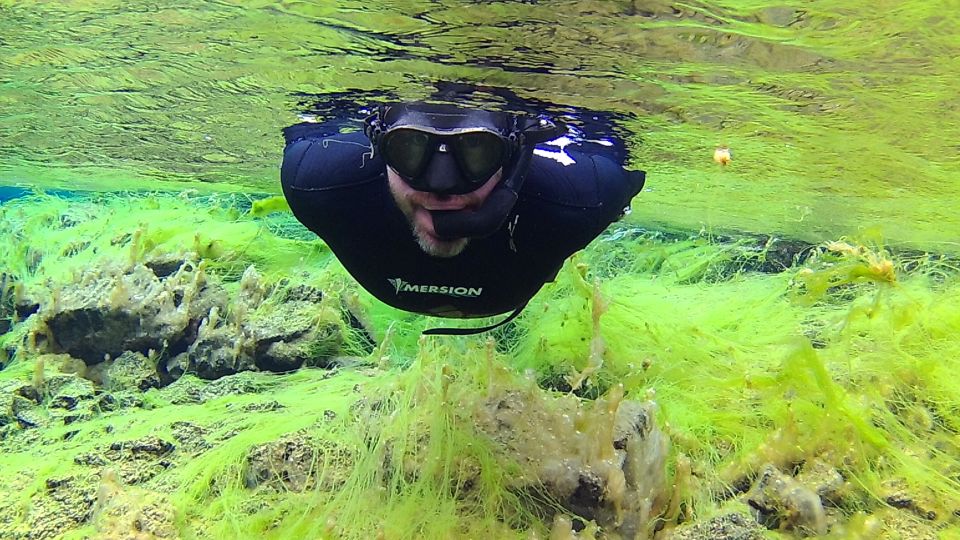
Your start point is straightforward: Thingvellir National Park, Thingvellir P5 parking lot. Park your car there, then walk about 300 meters to the vans. Look for the vehicles with the Freedive Iceland logo on the sides.
When you arrive, you’ll use the van as a changing base. You leave your belongings inside and focus on getting set up. This is a small-but-important detail. Iceland weather is real, and less time shuffling around in wet gear means you arrive to the water calmer and warmer.
You’ll meet your guide, then get your route and safety briefing before any water time. After that, you’ll put on an open-cell 7mm wetsuit and your equipment. There’s also a dryrobe overcoat you can wear anytime you’re not in the water. That’s practical in a couple ways: it keeps your core warm while you wait, and it also makes the “getting out” phase less miserable.
Comfortable shoes and comfortable clothes are the basics. Bring a camera if you want one, but remember: cold water and fog-prone gear can make photography tricky, so keep expectations realistic.
The 3-Hour Flow: From Safety Brief to Silfra Fissure
This tour runs about 3 hours total, and the timing is built around getting you ready properly and keeping your group moving safely.
Here’s how the flow typically feels:
- Meet and brief
You’ll talk through the route and the safety requirements with your guide before you suit up. If you’re nervous, this is where your questions get answered. In at least one case, the guide’s style included direct, bold humor—exactly the kind of tone that can make first-timers relax.
- Suit up, then gear check
You’ll get into the open-cell 7mm wetsuit and the rest of the equipment. You’ll also grab the dryrobe overcoat for warmth on land. Once your group is ready, you’ll head to the staircase.
- Enter the water and move at your pace
You’ll get into the fissure and go through Silfra at your own speed. You can stay in the water as long as you like within the activity’s safe structure, which is one of the reasons people rate this so highly. You’re not forced into a single rigid timeline that turns your first breath-hold into a stressful race.
- Back to warmth and hot cocoa
After the water time, you walk back to the changing van and warm up with hot chocolate. It’s a small finish, but it hits right. You’ll be cold in the best possible way, and that hot drink helps you recover without needing to scramble for refreshments.
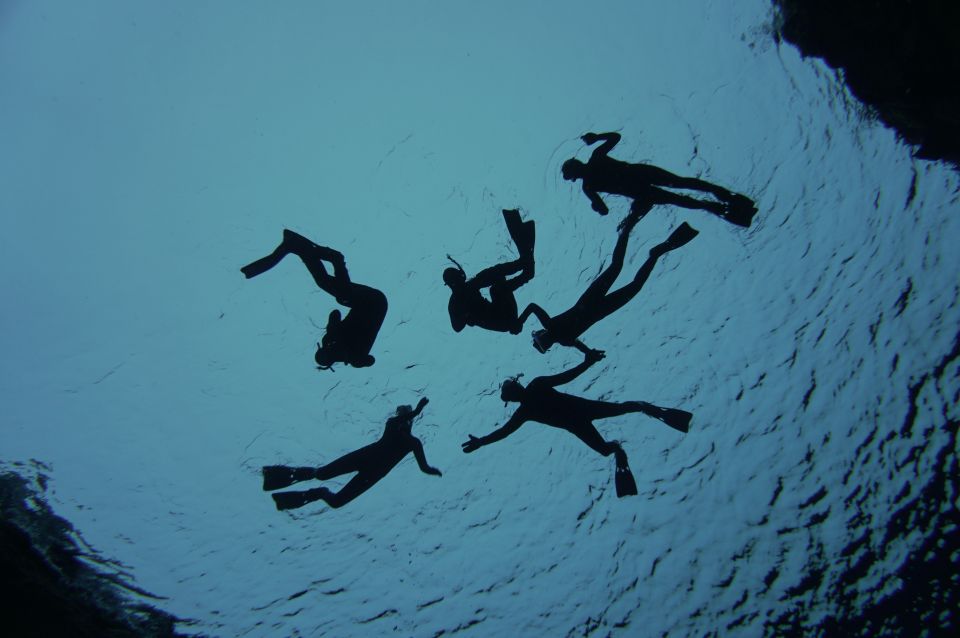
One more practical detail: your group is limited to 6 participants. Even if there are other people at the site, once you’re in the water and with your smaller group, the experience feels more controlled and less crowded than it might from shore.
What 100-Meter Visibility Looks Like in the Real World
On paper, “visibility over 100 meters” sounds like marketing. In practice, it’s the difference between seeing “water” and seeing space.
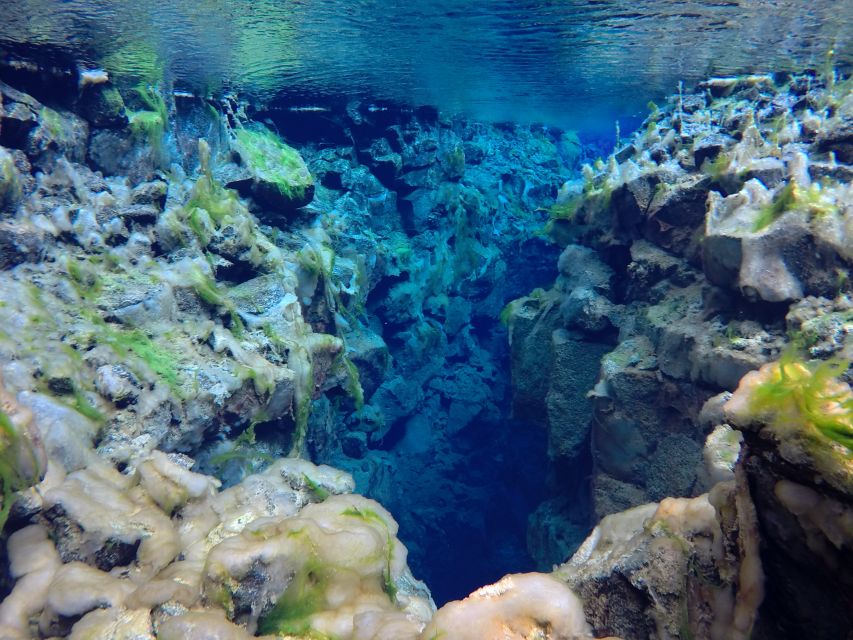
In Silfra, that clarity turns the fissure into something you can read visually: edges, depth changes, and the way the ravine narrows and opens up. That matters for breath-hold comfort too. When you can see what’s around you, you can relax your body. Less panic. Better awareness. More enjoyment.
Also, the guide matters here. A good guide doesn’t just say go. They help you manage the sequence—breathing, comfort, and pacing—so you don’t feel like you have to prove anything. One of the strongest themes from feedback is exactly that: clear instruction and real help during the session.
If you’re the type who gets nervous before water activities, you’ll probably appreciate the structure. You’ll get time to get ready, then enter when your group is set. That reduces the awkward waiting and the sense that you’re the only one unsure.
Price and Value: $227 for Gear, Entry, and a Warm Finish
At $227 per person, this isn’t a bargain activity. But it’s also not just paying for access to water. Your price includes several things that add up fast on your own: a bilingual guide (English and Icelandic), entry fees, diving/breath-hold gear, the wetsuit, a dryrobe overcoat, and hot cocoa.
What you don’t get is hotel pickup and drop-off. So you’ll want to factor in your own transport to Thingvellir. If you’re already driving through the area, that’s manageable. If you’re relying on transit or long shuttles, plan extra time.
Here’s the value logic I’d use to decide:
- You’re paying for safety + coaching, not just scenery.
- You’re paying for proper cold-water equipment and warm cover-ups.
- You’re paying for access to a specific natural feature where quality matters.
For many people, that combination is exactly what makes the price feel fair. Especially if you’re a first-timer who would otherwise struggle to find a safe setup on your own.
Who This Guided Silfra Session Is Best For (and Who Should Skip It)
This is listed as not suitable for quite a few groups, and that’s worth taking seriously. You should only book if you meet the physical and comfort requirements.
You need to be:
- in physically good condition
- comfortable in the water
- able to swim
And it’s not suitable for:
- children under 12
- pregnant women
- people with back problems
- people with heart problems
- wheelchair users
- non-swimmers
- people over 65
- people over 6 ft 6 in (200 cm)
- people under 88 lbs (40 kg)
- people under 4 ft 8 in (145 cm)
- people over 280 lbs (127 kg)
That’s a lot of limits, but they’re not there to be picky. Cold-water breath-hold activities require a clear baseline fitness and safety margin.
If you’re a swimmer who handles cold water reasonably well, this can be a great first breath-hold experience—especially with a guide who keeps things organized and calm. People also mention that the group can include mixed experience levels, and the structure helps everyone enjoy it.
Practical Tips for First-Timers Who Know How to Swim
If you’ve snorkeled before or done scuba, you still might feel different here. Breath-hold is its own skill, and cold water adds a second layer. A few practical points can make your session smoother.
1) Arrive ready for the cold
You’ll be in and out of the water, and you’ll rely on the dryrobe overcoat and wetsuit for most warmth between moments.
2) Don’t fight your group’s rhythm
The experience is paced by your guide and adapted to the group. If you try to “win” against the clock, you’ll likely feel more stress than fun.
3) If you’re used to fins, think about length
One participant noted that they used regular fins they were familiar with and wished they’d used longer free-breath-hold style fins instead. I’d take that as a hint: if you have a choice in fin type for your setup, consider what tends to work best for breath-hold swimming rather than just general snorkeling.
4) Use your camera like a tool, not a mission
A camera is allowed, but Silfra conditions and gear fog can turn picture-taking into frustration. If you want photos, think quick and simple. If you don’t, spend the time just watching.
5) Keep your body in the safe zone
Avoid alcohol and drugs. This also includes not drinking alcoholic drinks in the vehicle. It’s a safety boundary and a comfort boundary.
Small humor help matters too. One review highlighted the guide’s direct sense of humor, which can take the edge off right when you’re getting ready to get in.
Should You Book a Guided Silfra Breath-Hold Session?
If you want an Iceland activity that blends science (tectonic plates) with a rare sensory experience (100-meter clarity), this is an excellent pick. The guiding is a big part of why it works for first-timers. You’re not left to guess how to handle breath-hold pacing in cold water.
I’d say book it if:
- you know how to swim
- you’re comfortable in cold water for short periods
- you want a structured, coached experience with a small group
- you like nature that you can actually move through, not just stand and view
I’d skip it if:
- you’re outside the health or fitness limits
- you’re not comfortable in the water
- you’re expecting a casual, zero-effort outing (this has real physical requirements)
Overall, the combination of expert guidance, warm gear, and incredibly clear water is what makes this stand out. If that sounds like your kind of trip, Silfra is worth making time for.
FAQ
Where is the meeting point?
Meet your guide at Þingvellir National Park at the Thingvellir P5 parking lot. From there, you walk about 300 meters to the dive vans. Look for vans with the Freedive Iceland logo on the sides.
How long is the tour?
The activity lasts about 3 hours.
What’s included in the price?
It includes a bilingual guide, entry fees, diving/breath-hold gear, a wetsuit, a dryrobe overcoat, and hot cocoa.
What should I bring?
Bring comfortable shoes, a camera, and comfortable clothes.
Who is this tour not suitable for?
It’s not suitable for children under 12, pregnant women, people with back problems or heart problems, wheelchair users, non-swimmers, people over 65, people taller than 200 cm, people under 40 kg or under 145 cm, and people over 127 kg.
Is there a cancellation option?
Yes. You can cancel up to 24 hours in advance for a full refund.