REVIEW · REYKJAVIK
Chasing Aurora Borealis with Warmth and Treats in Premium Tour!
Book on Viator →Operated by Enjoy Iceland Tours · Bookable on Viator
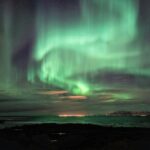
Midnight in Reykjavik can be magic. This late-night small-group minibus aurora hunt takes you away from city light and keeps you warm with hot chocolate and Icelandic pastries. The catch is simple: the aurora is never guaranteed, so on a bad night you can spend time driving and waiting.
I like that they handle the basics for you: hotel pickup and drop-off, an English live guide plus audio, and a tight group size (max 19). You’re signing up for a guided search that lasts about 3 to 5 hours, depending on when the sky decides to cooperate.
In This Review
- Key Points That Matter Before You Go
- Leaving Reykjavik’s Glow Behind
- Warm Treats Make the Waiting Bearable
- Pickup, Timing, and That 1 a.m. Feeling
- Inside the 3 to 5 Hour Aurora Hunt
- Your Guide: Science, Camera Tips, and Persistence
- Photo Reality Check: Tripod Matters More Than You Think
- Weather Is the Main Character (And That’s Not a Cop-Out)
- Minibus Comfort vs. the “Bigger Bus” Tradeoff
- Value and Cost: Is $249 Reasonable?
- Who This Tour Is Best For
- Should You Book This Reykjavik Aurora Borealis Tour?
Key Points That Matter Before You Go
- Small-group setting (max 19) helps you move faster and stay calmer during the hunt
- Hotel pickup and drop-off means you’re not figuring out nighttime buses in the cold
- Hot chocolate plus Icelandic treats take the edge off the standing-around time
- Your guide’s persistence can make the difference when aurora activity is weak
- Trip length can stretch to 5 hours depending on cloud gaps and aurora timing
- Tripod advice is real if you want phone or camera shots that aren’t blurry
Leaving Reykjavik’s Glow Behind
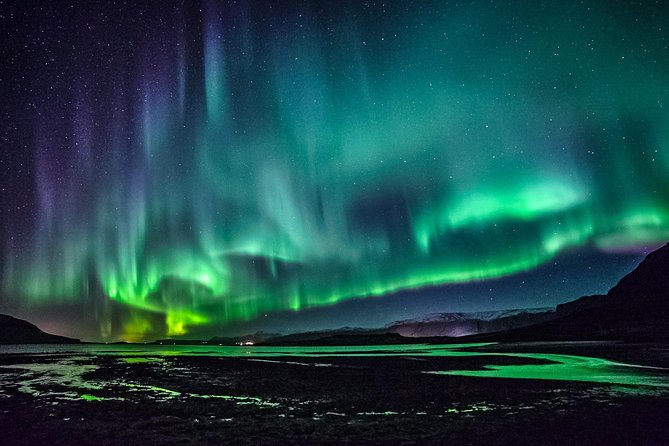
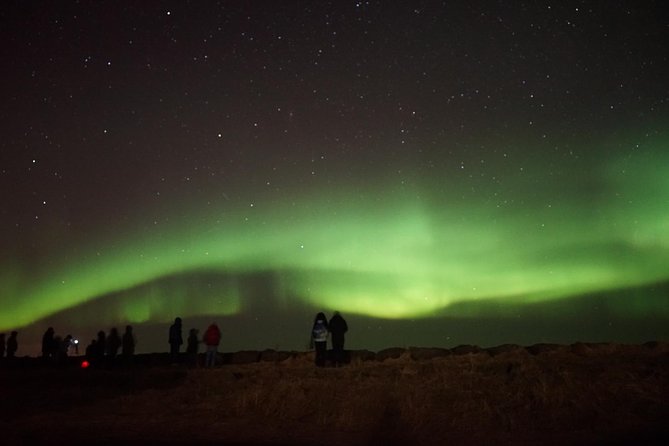
The whole point of this tour is getting you out where your eyes have a chance. Reykjavik is bright enough to dull the aurora, so the plan is to put you in darker countryside with the guide steering the search.
Expect a long, late night rhythm. You’ll drive out from the city, stop in a few places while the sky is checked, and then settle somewhere quieter if conditions improve. One thing to be aware of: sometimes stops are at pull-offs or roadside viewpoints. If headlights and passing cars are in view, they can make the aurora harder to see, even when you’re close.
You can also read our reviews of more tours and experiences in Reykjavik.

Warm Treats Make the Waiting Bearable
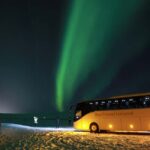
This is one of those tours where the “waiting part” is built in. And that’s why I’m glad they feed you. You’ll get hot chocolate made with chocolate plates and milk, plus Icelandic pastries such as Kleinur (donuts) or Kanilbollur (cinnamon buns).
Think of it as practical comfort, not a luxury extra. When you’re cold, you stop paying attention. Warm drinks and sugar help you keep your focus on the sky instead of your fingers.
Pickup, Timing, and That 1 a.m. Feeling
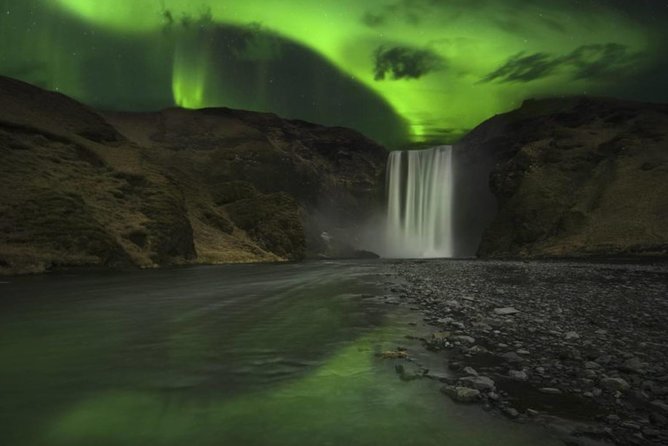
Pickup is offered at Reykjavik hotels, hostels, guesthouses, private homes, and similar stays. In some cases you might need to walk to the nearest bus stop, and your hotel reception can help you find it. Either way, the tour company sends a reconfirmation email 6 to 24 hours before with the pickup time and location, and you should check for updates again up to 1 hour before.
One more real-world note: pickup can take up to 30 minutes because they’re collecting multiple people. So don’t plan a tight schedule right before the pickup window. Build in time to be ready, warm, and waiting.
Your return is usually late—often after midnight. That’s part of the deal with aurora chasing in Iceland.
Inside the 3 to 5 Hour Aurora Hunt
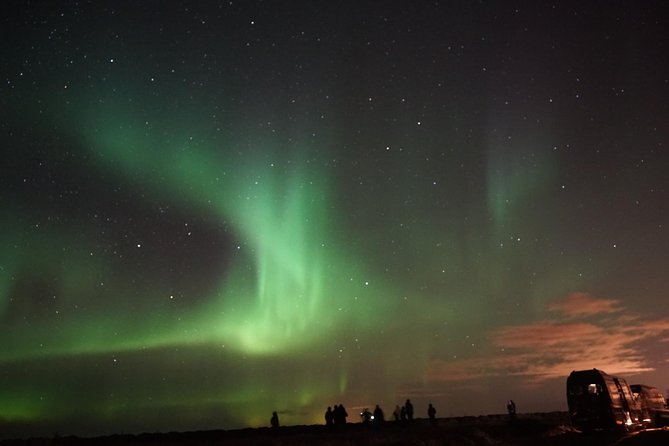
The tour runs about 3 to 5 hours. The company keeps it limited, but it can take longer than 3 hours because aurora appearances are unpredictable. The guide’s job is to keep moving until they find a better chance, usually by looking for gaps in cloud cover and darker skies.
In practice, this means the night may feel like:
- driving out quickly to escape city light
- scanning and stopping as conditions change
- repeating the hunt until the sky gives you something worth seeing
When it clicks, it can be breathtaking. Some guides are described as persistent to the end—one guide named Marc was praised for continuing right to the last stretch of the tour. Maggi (also referenced as Magnus, often called Maggi) is another name that shows up again and again for pushing for sightings even when aurora strength looks low at first.
When it doesn’t click, you’re still getting value in a different way: expert searching in the right areas, instead of you driving yourself with guesswork and a frozen dashboard.
Your Guide: Science, Camera Tips, and Persistence
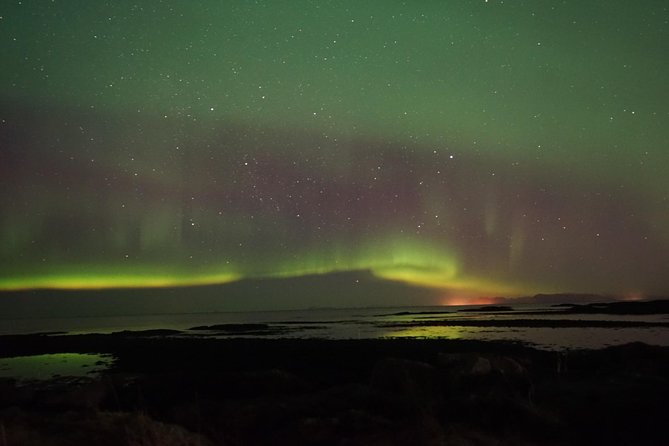
This tour leans heavily on the guide experience. You get both English audio and a live English guide, and the best guides use the time to explain what they’re looking for and how to improve your odds.
A common thread in the guide stories is persistence. Maggi, for example, is repeatedly described as knowledgeable, helpful, and determined to keep searching until the sky cooperates. Magnus (Maggi) is also mentioned as an experienced driver and guide who managed to find multiple sightings through cloud gaps during one challenging night.
You’ll also get practical instruction for photography. Even when aurora activity is weak, guides may talk you through settings and how to get better shots. On at least one occasion, a guide used personal equipment to capture a photo, with a nominal fee for the result. That’s not guaranteed for every night, but it’s a good reminder: bring a tripod if you have one, because it can matter for both phones and cameras.

Photo Reality Check: Tripod Matters More Than You Think
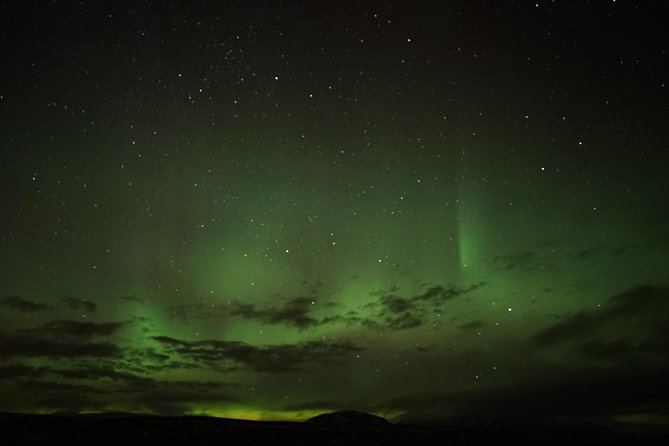
Tripods aren’t included, so if you own one, bring it. The tour explicitly notes that a tripod is very necessary for getting decent photos with phones and photo cameras.
Here’s the practical takeaway: low light + long exposure = blur risk. A tripod stabilizes everything while you wait for a dim, moving light ribbon to show up.
If you don’t have a tripod, you can still capture something—but your odds improve when you reduce camera shake. Also, let your eyes adjust to the dark. A photo might take a few minutes to show results, but your eyes can catch the aurora sooner if you’re not constantly checking your screen.
Weather Is the Main Character (And That’s Not a Cop-Out)
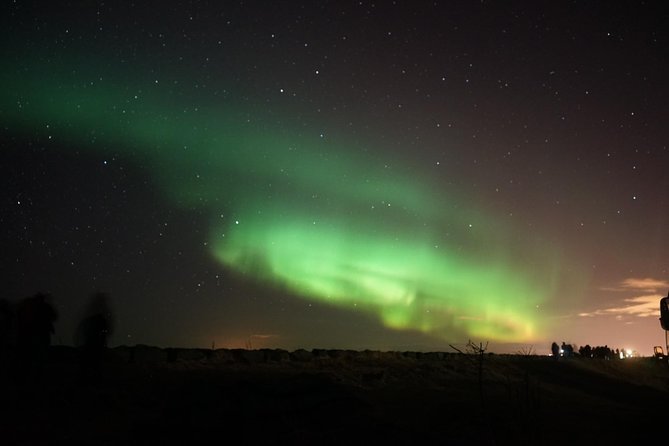
The tour is very weather-dependent. Seeing the Northern Lights is not guaranteed, even though the tour is operated. That means you’re buying a guided search—not a ticket to a specific light show.
The company also states the tour can be cancelled up to 1 hour before departure due to weather or unsafe conditions. If they cancel due to poor weather or circumstances beyond their control, you’ll be offered a different date or a full refund. After you’re out on the tour, refunds won’t be issued just because the sky didn’t cooperate.
What you can do is manage expectations and plan smart. I’d book for your first or second night in Iceland so you have a backup option if clouds win. Cold nights, wind, and cloud cover are common. Even strong aurora nights can be ruined by a thin layer of cloud at the wrong time.
Minibus Comfort vs. the “Bigger Bus” Tradeoff
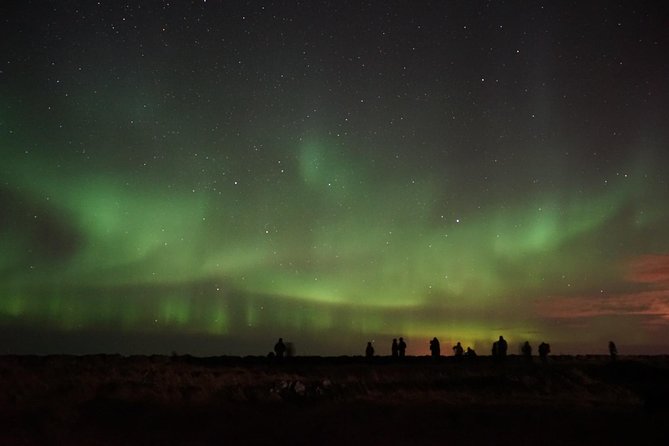
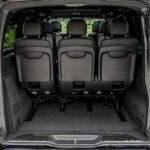
This tour caps at 19 people, and that’s a big deal for an aurora hunt. Smaller groups usually mean fewer delays when you need to pull over, get positioned quickly, and keep everyone together in the dark.
It also means you’re less likely to be stuck waiting while the logistics of large numbers slow the whole operation down. One of the clear comparisons people make is that huge tours can feel slower and less fun. Here, the setup is built for motion and flexibility.
Add in the practical comforts—minibus transport, pickup and drop-off, warm drinks, and a live guide—and $249 starts to make sense as a “pay for the system” choice. You’re not just paying to be driven. You’re paying for guided decision-making in a place where weather and cloud cover control the outcome.
Value and Cost: Is $249 Reasonable?
At $249, this is a premium aurora experience, but it’s not just because it’s late-night and Iceland is expensive. The value comes from a stack of small things that matter when you’re tired and cold:
- Pickup and drop-off so you’re not improvising transportation at midnight
- Small-group size (max 19) for quicker positioning
- Warm hot chocolate and Icelandic treats to keep you functioning
- Guide plus English audio so you understand what you’re seeing
- Multiple chances to find clearer skies within a 3 to 5 hour window
The main cost downside is what’s not included. Warm clothes, shoes, gloves, and a hat are on you. A tripod is not included either. If you’re traveling light and rely on what you packed for a milder climate, you’ll feel it fast.
Who This Tour Is Best For
You’ll enjoy this most if:
- you want someone else driving and searching so you can focus on the sky
- you like small-group experiences with a real guide presence
- you’re okay with uncertainty and the possibility of a weak or short aurora display
- you want photography tips and the option to upgrade your images if your guide offers it
It may be a bad fit if:
- you need a guaranteed show (no aurora tour can promise that)
- you’re very sensitive to cold and wind, because warm gear is not provided
- you don’t like late nights, since you’re returning after midnight
Families can participate too, with a minimum age of 5, and children must be with an adult.
Should You Book This Reykjavik Aurora Borealis Tour?
If you want a guided, small-group aurora chase with pickup, warm treats, and a guide who keeps searching when conditions are tough, I think this is a strong option. The biggest reason to book is the “system” advantage: leaving the city glow, staying together, and getting expert guidance instead of guessing.
Just don’t treat it like a guaranteed light show. Treat it like your best shot to chase the sky under real winter conditions. If you book for your first or second night in Iceland, you’ll have breathing room if weather changes the plan.