REVIEW · REYKJAVIK
From Reykjavík: 3-Day Tour of the Wild Westfjords
Book on GetYourGuide →Operated by Nicetravel · Bookable on GetYourGuide
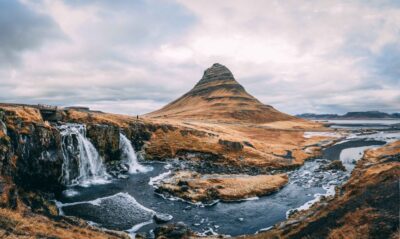
The Westfjords feel remote in the best way. This 3-day road trip strings together Dynjandi’s dramatic waterfall ladder and the seabird chaos at Látrabjarg, plus fjords, beaches, and wildlife without the hassle of planning a route on your own. I like that the day-to-day pace gives you real stops, not just photo pull-offs, but do note the main tradeoff: you’re in the minibus a lot, and Iceland weather can turn travel-time into a slow-and-steady game.
This is a small-group trip (up to 18) with an English-speaking guide, in a minibus, departing from Reykjavík with pickup between 08:30 and 09:00. I also appreciate the comfort angle: you get 2 nights in a private room with en-suite bathroom and breakfast, so you can focus on the scenery instead of hotel logistics. Guides like David and Halldor are specifically called out for friendly, nature-minded guiding and a good pace.
In This Review
- Key highlights worth planning around
- Getting to the Wild Westfjords: timing, group size, and what the van changes
- Day 1 in the Westfjords: Viking turf-roofs, Þingmanná Falls, and Krosslaug heat
- Day 2: Látrabjarg puffins, Rauðasandur walks, and Dynjandi’s seven-step power
- Day 3: Bolafjall skywalk, Ósvör fishing village, and the Seven Fjords Road
- Wildlife spotting: how to enjoy foxes and seals without chasing guarantees
- Price and value at about $1,142: what you really get, and what you still pay for
- Practical tips that make or break the trip
- Should you book the Westfjords road trip from Reykjavík?
- FAQ
- What time is pickup in Reykjavík?
- Is the tour guided, and what group size is it?
- What’s included in the tour price?
- Are lunch and dinner included?
- What should I wear for the Westfjords?
- What happens if a ferry ride gets canceled?
Key highlights worth planning around
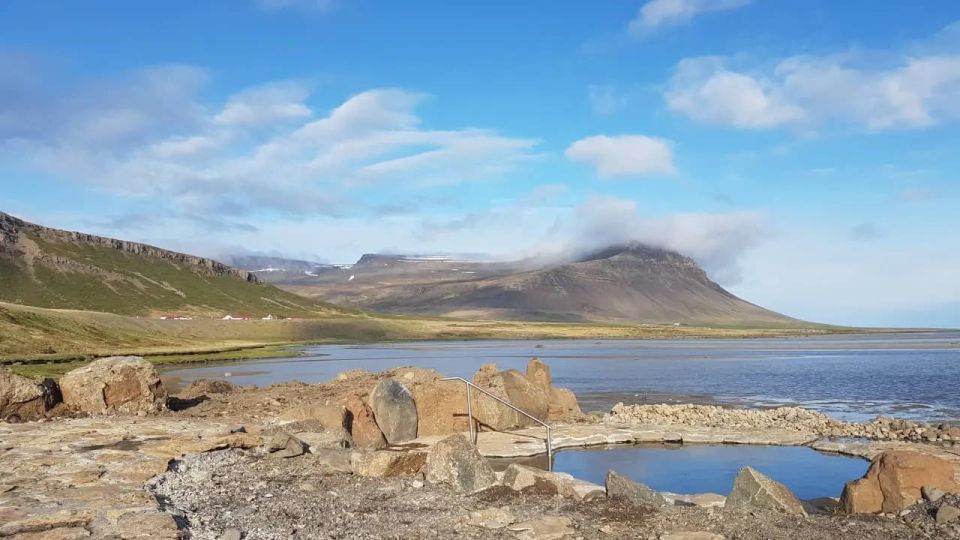
- Seven Fjord Road: Big, uninterrupted views as the route threads up and down seven fjords
- Dynjandi: A seven-step cascade that feels like a waterfall stairway
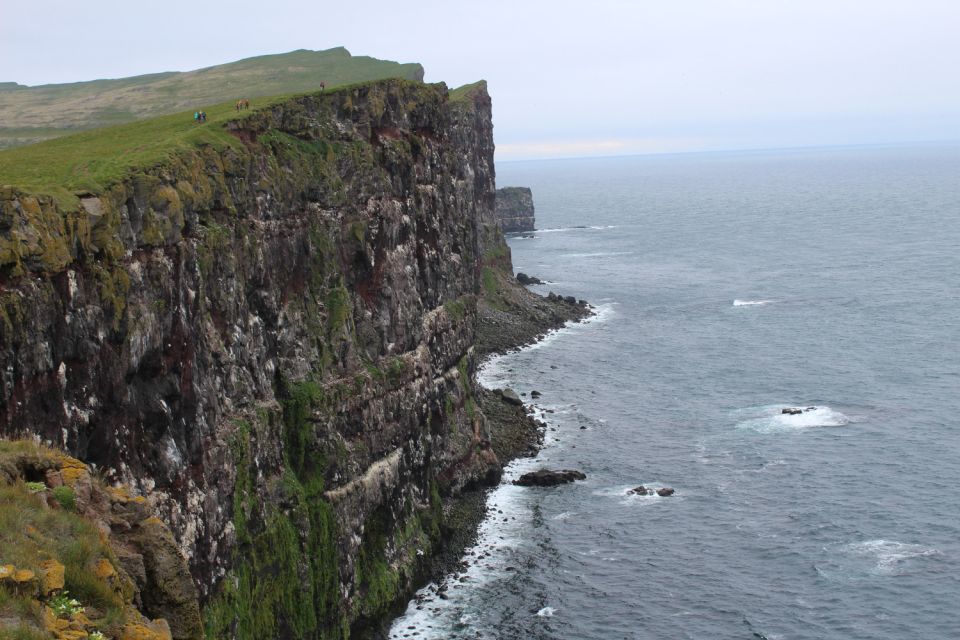
- Látrabjarg bird cliffs: Puffins and other seabirds at Iceland’s westernmost edge
- Rauðasandur / multicolored sands: A beach walk that’s more color and texture than postcard
- Arctic fox and seals: Wildlife spotting with a backup plan for foxes
Getting to the Wild Westfjords: timing, group size, and what the van changes
The trip starts with Reykjavík pickup (08:30–09:00). Pickup happens from designated city bus stops, depending on where your hotel is located in the center, and the exact meeting point gets confirmed after booking. You should plan to be ready from 8:30, since Iceland time is polite but buses do not wait forever.
You’re traveling in an English-guided minibus for three days. With a max of 18 people, you’ll generally feel like you’re on a road trip with a small crew rather than herding people. The group size matters in the Westfjords, where many sights are along narrow roads and parking is limited.
Two comfort details are worth noting early: free Wi‑Fi on the bus and USB chargers by every seat. When you’re scanning for weather updates, mapping your own dinner plans, or just keeping your phone alive, those small comforts add up.
One practical thing I’d watch: this tour runs under all weather conditions, and you’ll be moving even when wind is doing its thing. Bring warm layers and windproof, waterproof outerwear. Think “I can stand still and wait for clouds to clear,” not “I’m dressed for a calm day.”
You can also read our reviews of more tours and experiences in Reykjavik

Day 1 in the Westfjords: Viking turf-roofs, Þingmanná Falls, and Krosslaug heat
Day 1 begins in Reykjavík with a drive out to Borgarnes and a quick hit of Viking-era Iceland at Eiriksstaðir, a turf-roofed heritage site tied to Eirik the Red and Leif the Lucky. This is one of those stops that helps you connect the dots: West Iceland isn’t just dramatic coastlines, it’s also an old story of settlement and survival in tough terrain. The entry fee is included, which keeps the “what costs extra” stress low.
From there, you shift into coastal scenery, including cliffs at Breiðafjörður—the gateway feeling that the Westfjords are about to get serious. The route is built for sightseeing, with opportunities to pull over and look. You’re not just watching Iceland pass by; you’re getting time to actually absorb it.
Next up is the Vatnsfjörður Natural Reserve, home to Þingmanná Waterfalls and a canyon. The value here is the variety: you get waterfalls, then geology, then coastline mood. It’s also a reminder that the Westfjords are less about curated attractions and more about natural forces doing their work—water carving rock, and weather shaping everything in between.
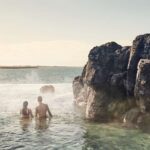
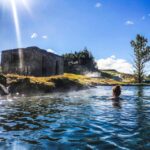
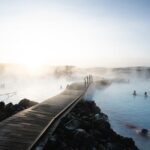
A beach stop at Birkimel Bay adds a different texture to the day. You can also choose to try the optional Krosslaug swimming pool: a natural pool run by a local youth association. If you go in, you’re dealing with geothermal warmth right in a raw coastal setting, and you’ll see people using the donation box approach (optional, cash donation in any currency). I like that the pool ties fun to local community support, even if you skip the swim.
The final stretch for the day includes crossing the Kleifaheiði mountain range. You’ll pass Kleifabúi, a 5-meter stone statue created by engineers connected to building the mountain road. It’s not a must-see in the way a big glacier is, but it gives you perspective on human effort in remote places—someone had to build the road you’re using to see all this.
Day 2: Látrabjarg puffins, Rauðasandur walks, and Dynjandi’s seven-step power
Day 2 is the “wild coast, big birds, and waterfall drama” day.
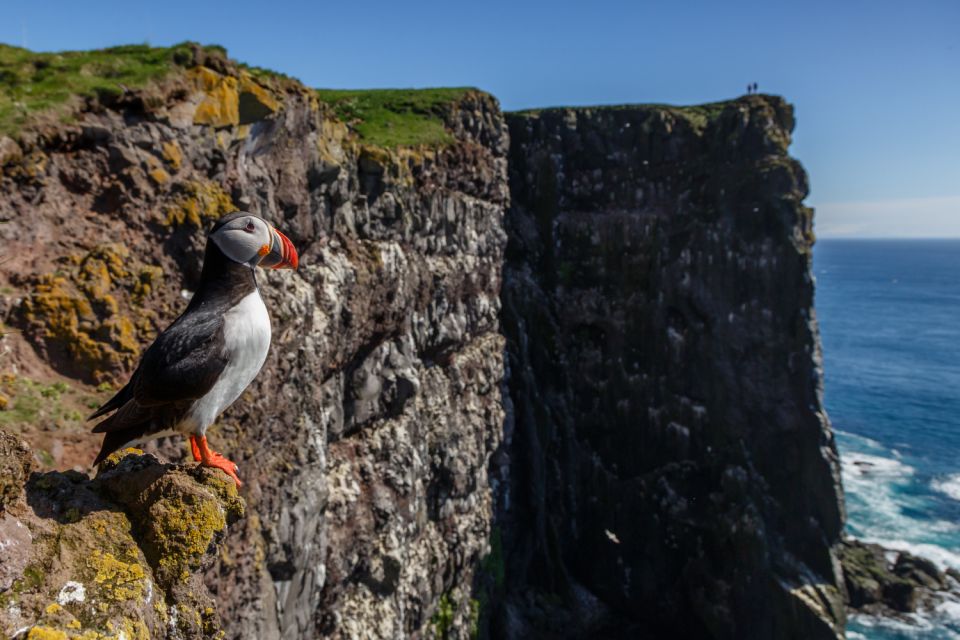
You start with Látrabjarg, one of the best places in the Westfjords for bird spotting. This is the westernmost point in Iceland, and in summer the cliffs host thousands of seabirds. Puffins are the headline, but you’ll also be watching for other species like cormorants and fulmars. The stop can be cold and windy, so your best strategy is dressing for being still. Bring something you can keep zipped and layered.
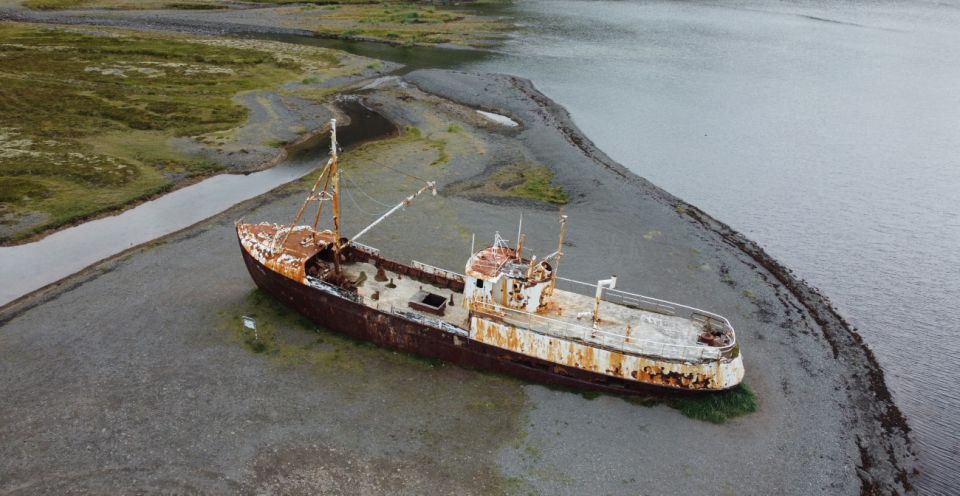
On the way, there’s also mention of the Garðar shipwreck. That’s the kind of roadside detail that gives extra context to why these cliffs are both fascinating and dangerous.
Then you shift to Rauðisandur (often described alongside Rauðasandur), where you can walk the multicolored sands. This is not a long trek; it’s a beach walk, and that makes it a great break from cliff viewpoints. The payoff is the way color plays against ocean gray. If you’re the type who loves visual texture (not just big views), you’ll likely enjoy this stop a lot.
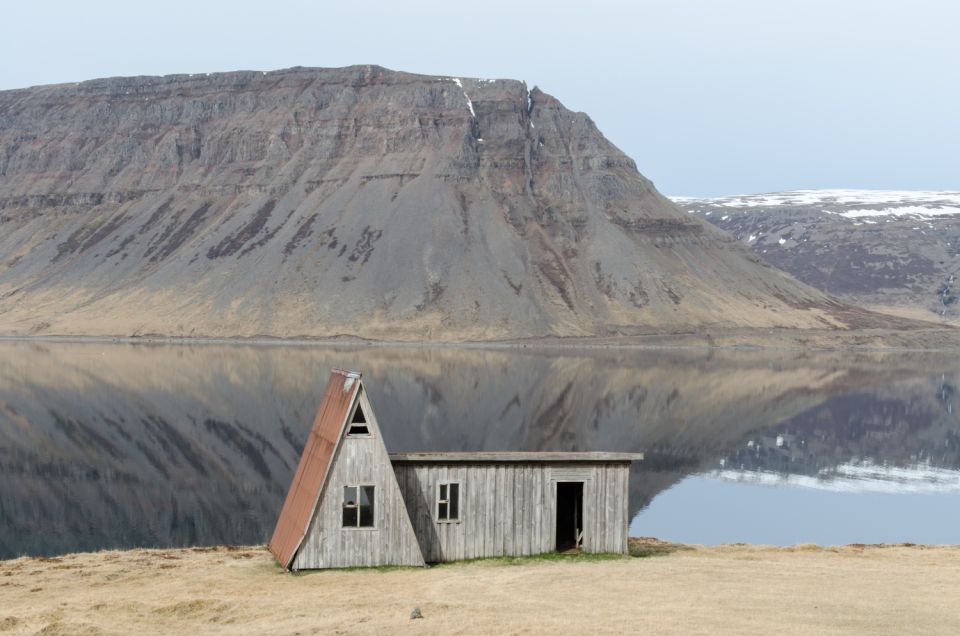
After the beach, you look toward Fossfjörður waterfall and the iconic A-House. This is a classic Westfjords pairing: human landmarks and natural features, close enough together that you can keep your eyes moving and build a mental picture of how the coast is arranged.
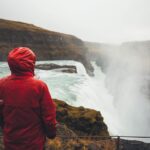
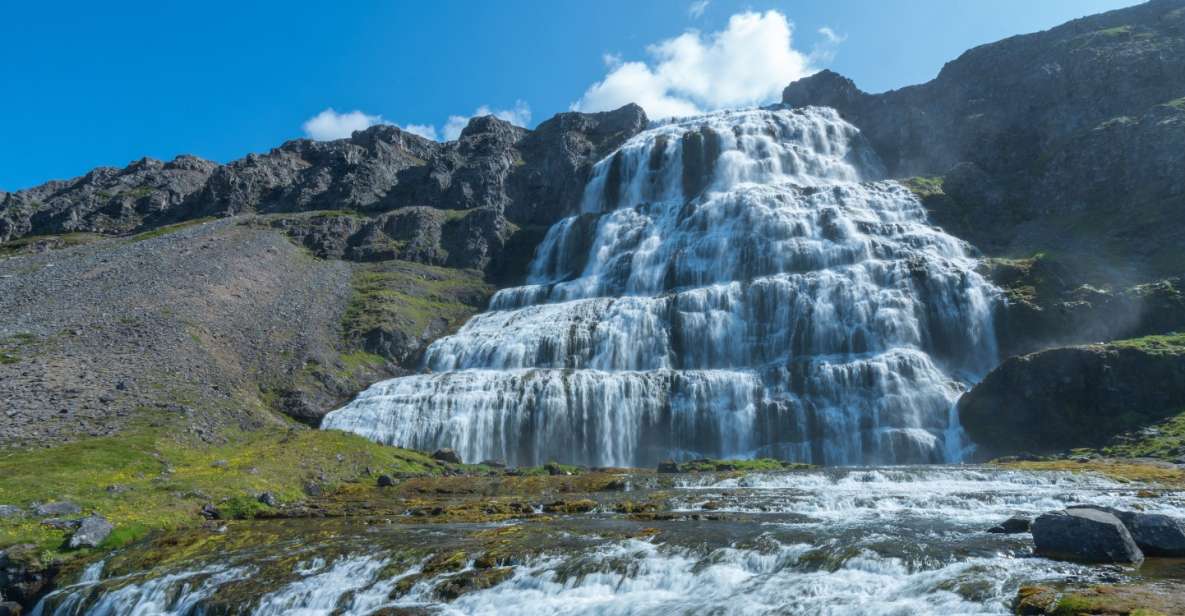
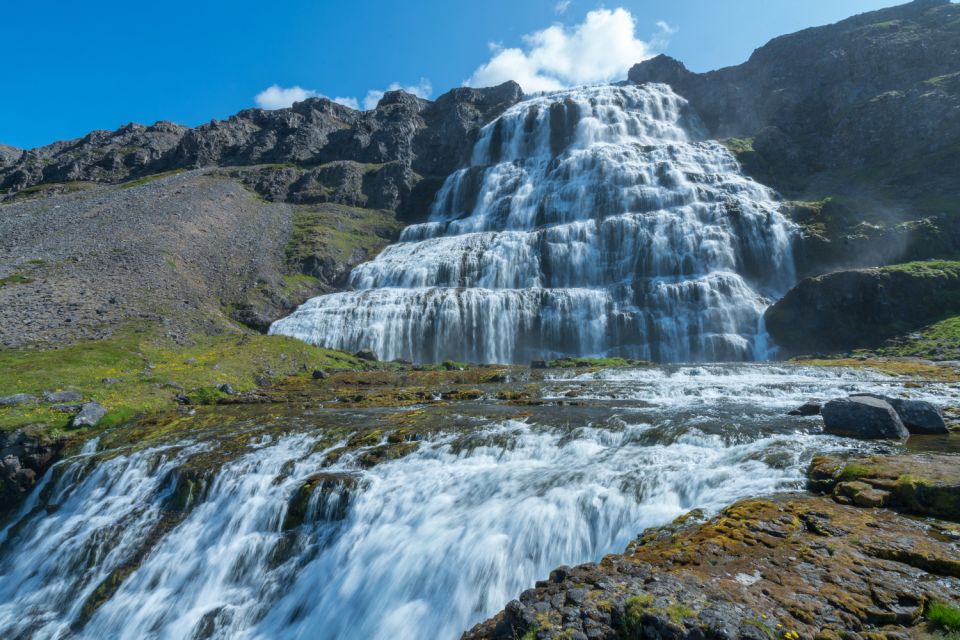
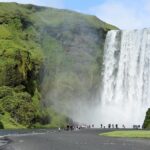
The main finale is Dynjandi, famous for its seven-step cascade—often likened to a wedding cake shaped by water. What I like about Dynjandi is that it changes as you watch. You don’t just see one fall; you see multiple drops in sequence, like the waterfall is negotiating its way down the cliffs.
Dinner time lands in Ísafjörður, the capital of the Westfjords. Having a proper town at the end of Day 2 helps you reset. You’ll have scheduled breaks for buying lunch or snacks, but meals are not included, so plan to eat locally on your own that night. Ísafjörður is a natural place to do it, since you’re already there.
Day 3: Bolafjall skywalk, Ósvör fishing village, and the Seven Fjords Road
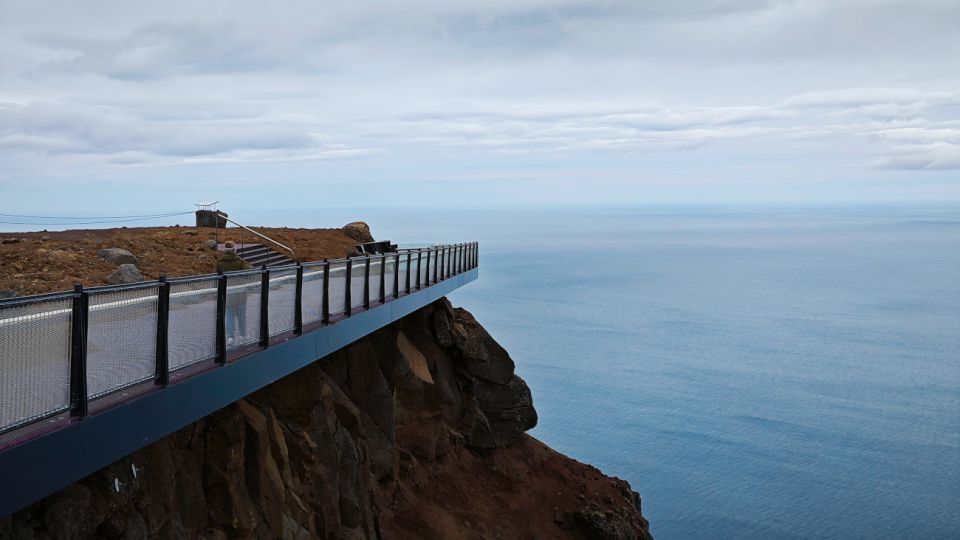
Day 3 starts with a climb to Bolafjall (638 m). Then you walk out to a skywalk viewing platform built over steep cliffs. This is one of the most practical ways to see the coastline without needing a long hike. If you’re short on time, it’s a strong “look from up high” moment that sets you up for what comes next.
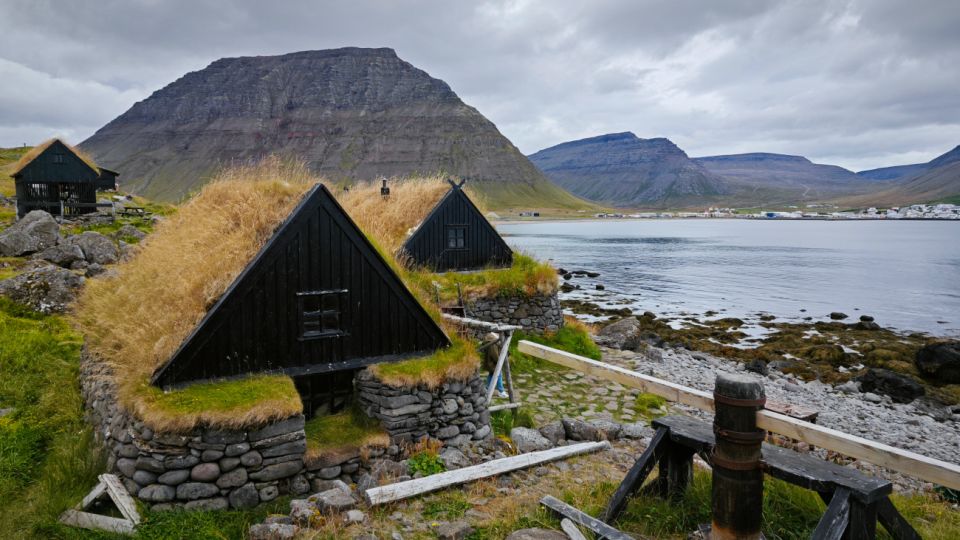
From there, you stop at Ósvör Fishing Village, a small cluster of turf-roofed buildings. These turf-roof structures matter because they look like the local version of practical architecture—adapted for a place where weather is a major factor. It’s a calm contrast to the bold cliffs and waterfalls you’ve been chasing.
Next is Óshólaviti Lighthouse. Even if you don’t spend a lot of time here, lighthouses are useful wayfinding clues. In the Westfjords, they signal how ships, weather, and coast geography have always been tightly connected.
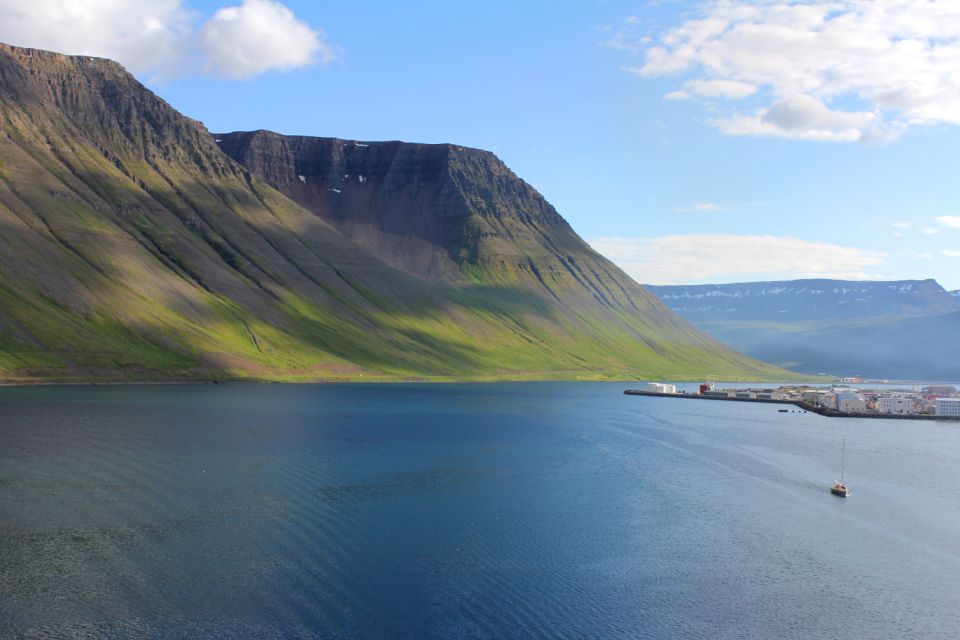
Then you drive the Seven Fjords Road. This is the big driving payoff: the road hugs the coastline and gives you repeated, wide views of fjords, mountains, and glaciers in the distance. You’re up and down in elevation as you go, which means the scenery changes constantly—one fjord view becomes a different angle, then a glacier view shows up behind it. It’s a “keep looking out the window” kind of day, and it’s also a day where you’ll likely want more time for your own short stops. The route is scenic enough that you’ll want to do your own little photo and observation breaks.
Wildlife gets an explicit focus on Day 3. Arctic foxes roam this area, so you’ll want to keep an eye out through the drive and around viewing stops. If you don’t see any in the wild, there’s a backup plan: the Arctic Fox Center, with an included entry fee. That’s a smart way to balance hope with reality, especially in places where fog or wind can make spotting hard.
There’s also a stop at Hvitanes, one of the more accessible spots in the Westfjords to spot seals. This is where you slow down, scan the water, and look for movement. If you can, also glance north for views toward the Arctic Circle and Hornstrandir area when conditions allow—this is more about directional context than a guaranteed “see it perfectly” promise.
The final stop is by Grabrok volcanic craters, closing the loop by reminding you this region is active, not just scenic.
Wildlife spotting: how to enjoy foxes and seals without chasing guarantees
Wildlife is the part of this tour that feels magical—and also the part that can disappoint if you treat spotting like a checklist. The good news is the tour builds in flexibility.
For arctic foxes: you’re not forced into one location waiting for an animal that might not appear. You get opportunities while driving through the area, and if you miss it, you can still see foxes at the Arctic Fox Center. That means your day doesn’t rely entirely on luck.
For seals: Hvitanes is chosen specifically because it’s more accessible. Still, you’ll need patience. Keep your layers on, keep your eyes moving, and accept that the coast can be slow. If you want a “make the most of it” mindset, focus on the environment too—the coastline, rocks, and how the water behaves. Even without a seal pop-up, the setting is part of the experience.
And for birds: Látrabjarg is a summer powerhouse. If you come at the right season, it’s built for seabirds. But even then, wind matters. Dress for staying outside while you watch.
Price and value at about $1,142: what you really get, and what you still pay for
At roughly $1,142 per person for three days, you’re paying for more than views. You’re paying for transportation across remote roads, a guided route that hits major Westfjords highlights, and two nights in private lodging with breakfast.
Here’s what that covers:
- Professional English guidance in a minibus
- Reykjavík pickup and drop-off within the city’s designated bus-stop system
- 2 nights of accommodation (private room, en-suite bathroom, breakfast)
- Included entry fees at Eiriksstaðir Viking Longhouse and the Arctic Fox Center
- On-bus Wi‑Fi and USB chargers
What you should budget separately:
- Lunch and dinner (you’ll stop for snacks or lunch breaks, but you’ll pay)
- Optional cash donation if you use Krosslaug
- Swimwear and towel if you want to swim (optional)
I think the best value comes if you don’t want to spend your Iceland time planning a complicated drive and timing your own lodging around fjords. The Westfjords can be beautiful and intimidating at the same time; having the route handled removes a lot of stress. If you love driving independently and already know where you’ll sleep each night, you might decide a self-drive trip is cheaper. But if you want a guided rhythm with major sights strung together, the price starts to make sense.
One extra note: if you travel solo, a single room supplement is mandatory. The trip is set up around private rooms, so solo travelers shouldn’t assume they’ll automatically pay the shared-room rate.
Practical tips that make or break the trip
Because the tour runs in all weather, your packing matters more than your plans.
Bring:
- Warm, windproof layers
- Waterproof outerwear (you’ll likely need it)
- Comfortable walking shoes for cliffside paths and platforms
- A head covering for gusty days
- Swimwear and a towel only if you’re planning to use Krosslaug
On timing:
- Day 3 returns to Reykjavík around 20:30, depending on weather and road conditions. That means your final evening back in the city will feel like a half-recovery day, not a late-night party plan.
On meals:
- Lunch and dinner aren’t included. Use the scheduled stops to grab food you’ll actually enjoy, and keep a little flexibility. If you’re picky about timing, you might want to bring snacks in your bag for the longer stretches between stops.
On “what if the weather messes with plans?”:
- A ferry ride can be canceled due to weather or safety. If that happens, the tour drives instead to the Westfjords and refunds the ferry fee. You can still expect the trip to continue; the mode of getting there may change.
Should you book the Westfjords road trip from Reykjavík?
Book it if you want a fast, focused way to see the Westfjords’ signature moments: bird cliffs at Látrabjarg, waterfall power at Dynjandi, sandy-coast walking at Rauðisandur, and a day built around the Seven Fjords Road. It’s also a good fit if you prefer a small group and an English-speaking guide who keeps the pace moving and the stops meaningful.
Consider skipping or switching to something else if you hate being in a vehicle for long stretches. This trip is scenic, but it is also road-time. Also, if you want meals fully handled for you, you’ll need to plan for paying for lunch and dinner on your own.
If you’re excited by the idea of fjords, cliffs, wildlife sightings that are helped by smart stop choices, and a route that feels like a real road trip through one of Iceland’s wilder regions, this is an easy “yes” for many people.
FAQ
What time is pickup in Reykjavík?
Pickup happens between 08:30 and 09:00. Your exact pick-up location is confirmed within 24 hours after booking, since bus access in central Reykjavík is limited to designated stops.
Is the tour guided, and what group size is it?
Yes. It’s a guided tour in English with a professional guide, and it’s limited to a small group of up to 18 participants.
What’s included in the tour price?
The price includes guided transport in a minibus, Reykjavík pickup and drop-off, 2 nights in a private room with en-suite bathroom and breakfast, entry to Eiriksstaðir Viking Longhouse, entry to the Arctic Fox Center, and Wi‑Fi plus USB chargers on the bus.
Are lunch and dinner included?
No. Lunch and dinner are not included. You’ll have scheduled stops so you can buy lunch or snacks during the tour.
What should I wear for the Westfjords?
Bring warm clothing plus windproof and waterproof gear. The tour operates in all weather conditions, and many stops involve being outside.
What happens if a ferry ride gets canceled?
If a ferry ride is canceled due to weather or safety, the tour drives to the Westfjords instead and refunds the ferry fee.