Mid-Atlantic geology starts the moment you arrive. This private Reykjanes tour makes your first Iceland hours count with a Keflavik pickup and a smart plan that ends either back at the airport or at your hotel. I also like how the day stays flexible for mixed ages, so you are not trapped on a rigid bus schedule.
You get a tight run of real Reykjanes basics: the Bridge Between Continents and the geothermal stops that explain why this peninsula feels so otherworldly. Entry is listed as free at each stop, which helps you spend your money on the experience, not add-on tickets.
The main catch is the price: it is per group (up to 7), so if you travel solo or as a couple, it can feel steep. And with about 4 to 5 hours total, each site is more of a focused visit than a long hangout.
In This Review
- Key highlights to know before you go
- Keflavik Airport Pickup to Reykjanes: the big advantage for early arrivals
- The Bridge Between Continents at Sandvík: where the plates almost touch
- Reykjanes Lighthouse: built twice, damaged once, and still doing its job
- Gunnuhver Hot Springs: boiling mud pools with real geothermal explanations
- Krysuvík and Seltún: boardwalks through mudpots and fumaroles
- Kleifarvatn Lake: deep, changing, and full of strange stories
- How the timing works: 4 to 5 hours for layovers and first visits
- Price and value: what $1,275 per group buys you
- Practical tips: camera angles, rain gear, and flight timing
- Should you book this private Reykjanes Peninsula tour?
- FAQ
- How long is the Private Reykjanes Peninsula Tour?
- How many people are in the group?
- Where does the tour start?
- Do you get dropped back at the airport or at a hotel?
- Is the tour guided in English?
- Is the admission fee included for the stops?
- Does the tour include food or drinks?
- What should I bring?
- What information do I need to provide before the tour?
- What is the cancellation policy?
Key highlights to know before you go
- Door-to-door Keflavik start with meet-and-greet pickup and a driver holding a sign with your name
- Tectonic drama on foot at Sandvík, where a footbridge crosses a major fissure at the Mid-Atlantic Ridge
- A lighthouse with a timeline from 1878 to a rebuilt 1907–1908 version, plus details like the 69-meter light signal height
- Gunnuhver’s boiling mud pools in a UNESCO Global Geopark setting, with geothermal chemistry you can actually picture
- Boardwalk walking at Krysuvík (Seltún) through mudpots and fumaroles with colorful mineral deposits
Keflavik Airport Pickup to Reykjanes: the big advantage for early arrivals
If your trip starts or pauses at Keflavik International Airport, this is the kind of excursion that turns waiting time into sight time. You get a meet-and-greet pickup right after you arrive, and the driver uses a distinctive sign showing your name. You will also receive a mobile ticket, and you are asked to share your flight number so they can monitor timing.
The tour is private for up to 7 people, so the pacing can match your group. That matters on Reykjanes, where weather can change fast and some stops are better enjoyed slowly. The day also ends with drop-off to your hotel or back to the airport, which is perfect if you have a layover or an early departure the next day.
One practical thing: bring a rain coat. You are visiting geothermal areas and coastal terrain, where mist and showers happen. If you are prepared, you will enjoy the stops instead of rushing through them.
You can also read our reviews of more private tours in Reykjanes


The Bridge Between Continents at Sandvík: where the plates almost touch
This is the Reykjanes stop that gives you instant context. The peninsula sits on one of the world’s major plate boundaries, the Mid-Atlantic Ridge, where the Eurasian and North American plates keep drifting apart. That motion creates tension, and linear fractures called fissures form along the cracks.
At Sandvík, the Bridge Between Continents is a small footbridge over a major fissure. It is built as a symbol for the connection between Europe and North America, and it is also a quick, physical reminder that Iceland is alive with geology. The visit is short, about 20 minutes, and the entry is free.
There is an extra option to make it more memorable: you can cross the continental divide on Leif the Lucky’s Bridge, then pick up a personalized certificate at the Reykjanes information center and Reykjanes Geopark visitor center at Duus Cultural house. If you like your sightseeing with a small souvenir element, this is a nice bonus.
Reykjanes Lighthouse: built twice, damaged once, and still doing its job
A lighthouse stop can sound like a scenic extra, but Reykjanes Lighthouse is really a story machine. The first lighthouse in Iceland was built on Valahnúkur in 1878. By 1905, earthquakes and surf had damaged it so badly that it risked falling into the sea.
A new lighthouse was built in 1907–1908 on Bæjarfell hill, and the old structure was demolished with an explosion on April 16, 1908. That is the kind of timeline you will remember, especially when you see the site laid out in a harsh coastal setting.
Here are the technical details that make it fun to look at instead of just stand near it. The light signal is 69 meters above sea level, while the lighthouse itself is 26 meters tall. It also includes a radio beacon with a correction signal, and the design and engineering are credited to Frederik Kjørboe and Thorvald Krabbe. Operations are under the Icelandic Maritime Administration.
You usually get around 20 minutes here, with free entry. If the wind is up, keep your time efficient and aim for good photos quickly. This is a place where the surroundings matter as much as the structure.
Gunnuhver Hot Springs: boiling mud pools with real geothermal explanations
Gunnuhver is close to Reykjanes Lighthouse, and the area’s name comes from a female ghost tale. But step beyond the folklore and it gets scientifically interesting fast. Steam rising from a boiling geothermal reservoir water source condenses and mixes with surface water, forming the mud pools you see.
The chemistry is part of the show. Gases such as carbon dioxide and hydrogen sulfide make the water acidic, which changes nearby fresh lava rock into clay. And there is a modern chapter too: after production from the reservoir started in 2006, steaming increased markedly due to a pressure drawdown.
Today, Iceland’s largest mud pool is a highlight in the Gunnuhver group. It is about 20 meters wide across a rim of mud and is boiling vigorously. This stop is about 20 minutes with free entry, and it sits in the heart of the Reykjanes UNESCO Global Geopark.
Practical note: the geothermal activity means stronger smells and heavy steam can be part of the experience. If you are sensitive, take a few steps closer only when you want that extra photo angle, then step back to reset.
Krysuvík and Seltún: boardwalks through mudpots and fumaroles
Krysuvík is one of those geothermal areas that feels like the ground is doing its own work schedule. This is a high temperature geothermal zone, and there are boardwalk paths to guide you through some of the most dramatic sections.
In Seltún, you will see mudpots and fumaroles, plus colored sediments created by mineral deposits from geothermal solutions. Instead of being one-note, the colors and textures help you read the area like a living diagram. The tour information also points out that there are good walking paths around the area with parking available.
Setún is part of the Reykjanes nature reserve, which is a useful detail if you care about conservation context while you sightsee. You usually get around 30 minutes at Krysuvík, and entry is free.
If you want a geothermal stop that feels like a guided walkthrough rather than a scramble, Krysuvík is the one to aim for in this route. The boardwalk approach makes it easier to focus on what is happening in front of you.
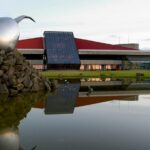


Kleifarvatn Lake: deep, changing, and full of strange stories
Kleifarvatn is the kind of stop you appreciate when you like variety. After the geothermal steam, you get a lake with a different vibe: volcanic surroundings, deep water, and an ongoing geology story.
The lake covers about 10 km², making it the largest on the Reykjanes peninsula and the third largest in southern Iceland. It is about 97 meters deep, which puts it among Iceland’s deeper lakes. The catchment area is small, and surface discharge is limited, which helps explain why it can respond to changes more directly.
There is a key change over time: the lake has diminished since 2000 because two major earthquakes likely opened fissures at its bottom. In the 1960s, char fry from Lake Hlidarvatn were released into Kleifarvatn and thrived quite well, so the lake is not just geology. It is also ecology.
Water temperatures vary by location. Hot water from some hot springs feeds into the lake in the southernmost part, while much of the rest is very cold. There is also a small fishing lodge nearby. And if you enjoy Iceland’s story layer, you might hear the legend that a worm-like monster, about the size of a medium whale, lives in the lake.
This stop is about 15 minutes and listed as free. It is short, but it gives your eyes a break from steam and gives you a stronger sense of the peninsula’s scale.
How the timing works: 4 to 5 hours for layovers and first visits
The total tour time is about 4 to 5 hours, which is exactly why this works for layovers and early arrivals. You can land, stretch your legs at a geology site, and still be in a position to catch your next flight or move on to the rest of your trip.
Because it is private, the pacing tends to feel more humane than on group tours. One highlight from real-world experiences is that guides can adapt the day for different ages, including groups with elders and children. If you are traveling with a mixed group, this matters more than people expect.
Weather is the wildcard in Reykjanes. The tour information includes rain gear advice, but the bigger point is that you should stay flexible. If conditions allow an extra hike, one guide-led day example included adding a volcano hike when weather cooperated. If that is something you want, ask your driver early in the day so they can judge safety and timing.
Also remember: each stop is time-boxed. You will see a lot, but you will not linger for long. If you want slow, long stays, you may need a longer, multi-day plan. For a first taste, though, this route hits the core points efficiently.
Price and value: what $1,275 per group buys you
The price is $1,275 per group for up to 7 people. That is not a cheap excursion if you are a solo traveler, but value shifts fast depending on how you book. With a full group of 7, you can think of it as roughly $182 per person. With 3 people, it is closer to $425 per person.
What justifies the cost is not a stack of paid attractions. It is the structure: airport pickup, guidance, and drop-off either back to Keflavik or to your accommodation. You are buying time, not just driving. And the sights listed are mostly free entry points, so the day is not built on expensive tickets.
Food and drinks are not included, so budget for that separately. If you plan snacks in advance, you will not feel rushed between stops. A private guide also means you can ask questions and adjust your pace without negotiation with a bus schedule.
In plain terms: this is a good value when you want maximum efficiency, door-to-door convenience, and a coherent intro to Reykjanes geology without the stress of self-driving logistics.
Practical tips: camera angles, rain gear, and flight timing
A few small details make a big difference on this peninsula route.
First, share your flight number. The pickup is timed to your arrival, and you want the driver to be ready without you standing around with luggage.
Second, pack for weather. The tour explicitly suggests bringing a rain coat, and Reykjanes can be wet, windy, and changeable.
Third, plan your photo style. At the Bridge Between Continents and the lighthouse, quick composition matters because wind and coastal light can be dramatic. At Gunnuhver and Krysuvík, steam and color can vary moment to moment, so take your first wide shot, then circle once if conditions allow.
Finally, remember the day is a loop. You will cover multiple zones in a short window, so keep your essentials accessible: jacket, phone, camera, and a way to take a few quick notes if you like remembering the names of features like Gunnuhver, Seltún, and Kleifarvatn.
Should you book this private Reykjanes Peninsula tour?
Book it if you want a smart, efficient introduction to Reykjanes that starts at Keflavik and ends exactly where you need to be. It is especially worth it for layovers, early arrivals, and first-time visitors who want tectonics, geothermal action, and a lighthouse story in one compact day.
Skip it or consider another option if your group is very small and the per-person cost feels hard to justify. Also, if you prefer long, slow visits at just one or two sites, the 4 to 5 hour structure may feel a bit fast.
If you book, go in with the mindset of a first tasting: learn the peninsula’s key ideas, enjoy the major sights, then come back later if you want deeper exploration.
FAQ
How long is the Private Reykjanes Peninsula Tour?
The tour lasts about 4 to 5 hours.
How many people are in the group?
It is a private tour/activity for your group, up to 7 people.
Where does the tour start?
It starts with pickup from Keflavik International Airport, at Keflavikurflugvollur, Iceland.
Do you get dropped back at the airport or at a hotel?
Yes. The tour includes drop-off either to your hotel or back to the airport.
Is the tour guided in English?
Yes, it is offered in English.
Is the admission fee included for the stops?
The information provided lists free admission tickets for the stops included in the itinerary.
Does the tour include food or drinks?
No. Food and drinks are not included unless specified.
What should I bring?
Bring a rain coat in case of rain. Comfortable weather gear helps on this route.
What information do I need to provide before the tour?
You should provide your flight number so the driver can monitor your arrival time.
What is the cancellation policy?
There is free cancellation, and you can cancel up to 24 hours in advance for a full refund.