REVIEW · REYKJAVIK
Reykjavík E-Scooter Adventure Small Group City Tour
Book on Viator →Operated by Reykjavík Rollers · Bookable on Viator
Reykjavík is best when you skip the slow parts. This e-scooter small-group tour is a fast, fun way to cover major sights with personal guide attention (max 8) and helmets plus training included, so you can feel comfortable early. I also like how the route mixes famous buildings with calmer stretches like the coast and parks. One consideration: if you have little patience for riding through busy sidewalks and dealing with wind, you’ll need to take the safety briefing seriously and dress for the weather.
You meet in the center at Skólavörðustígur, get kitted out, learn the scooter basics, and then roll past the big-ticket sights. The guide uses the ride to add stories you won’t pick up from a map, and the scooters make short work of distances you’d otherwise cover on foot. In cold or gusty weather, expect the ride to feel sharper than walking, so plan on layers and a positive attitude toward two wheels.
In This Review
- Key takeaways
- Two hours that actually changes how you see Reykjavík
- Start at Skólavörðustígur: where the tour begins and you learn the scooter
- Skólavörðustígur to Nauthólsvík: coast views without the long walk
- Öskjuhlíð Hill: riding through calmer air and lava-field character
- Höfði House and the Reykjavík Summit: history you can point to
- Sun Voyager and Harpa: Viking-inspired art meets basalt-like design
- Parliament House, Tjörnin, and Hljómskálagarður: democracy and quiet breaks
- Hallgrímskirkja finish: the observation deck and Reykjavík’s big view
- What you should wear and expect on the ride
- Price, group size, and guide style: why this feels worth it
- Who this tour suits best
- Should you book this e-scooter tour of Reykjavík?
- FAQ
- Where do we meet for the Reykjavík e-scooter tour?
- How long is the tour?
- Is a driver’s license required?
- What’s included with the tour?
- How many people are in each tour group?
- What happens if the weather is poor?
Key takeaways

- Max 8 people keeps the pacing relaxed and the guidance close
- Helmets and a hands-on training session help first-timers get confident
- You’ll see landmarks like Harpa, Parliament, and Hallgrímskirkja without waiting in long lines
- The route blends city icons with coast, hills, and parks for variety in views
- The guide adds story-time at stops like Höfði House and the Reykjavík Summit setting
- You can do it without a driver’s license, as long as you’re comfortable riding carefully
Two hours that actually changes how you see Reykjavík
Reykjavík has a way of making you feel like you either walk slowly and miss connections, or you rush and miss context. This tour is built for the middle road: cover a lot of the city in about 2 hours, while still getting real explanations at key stops. For first-time visitors, that matters. You leave with a mental map of where things are and what they mean, so your next day planning gets easier.
The value at $51 comes from what you’re buying: guide-led sightseeing plus scooter time plus safety prep. If you tried to recreate this on your own, you’d still need to figure out the best route, deal with pedestrian traffic, and spend time searching for parking or figuring out how to hop between areas efficiently. Here, you roll right between major highlights with the guide controlling stops and timing.
And yes, it’s also just fun. Multiple guests call it a favorite part of Iceland because the ride feels like you’re buzzing through the city, not just getting dropped at photo points. That energy is real, as long as you go in with the mindset that it’s a scooter tour, not a slow city stroll.
You can also read our reviews of more city tours in Reykjavik



Start at Skólavörðustígur: where the tour begins and you learn the scooter

You start at Skólavörðustígur 6b in the city center. That’s a smart meeting choice because it’s close to where most people want to be anyway: cafes, shops, and the pedestrian rhythm of downtown.
Before you ride far, the guide runs a safety briefing and introduces the scooter. Helmets are included, and a training session helps you get the feel of acceleration, braking, and staying steady around pedestrians. Even if you don’t have a driver’s license, the tour is set up so you can still participate, which is great for people who rent cars less often or simply don’t want that extra step.
This early stage is where the tour earns its smooth reputation. In the feedback I’m seeing, guides are described as friendly, accommodating, and attentive—especially when the route gets busy. That’s not a minor detail. Reykjavík sidewalks can feel tight when you add wind, tourists, and motion. A careful intro helps you avoid the first-stop nerves that can otherwise take the joy out of the whole experience.
Skólavörðustígur to Nauthólsvík: coast views without the long walk
After you get oriented, you head toward the coast, passing through the parts of Reykjavík that look good from street level but are tough to string together on foot. One of the standout stops is Nauthólsvík Beach, known for its contrasting black sand and the geothermal-heated seawater. It’s the kind of scene that looks like it belongs to a postcard, but it’s also practical: the area is set up for relaxing and being near the water.
What I like about this stop is that it shifts the mood. Downtown architecture is one thing; ocean air is another. You get a chance to breathe, and you’ll probably notice how the city’s geography shapes everything. Iceland is never just scenery. It’s weather, heat, rock, and water working together.
Drawback? If you’re expecting a long time on the beach, this isn’t that tour. The goal is movement and highlights. You’ll get enough to feel the place, but you’re not settling in for an all-day soak.
Öskjuhlíð Hill: riding through calmer air and lava-field character
Next comes Öskjuhlíð Hill, where the pace feels a touch more open. The route takes you past woodland and lava fields, and that combination gives Reykjavík an unexpected texture. From a scooter, you’re moving, but slowly enough that you can actually take in shapes in the environment rather than just passing them at car speed.
This is also where e-scooters shine. Walking uphill or detouring to scenic viewpoints costs time. On a scooter, you can keep the energy up and still enjoy the shift in scenery. And because the group is small, it’s easier to maintain spacing and stay aware of pedestrians.
Practical tip from the vibe of the day: treat wind here like a factor, not a surprise. Many people go to Iceland thinking cold equals only temperature. In Reykjavík, wind changes how the ride feels on your face and hands. If you plan on taking photos, build in a moment to shield your lens and warm up your fingers between stops.
Höfði House and the Reykjavík Summit: history you can point to
Then you reach Höfði House, famous for hosting the 1986 Reykjavík Summit between Ronald Reagan and Mikhail Gorbachev. This is one of those stops where a guide can turn a building into a story. You’re not just seeing another historic facade; you’re seeing a real setting connected to big political shifts.
What makes this moment valuable is how it fits into the ride. When history is told while you’re moving through the surrounding neighborhood, it sticks better. You also get context for why Reykjavík shows up in world affairs beyond just being a scenic northern capital.
If you’re someone who likes understanding Iceland’s global connections, this stop is a highlight. If you only care about photos, it still works because Höfði House is visually distinctive and easy to recognize once you’ve been there.






Sun Voyager and Harpa: Viking-inspired art meets basalt-like design
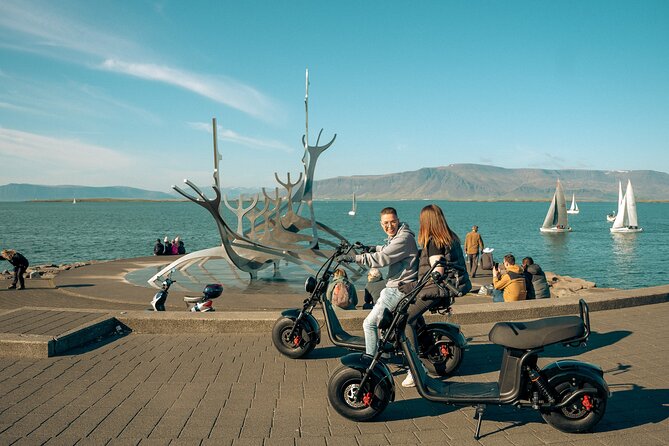
From the summit setting, the route turns to the waterfront art scene with Sun Voyager. This sculpture is inspired by Viking ship shapes, and the payoff is both visual and practical: you’re positioned for ocean views with Mount Esja in the distance on clear days. It’s an easy win for getting a sense of Reykjavík’s horizon.
After that, you move to Harpa Concert Hall, one of Reykjavík’s most photographed modern buildings. Its facade is designed to resemble Icelandic basalt landscapes, and it creates a light-and-geometry look that’s hard to capture accurately from just one angle on foot. On a scooter, you can glide into the right viewing spots without doing a complicated walking loop.
Harpa also matters culturally. It’s not only architecture. It’s tied to performances and the city’s creative life. Even if you don’t catch a concert, the tour helps you understand why locals treat Harpa as more than a landmark.
Potential drawback: Iceland weather can be moody. If it’s foggy or raining, the visual impact can soften. Still, the stop works because you’ll get the story behind it, and Harpa’s facade texture is interesting even in flatter light.
Parliament House, Tjörnin, and Hljómskálagarður: democracy and quiet breaks
The tour continues to Parliament House, where Iceland’s democratic process unfolds. This is a good reminder that Reykjavík isn’t only about art and scenery. It’s also a working government city. The guide’s explanations help you see the building’s role beyond the architecture.
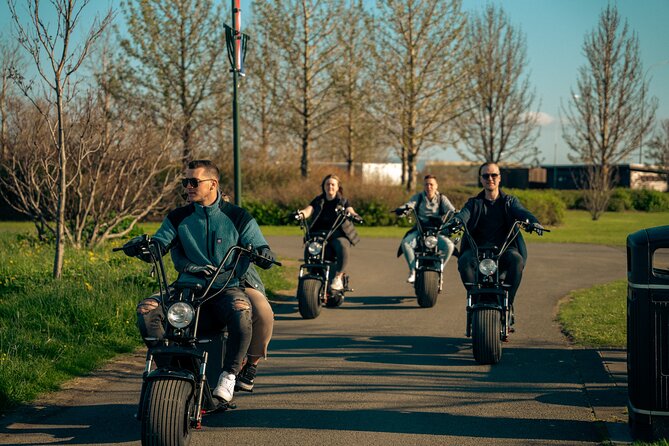
From there, you head to Tjörnin, a lake surrounded by parkland. This stop is designed for a calmer pause. You’re surrounded by greenery and birdlife, and it’s the kind of pocket where you can slow down mentally even while still on a moving route. If you’ve spent your trip hopping between attractions, Tjörnin feels like a reset.
Next is Hljómskálagarður, a tranquil park setting where you can relax, reset, and enjoy the scenery. These quiet breaks are more than nice-to-have. They keep the ride from turning into pure “sight rush,” and they give you a chance to warm up if the wind picks up again.
I like that the itinerary has built-in changes in pace. It makes the two-hour experience feel longer in good ways, because it doesn’t flatten everything into one constant motion.
Hallgrímskirkja finish: the observation deck and Reykjavík’s big view
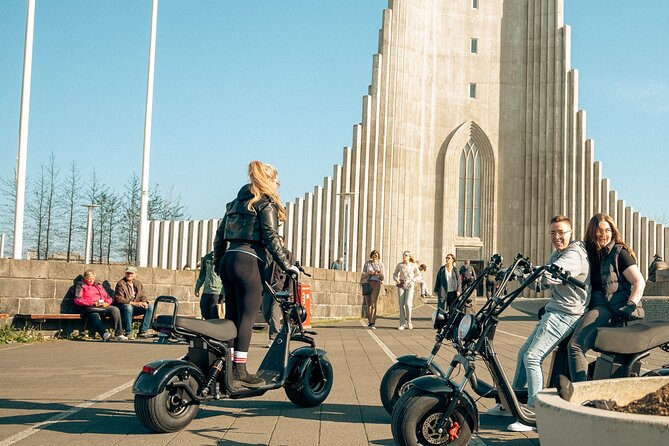
The tour ends at Hallgrímskirkja Church, one of the city’s most iconic structures. The best part here is the plan to ascend to the observation deck for panoramic views of Reykjavík. This is where the scooter tour payoff becomes visual: you can look down and connect what you saw earlier—coast, neighborhoods, and the way the city sits against its natural surroundings.
This final stop also gives you a cultural anchor. The guide shares stories about the church’s construction and its role in Icelandic culture, so it’s not just an ending photo. It helps you understand why the building matters to locals.
Weather can affect the deck experience, but even on less-than-perfect days, it’s still a meaningful capstone. You’ll leave with a sense of orientation that makes the rest of your stay feel easier.
What you should wear and expect on the ride
E-scooters in Reykjavík come with an obvious truth: you’re outside. Cold and wind can make a short ride feel longer. That’s why it’s smart to dress like you’ll be standing at a viewpoint. Keep gloves handy. Consider covering your face, because gusts can hit the lower face fast when you’re moving.
I also see a strong practical theme in feedback: the team is attentive to weather. One guest specifically mentioned that they were provided good clothes and stayed dry, which is a nice touch when the sky turns. Even if you don’t get extra gear, plan on layering and expect the guides to help you stay comfortable.
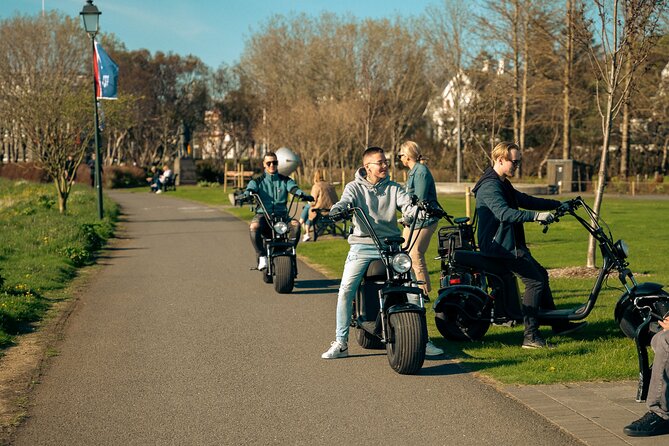
Riding-wise, scooters are described as easy to ride and stable by multiple guests. Still, there’s a moment early on when you’ll feel a little nervous if you’ve never ridden one. The training exists for that exact reason. Give yourself a minute to find your rhythm, especially around pedestrians, obstacles, and city streets.
Price, group size, and guide style: why this feels worth it
At $51 for about two hours, the price feels fair when you break it down. You’re paying for:
- A guide who controls pacing and keeps you safe
- Helmets and a training session so you’re not figuring it out solo
- Access to a route that would take multiple bus rides or time-consuming walking to recreate
- Stops with story-time at places like Harpa, Höfði House, and the Parliament area
The small-group limit of 8 is a big part of the value. Bigger tours can feel like a moving line. Here, the guide can watch individuals and adjust. That matters when you’re learning to ride and when sidewalks get busy.
The guide style also comes through strongly in the way people talk about it—friendly, accommodating, responsive, and careful. Viktor is named in multiple comments, and that kind of consistency suggests a guide who knows how to make a nervous first ride feel normal.
Who this tour suits best
This is a great pick if:
- You want a first-day orientation so planning the rest of Reykjavík gets easier
- You like seeing a lot without doing mile after mile on foot
- You enjoy stories that connect architecture to politics, culture, and local life
- You’re comfortable riding a scooter carefully around pedestrians
It might be less ideal if:
- You strongly dislike riding in wind or cold and want only indoor time
- You need lots of downtime at each stop rather than short, guided moments
- You prefer slow walking and don’t want the hands-on focus required to ride safely
Should you book this e-scooter tour of Reykjavík?
I’d book it if you want an efficient, upbeat way to see Reykjavík’s major landmarks while getting context along the route. The combo of small group size, hands-on scooter training, and the mix of iconic spots (Harpa, Parliament, Hallgrímskirkja) with calmer scenery (Tjörnin and parks) makes it feel like more than a checklist tour.
You should hold off if you know you’ll struggle with scooter riding around crowds or if you’re traveling when the weather is likely to be seriously rough. But if skies cooperate and you’re open to a little wind-in-your-face momentum, this is one of the easiest ways to get your bearings fast and have fun doing it.
FAQ
Where do we meet for the Reykjavík e-scooter tour?
You meet at Skólavörðustígur 6b, 101 Reykjavík, Iceland.
How long is the tour?
The tour runs about 2 hours (approx.).
Is a driver’s license required?
No. The tour says people without a driver’s license are welcome to participate.
What’s included with the tour?
You get a modern e-scooter and a helmet.
How many people are in each tour group?
The tour has a maximum of 8 travelers.
What happens if the weather is poor?
This experience requires good weather. If it’s canceled due to poor weather, you’ll be offered a different date or a full refund.