REVIEW · REYKJAVIK
7 Day Around Iceland Tour- PRIVATE TOUR
Book on Viator →Operated by Travelling Iceland · Bookable on Viator
One week, one full ring of ice. This private Iceland tour is built for seeing a lot without the stress of rentals or driving: a guide, door-to-door pickup, and tight time for the Golden Circle, South Coast waterfalls, glacier lagoons, and North Iceland thermal wilds. I especially love the private guide format, which makes every long day feel more like a conversation than a checklist, and the six nights with breakfast included in local hotels and guesthouses keeps the trip practical.
The big thing to weigh is the price. At $11,101.77 per person, this is a “you want it done right” option, not a budget play. Also, the experience depends on good weather, so if conditions are poor, your date could be swapped (or you’d get a full refund).
In This Review
- Key Highlights You’ll Actually Feel Day to Day
- A One-Week Iceland Circle Without the Rental Car Headache
- What “Private” Really Means on This Tour
- Thingvellir and the Golden Circle’s Strong Start
- Friðheimar’s Tomato Lunch and the Secret Lagoon Reset
- South Coast Waterfalls, Solheimajökull, and the Black Beach Drama
- Glacier Lagoons: Jökulsárlón, Fjallsárlón, and Diamond Beach Time
- Season Matters: Ice Caves (Nov–Mar) and Langjökull Glacier (Apr–Oct)
- East Iceland’s Thermal Zones and the Big Waterfall Charge
- Myvatn Nature Baths and Goðafoss on the Way Toward Akureyri
- Kirkjufell Views and Snæfellsnes Coastal Classics
- West Iceland Waterfalls: Hraunfossar, Barnafoss, and Borgarnes
- Price and Logistics: Is $11,101.77 Per Person Good Value?
- Who This Tour Fits Best
- Should You Book This Private Iceland Circle Tour?
- FAQ
- What does the tour include?
- Is pickup available?
- Is this tour private?
- Are meals included?
- How long is the tour?
- Is good weather required?
- Are glacier activities seasonal?
Key Highlights You’ll Actually Feel Day to Day
- Private guide pacing: You’re not sharing a van or fighting for photo stops.
- Car-free logistics: pickup and private transportation mean you can focus on sights, not routes.
- Geothermal moments on repeat: from a tomato-powered geothermal lunch to Secret Lagoon soaking.
- Iceberg lagoons plus black-beach walks: Jökulsárlón, Fjallsárlón, and Diamond Beach time on foot.
- Nature baths after big days: Myvatn Nature Baths and Secret Lagoon help your legs recover.
- Seasoned glacier options: ice cave exploration is listed for Nov–Mar, and a Langjökull glacier trip is listed for Apr–Oct.
A One-Week Iceland Circle Without the Rental Car Headache
If you’ve ever tried to plan Iceland driving, you know the reality: distances look short on a map, but weather and road conditions can stretch the day fast. This tour cuts out the rental-car juggling act with private transportation and pickup. That matters because Iceland isn’t just scenic—it’s also changeable. When conditions shift, you want a plan that can shift with them.
The other reason I like this setup is that it’s built around meaningful stops rather than long, empty drives with occasional “looks nice” moments. You get time for the big classics (Thingvellir, Geysir, Gullfoss) and also the kind of places people remember later—like walking near waterfalls from unusual angles, or eating lunch in a greenhouse heated by the ground.
And yes, the day is busy. But the pace is more manageable when you’re not also navigating.
You can also read our reviews of more private tours in Reykjavik
What “Private” Really Means on This Tour
This is a true private tour/activity. Only your group goes, which changes the feel of the whole trip. You can ask questions in the car, your guide can adjust timing when you linger, and it’s less stressful around photo stops and viewpoints.
Also, this operator clearly leans into guide quality. In the feedback tied to this experience, guides like Helga Bára (also referenced as Dr. Helga Bára), Addy, and Sigrún are named as standouts. That lines up with what you want in Iceland: someone who can explain why the ground looks the way it does, not just where to stand.
Thingvellir and the Golden Circle’s Strong Start
Your first stop is Thingvellir, a World Heritage Site where Iceland’s Parliament was established in 930—the first democracy in the world. Even if you’re not a history person, the setting makes the story easier to grasp: this is where geography and human history intersect. Afterward, you walk to Öxarárfoss waterfall. It’s a nice balance: start with big-picture context, then get your feet wet (figuratively) with a close-up waterfall walk.
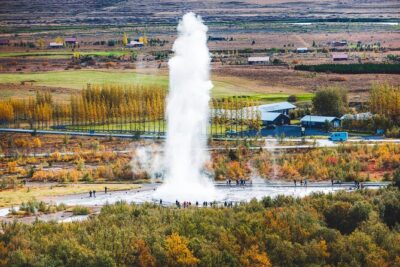
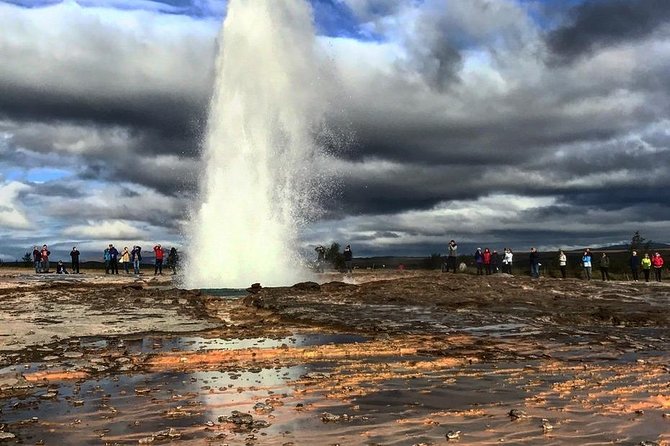
Next comes Geysir. The famous geyser “Geysir” itself is often described as almost inactive, while Strokkur erupts roughly every four minutes. That rhythm is useful. You can watch calmly, take photos without chasing, and still get the full effect—boiling water launching upward.
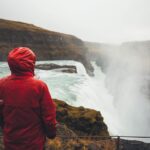
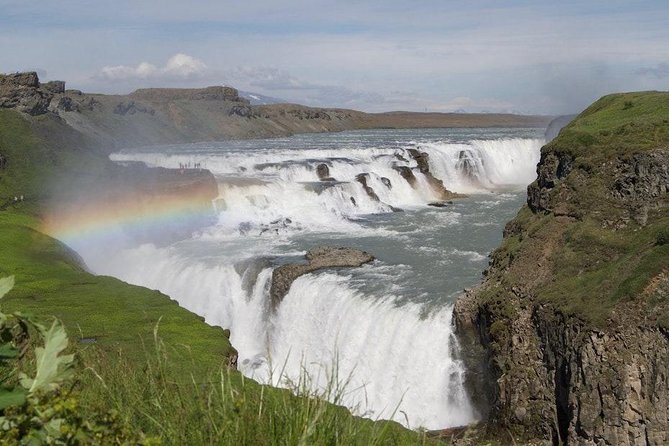
Then you land at Gullfoss, one of the most powerful waterfalls in the Golden Circle. You get both the view from above and the option to walk down a path closer to the falls. That combination is smart because Iceland waterfalls often look different depending on distance—wide and dramatic from afar, more forceful up close.
Practical note: bring layers you can handle in quick changes—cold mornings at viewpoints can turn into wet, gusty afternoons.
Friðheimar’s Tomato Lunch and the Secret Lagoon Reset
Not every Iceland tour includes a lunch moment that feels weird—in the best way. Here, Friðheimar is the stop. Tomatoes are grown using geothermal heat and geothermally generated electricity, and the restaurant serves a meal made mainly from those tomatoes.
This works because it gives you a break from pure sightseeing. You’re suddenly eating in an actual geothermal production space. Even if tomatoes aren’t your thing, it’s a chance to understand how Iceland uses the energy under your feet.
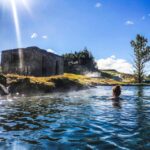
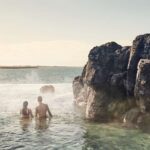
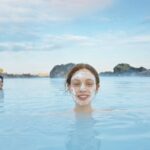
Later, you end the day near Hvolsvöllur at the Secret Lagoon (Gamla Laugin), a natural geothermal bath. This is the “warm your body and reset your head” part of the trip. After a day of waterfalls and wind, soaking is a gift. You don’t just relax—you also give your legs a chance to recover for the next round of standing, walking, and weather.
South Coast Waterfalls, Solheimajökull, and the Black Beach Drama
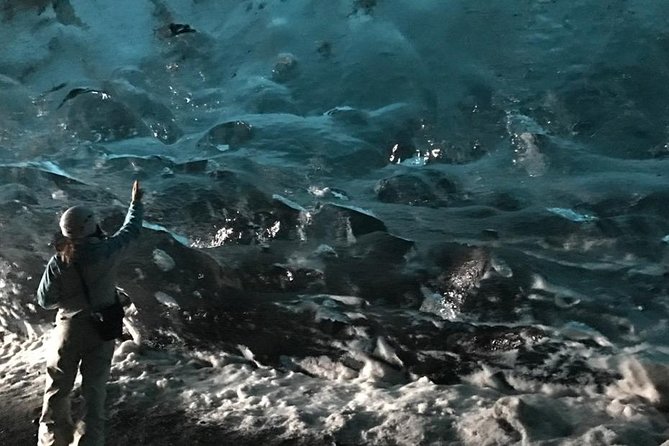
The South Coast is where Iceland shifts from “famous sights” to “how is this real?” territory.
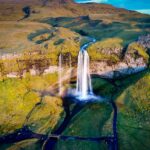
You start with Seljalandsfoss, known for the rare chance to walk behind the waterfall. That changes the experience completely. Instead of viewing it like a wall of water, you get the sensory effect—mist in your face, water noise surrounding you, and a different angle for photos without needing special gear.
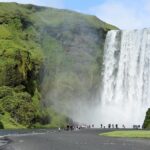
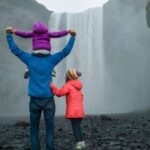
Then you hit Skógafoss, one of Iceland’s best-known waterfalls. It’s tied to meltwater from glaciers including Eyjafjallajökull and Mýrdalsjökull, so the waterfall is basically a visible reminder of the ice still feeding the island.
Sólheimajökull follows next. This is an outlet glacier flowing from Mýrdalsjökull, with the volcano Katla sitting beneath that bigger ice cap. This is a place to notice scale: glaciers are not just “cold scenery,” they’re part of active geology.
Next you reach the dramatic terrain of Dyrhólaey with south-coast views and black beaches. The sea has carved the promontory down—something you can see right from the viewpoints.
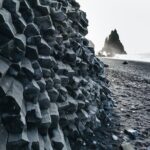
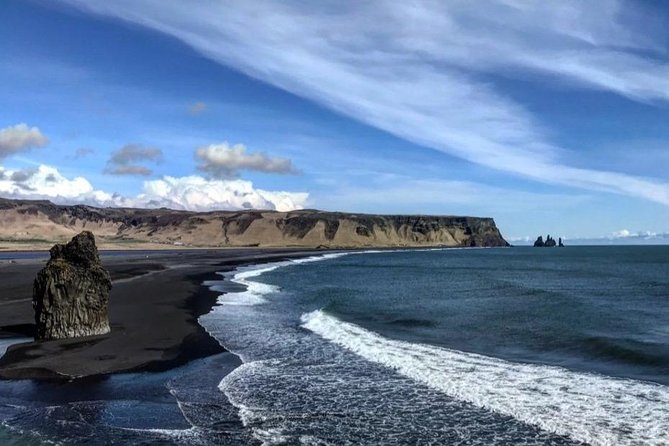
Then comes Reynisfjara Beach, the classic black beach. Basalt makes it black, and the beach is known for basalt columns and the seastack Reynisdrangar. This stretch is famous for more than photos—it’s a reminder that Iceland coastlines are shaped by constant erosion, and the ocean is not to be underestimated.
Practical note: even when the view is calm-looking, conditions on black beaches can be rough. Dress for wind and wet spray, and keep an eye on where you step.
You can also read our reviews of more tours and experiences in Reykjavik
Glacier Lagoons: Jökulsárlón, Fjallsárlón, and Diamond Beach Time
This is where the trip shifts into “ice everywhere” mode.
At Skaftafell (part of the wider Vatnajökull National Park), you get a nature setting tied to Vatnajökull, the largest glacier in Europe. It’s not just a stop for views—it’s a way to experience the larger glacier ecosystem rather than only seeing isolated points.
Then you move into canyon country at Fjaðrárgljúfur, a canyon carved about 9,000 years ago by a glacial river. The description of its depth and length matters here because you’ll feel it when you stand near viewpoints. This stop can also add a fun pop-culture hook, since it appeared in a Justin Bieber music video.
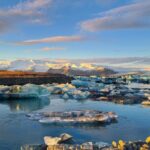
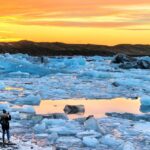
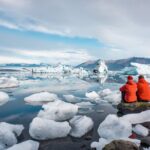
Finally, you get the iceberg lagoons in front of a calving glacier:
- Jökulsárlón for the floating icebergs and the walk onto the black-beach area sometimes called Diamond Beach.
- Fjallsárlón for another lagoon view where ice breaks off the glacier and gathers in the water.
These lagoon stops are good to schedule back-to-back because your brain keeps learning the “pattern” of what you’re seeing: glacier front, iceberg drift, black sand reflections, and changing ice shapes every few minutes. If the light is decent, this is the part of Iceland that makes you stop talking and just watch.
Season Matters: Ice Caves (Nov–Mar) and Langjökull Glacier (Apr–Oct)
Two glacier experiences are listed with seasonal timing, and it’s worth paying attention to this before you book.
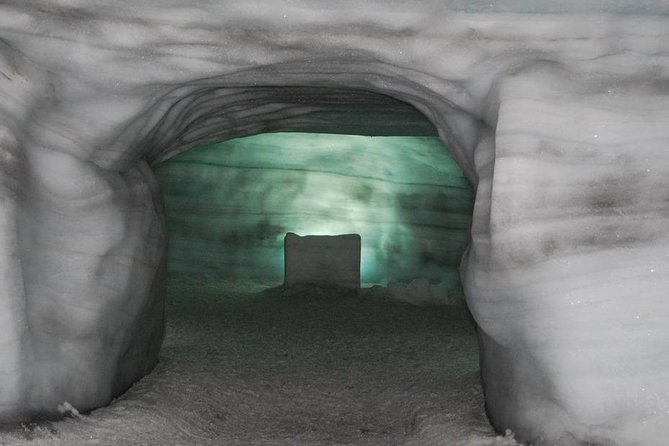
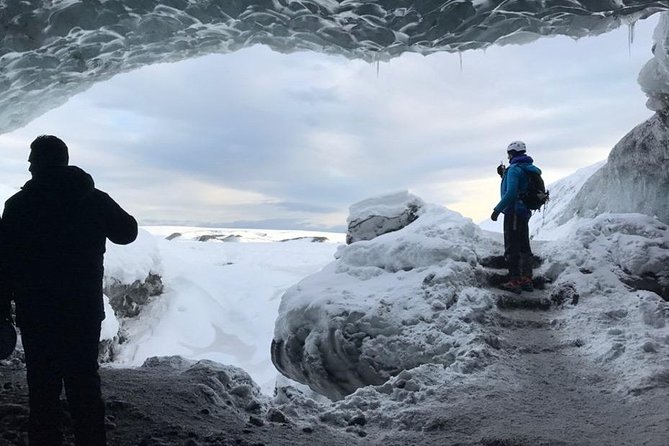
1) Ice cave exploration is described for winter (November–March). If your travel dates fall in that window, you should expect an ice cave style visit as part of the route, with a stop near Höfn.
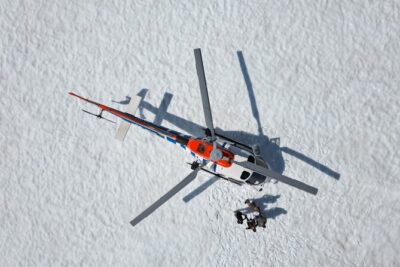
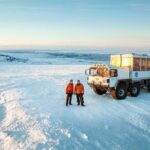
2) A different glacier activity, Into the Glacier, is described for summer (April–October) at Langjökull. This trip uses a monster truck to transport you onto the glacier, with a guide on top for the experience. Pickups are in Húsafell, and the view is noted as especially spectacular in good weather.
If you’re choosing travel months, this matters. You might not get the exact same ice experience across the year.
East Iceland’s Thermal Zones and the Big Waterfall Charge
As you move toward East Iceland, you get Djupivogur, a picturesque fishing village known for art and coastal views. It’s a calmer moment before the heavy geology days ahead.
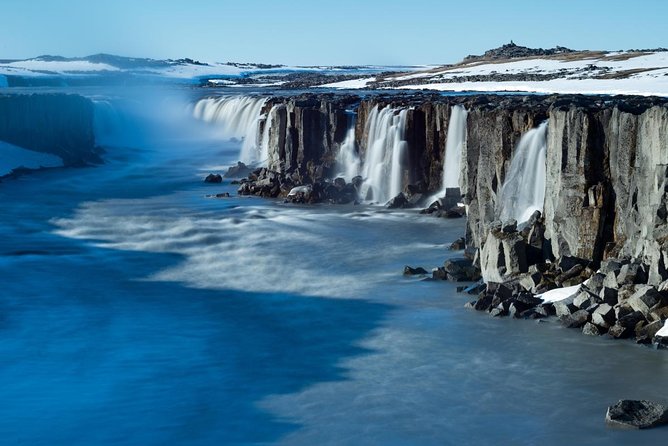
Then you track toward Hengifoss and Litlanesfoss. Hengifoss is described as one of the highest waterfalls in Iceland, while Litlanesfoss is surrounded by basalt columns. This is a good reminder: even when waterfalls look similar in photos, their geology and setting can feel totally different up close.
At Lake Mývatn you settle in for the North Iceland region. The route includes a stop near Egilsstaðir and then pushes toward Dettifoss, which is described as Iceland’s largest and most powerful waterfall, dropping about 100 meters into Jökulsárgljúfur canyon. That’s not a “pretty waterfall” kind of stop—it’s raw force. Wind can be brutal here, so plan for that with layers and eye protection if you have it.
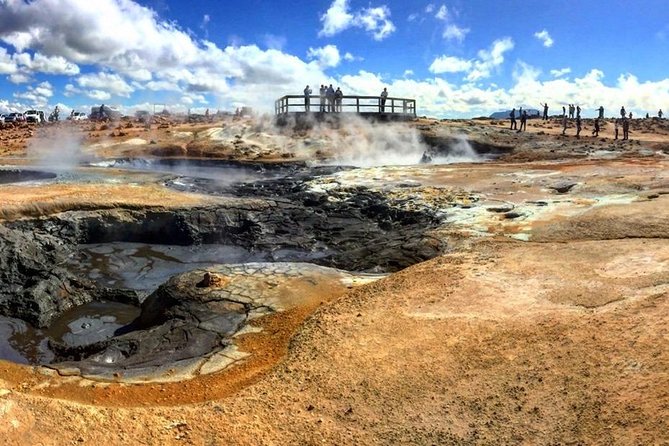
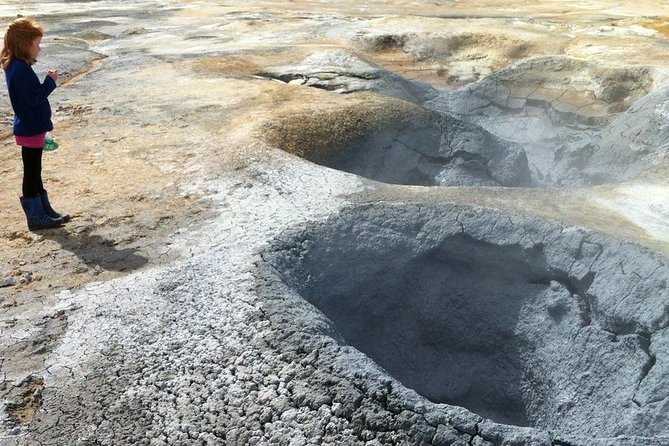
Before you leave the region, you visit Námaskarð (often called Hverarönd): active thermal fields with bubbling mud pools, steaming ground, and colorful fumaroles due to sulfur and mineral deposits. Nearby is the Krafla volcanic area, tied to a central volcano.
Then you add Dimmuborgir, lava formations made of massive lava tubes and part of the mythology of the Icelandic jule lads. Even if you don’t care about folklore, the lava shapes are the kind you can’t “unsee” once you’re standing inside the scene.
Myvatn Nature Baths and Goðafoss on the Way Toward Akureyri
After thermal geology, your body needs a break. You’ll get that at Myvatn Nature Baths (Jarðböð), a naturally heated man-made lagoon with mineral-rich water. You’ll spend about two hours here, which is a very real recovery tool on a trip with lots of standing and walking.
Next is Goðafoss, the “Waterfall of the Gods.” It’s another stop where you get the waterfall view plus the sense of this island’s water power shaping everything around it.
Then you arrive in Akureyri with a city tour feel and dinner on your own. Akureyri is where the trip begins to feel more human-scaled after days of pure geology.
Kirkjufell Views and Snæfellsnes Coastal Classics
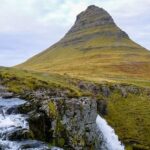
On the drive further west, you stop at Kirkjufell, one of Iceland’s most photogenic mountains, with Kirkjufellsfoss nearby. Even if you’ve seen it online, seeing it in real weather feels different—because the sky and light move fast.
Then you head into the Snæfellsnes Peninsula portion of the trip. The stops here are varied and very “Iceland” in the sense of legends and rock formations:
- Djúpalónssandur Beach for black pebbles and the wreckage story from 1948.
- Hellnar for an old fishing village feel and rock formations.
- Vatnshellir Cave, a lava tube in an 8,000-year lava field, accessible as a walk-in cave.
- Arnarstapi, a coastal village tied to legend and rock formations.
- Lóndrangar basalt cliffs, volcanic plugs shaped by erosion.
If you want one day that feels less about one big attraction and more about hours of shifting scenes, this peninsula portion delivers.
West Iceland Waterfalls: Hraunfossar, Barnafoss, and Borgarnes
Before returning toward Reykjavík, you get a quieter stretch through Borgarfjörður and its waterfalls.
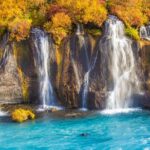
At Hraunfossar, you see a series of waterfalls streaming out of porous lava into the Hvítá river over about 900 meters. It’s unusual because the water looks like it’s spilling from the ground rather than only pouring down from a single cliff.
Near that is Barnafoss, or children’s waterfall, with a story tied to a natural bridge of lava and a tragic legend. The point here isn’t whether you love myths—it’s that this stop gives a different flavor than the big, roaring “main stage” waterfalls earlier in the trip.
You’ll also pass through Borgarnes briefly, and then the tour loops back toward Reykjavík for your final days in the cycle.
Price and Logistics: Is $11,101.77 Per Person Good Value?
Let’s talk straight. This is expensive. But you’re not only paying for a guide and a vehicle.
This tour lists hotels or guesthouses with daily breakfast, private transportation, a tour guide, and entrance for all sights and activities (with dinner and lunch described as extra). That matters because Iceland attractions often add up, and the cost of time is real—especially when you’re trying to hit a full island circle.
So the value question comes down to this:
- If you hate driving in Iceland’s weather and want your days organized for you, the price can feel more rational than you expect.
- If you can handle planning and car rental logistics, you could likely spend less.
- For a private trip at this rate, I’d only book if you want a calmer brain: fewer decisions, fewer logistics, and more guided context at each stop.
Also, the tour depends on good weather. If conditions force a change, you’ll either be offered another date or a full refund, but it still means flexibility is part of the deal.
Who This Tour Fits Best
I’d point this tour toward:
- People who want the most sight-per-day while still keeping the trip personal.
- Travelers who dislike car rentals and want someone else to handle route logic.
- Anyone who values guided explanation at places like Thingvellir, thermal fields, glaciers, and lava formations.
I might not choose it if:
- You’re on a tight budget (this price is the key limiter).
- You prefer slow, small hiking days with lots of free time. This is a “see a ton” route.
One more detail: it notes that most travelers can participate, which suggests the main requirement is being comfortable with regular walking and changing weather.
Should You Book This Private Iceland Circle Tour?
If you want a full Iceland circuit with minimal stress, this tour has a strong case. The private guide angle plus included stays with breakfast is a practical combo, and the geothermal and glacier stops are exactly the kind of Iceland memories that don’t feel like a letdown halfway through.
Book it if you:
- want car-free touring with pickup and private transport
- care about guided context at major natural sites
- like the idea of soaking in a geothermal bath and then moving straight into ice and waterfalls
Hold off if you:
- don’t want a packed week
- need the lowest price possible
- can’t be flexible about weather-dependent timing
If your ideal Iceland trip is “organized, guided, and unforgettable,” this private weekaround plan is built for that.
FAQ
What does the tour include?
It includes a tour guide, hotels or guesthouses with daily breakfast, private transportation, and entrance for all sights and activities (with dinner and lunch described as extras). All fees and taxes are also included.
Is pickup available?
Yes, pickup is offered, and the start time is 9:00 am.
Is this tour private?
Yes. It’s a private tour/activity, so only your group participates.
Are meals included?
Lunch on day 1 is included. Dinner is not included, and lunch on the other days can be bought on the trip.
How long is the tour?
It’s listed as 7 days (approx.).
Is good weather required?
Yes. The experience requires good weather. If it’s canceled due to poor weather, you’ll be offered a different date or a full refund.
Are glacier activities seasonal?
Yes. Ice cave exploration is listed for November to March, while Into the Glacier on Langjökull is listed for April to October.