REVIEW · REYKJAVIK
8-Days Northern Lights Exploration Tour from Reykjavík
Book on Viator →Operated by GJ Travel · Bookable on Viator
Northern lights don’t show up on a schedule. This 8-day winter tour from Reykjavik mixes guided Iceland highlights with a dedicated aurora program, so you spend less time guessing and more time watching. I especially liked the way the Northern Lights Academy turns night-sky hunting into a plan, not a hope.
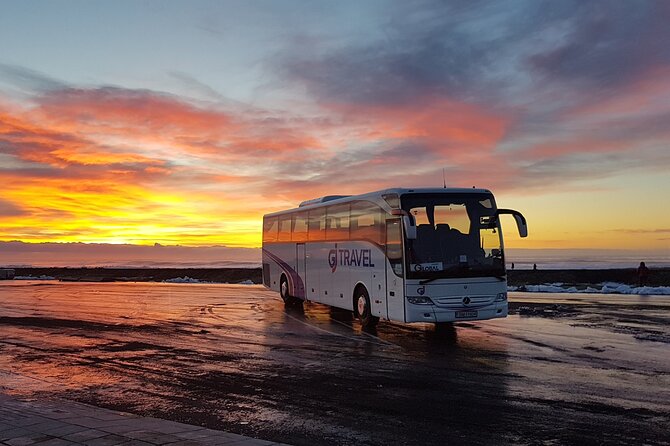
What I like most is that you get both brains and comfort: the Northern Lights Academy uses presentations, film, and guided searches, and the tour supplies winter safety gear like shoe spikes and a flashlight. I also love how the days don’t stick to one theme—hot springs, a lava cave, waterfalls, and glacier icebergs all show up before you know it. The one drawback to consider is that you’ll ride for hours in winter conditions, and aurora sightings still depend on weather.
In This Review
- Key highlights worth clocking before you go
- Price and what you truly get for $3,186 per person
- Reykjavik check-in, transfers, and the start time that matters
- Northern Lights Academy: the difference between hoping and watching
- Day 1 and Day 8 Reykjavik time: a city you can actually walk
- Grabrok Crater and the power of Iceland’s geothermal basics
- Kirkjufell photos and Vatnshellir’s lava-tube reality check
- Thingvellir, Geysir, and Gullfoss: the classic circuit with meaning
- Lava Centre, Skógar Museum, and Reynisfjara: museums and black sand in one day
- Jökulsárlón icebergs and Diamond Beach: where the week goes Arctic
- Vík, Seljalandsfoss, and the Blue Lagoon soak you’ll want after a long week
- Reykjavik farewell and how to use your last hours well
- Who this tour is best for (and who should think twice)
- Should you book this Northern Lights tour?
- FAQ
- How do the airport transfers work?
- What time does the main guided portion start?
- Is the Northern Lights hunting guided?
- What’s included in the cave visit?
- What’s included on the Blue Lagoon day?
- Is it possible to get a different lagoon if Blue Lagoon is closed?
Key highlights worth clocking before you go
- Northern Lights Academy nights built around instruction plus guided searching
- Shoe spikes and flashlight included for darker winter conditions
- Vatnshellir cave guided visit going 35 meters underground inside a lava tube
- Golden Circle power stops at Thingvellir, Geysir area, and Gullfoss
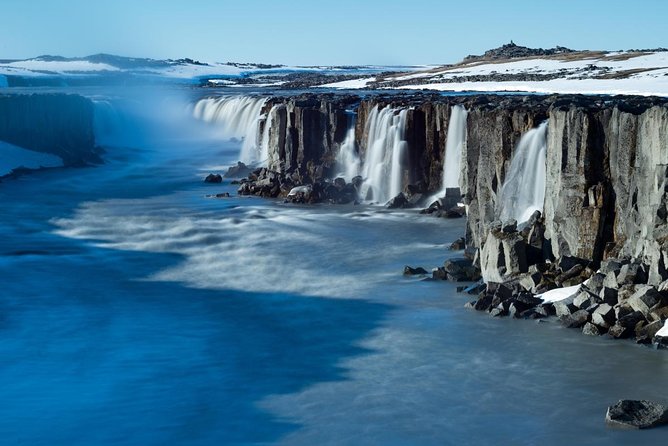
- Glacier day with Jökulsárlón and Diamond Beach for real ice-on-water drama
- Small group size (max 40) keeps the pace human
Price and what you truly get for $3,186 per person
At $3,186.01 per person, this is not a budget trip. But it bundles a lot of the stuff that usually costs extra or takes extra time to organize yourself: 7 nights in comfort tourist-class hotels with breakfast, a fully escorted 6-day bus tour, and a big stack of included activities.
You also get several paid moments baked in. That includes a guided tour into Vatnshellir, a hot spring tasting with geothermally cooked bread and eggs, admission tied to major sights like the Fridheimar geothermal greenhouse/horse visit, and multimedia presentation time at the Eyjafjallajökull Volcano Information Center. Then there’s the aurora component: the tour includes the Northern Lights Academy program plus winter and Northern Lights equipment.
Think of the cost as paying for logistics and certainty where you can get it—transport, planning, and guidance—while still accepting the one thing no tour can control: the sky.
You can also read our reviews of more tours and experiences in Reykjavik.

Reykjavik check-in, transfers, and the start time that matters
Your meeting point is the Hotel KletturMjölnisholt (Klettur and Mjölnisholt area) in Reykjavik. If you’re arriving by air, the airport transfer uses Flybus Plus shuttle service with no guide. You’ll get a Flybus voucher after booking, and the shuttle ride takes about 45 minutes to the BSI bus station in Reykjavik, where you may connect to a smaller coach for your hotel.
The guide meets you at the hotel before the first scheduled departure. On the main tour day 2, you meet in the hotel lobby at 09:00. Day 1 and day 8 are yours to manage at your pace.
This matters because winter days are short and your energy is a real resource. If you want smooth mornings, show up rested on day 2 and plan on being outside early enough to feel the cold.
Northern Lights Academy: the difference between hoping and watching
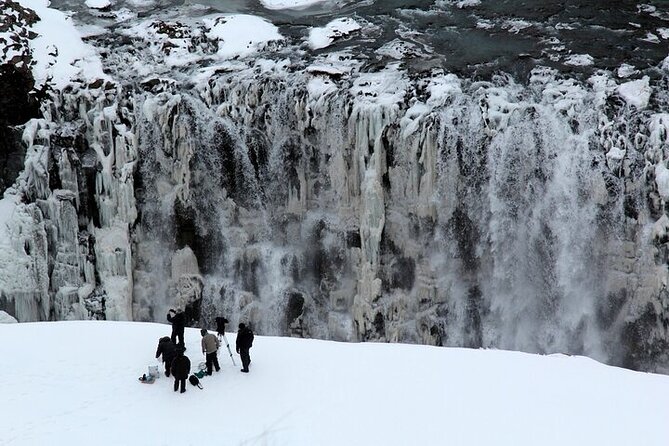
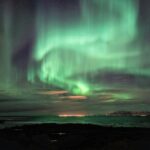
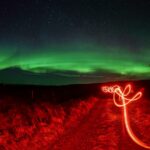
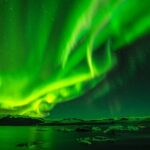
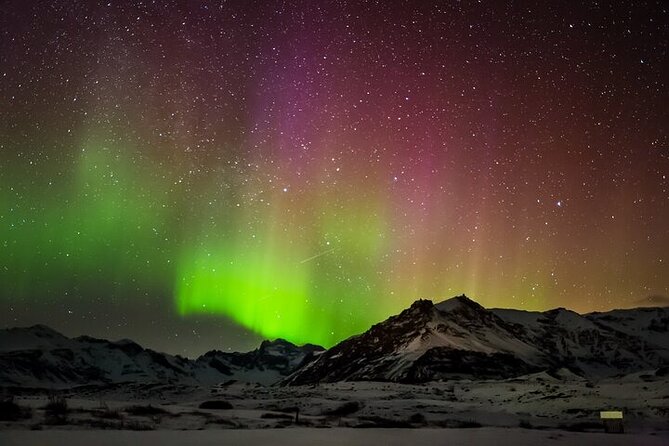
The Northern Lights portion is the heart of this trip, and it’s structured. The Northern Lights Academy program combines presentations, film, and Northern Lights searches. That means you’ll spend more time understanding aurora behavior—how it forms, what to look for, and how searches are handled—rather than just standing in the dark and waiting.
You’re also given winter and aurora support gear: snow and ice grippers (spikes) for your shoes and a flashlight. Those little details are more important than they sound. Slippery ground plus low light is how fun plans turn into cautious shuffling. With spikes and a light, you can focus on watching the sky.
From the included feedback, one standout moment was seeing the northern lights twice during the tour. That doesn’t mean it’s guaranteed, but it does suggest the program actively tries rather than passively hoping.
Day 1 and Day 8 Reykjavik time: a city you can actually walk
Day 1 starts with you in Reykjavik. If you arrive early or have a little time, this hotel location is useful because the main shopping street, Laugavegur, is close and walkable. That helps on a winter arrival day when you want a simple plan: drop bags, get food, and get your bearings without a complicated schedule.
Day 8 gives you another chunk of Reykjavik downtime (about 4 hours). If you want last-minute souvenirs, warm cafés, or just a final look at the city before you leave Iceland, that free time makes the trip feel less like a blur.
Just keep your expectations in check: winter daylight is brief. Use your Reykjavik time for small wins that don’t depend on perfect weather.
Grabrok Crater and the power of Iceland’s geothermal basics
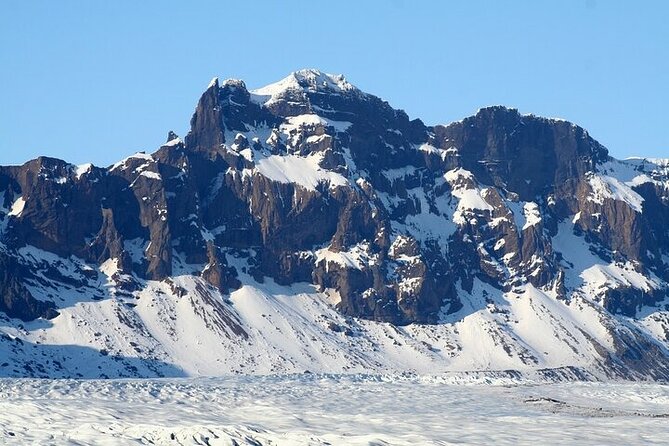
The tour kicks off its nature highlights with a day built on geothermal force and volcanic texture. You’ll visit Grábrók (Grabrok) crater, described as about 3,000 years old and surrounded by a moss-covered lava field. There’s a chance to walk up toward the rim for around 20 minutes, which is short enough for most people and long enough to feel the terrain and get a view.
From there, you go to Deildartunguhver Thermal Spring, listed as Europe’s most powerful hot spring. The numbers here are the point: it produces about 180 liters per second of water at nearly boiling temperatures around 97°C. Even if you don’t care about the science, this stop makes Iceland’s heat feel real.
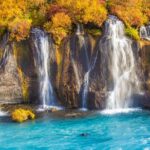
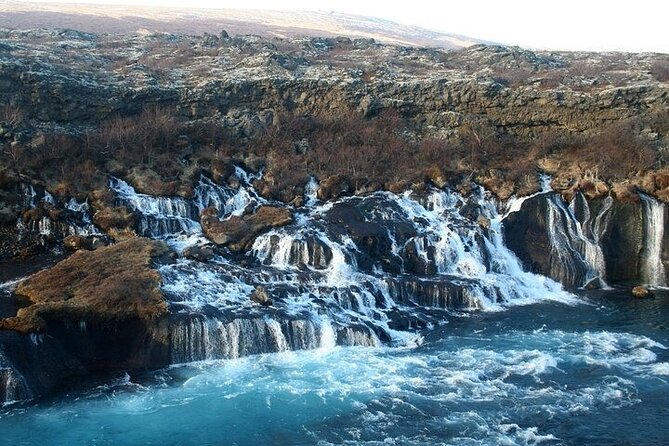
Then you switch to waterfall energy with Hraunfossar (Lava Falls) and the nearby Barnafoss (Children’s Fall). Hraunfossar is described as a waterfall of hundreds of meters wide that appears under a birch-covered lava field. Barnafoss has strange rock figures and a tragic tale tied to it, though the bigger takeaway is atmosphere and contrast: heat and water, lava and trees, soft movement and sharp geology.
Kirkjufell photos and Vatnshellir’s lava-tube reality check
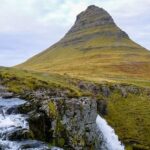
On day 3, you get a famous photo stop at Kirkjufell Mountain—one of Iceland’s best-known silhouettes, jutting into the bay. The stop is brief (about 10 minutes), so treat it like a fast chance to frame your own version of that iconic scene.
After that, you go underground to Vatnshellir Cave, a guided visit included in the tour. The description is clear: you go about 35 meters below the surface and roughly 200 meters into the lava tube beneath the glacier Snæfellsjökull. That matters because this isn’t just a walk to a viewpoint. You’re inside geology, where sound, damp air, and scale feel different than above-ground stops.
A good way to enjoy this day is to remember the rhythm: quick photos on the way, then one longer, hands-on experience. Cave tours in winter can be damp and dark, so you’ll be glad you’re going with a guide rather than trying to figure it out on your own.
Thingvellir, Geysir, and Gullfoss: the classic circuit with meaning
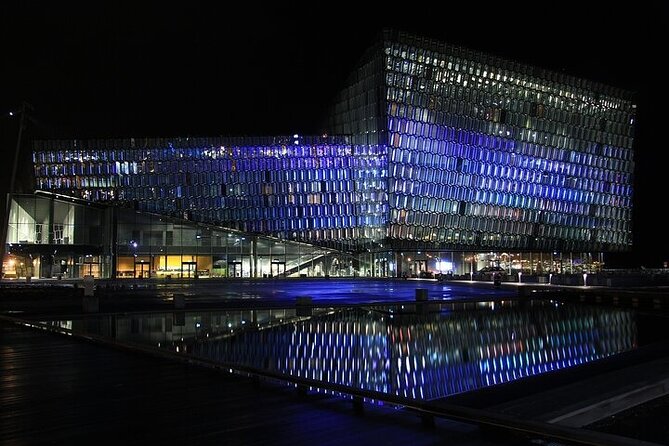
Day 4 leans into the Iceland many people plan for: Thingvellir National Park, geothermal hot springs, and a major waterfall.
At Thingvellir, you’re at a UNESCO World Heritage site (since 2004). The big cultural hook is the Alþingi, described as the oldest existing national parliament in the world. But the same stop also hits geology: you’re strolling through a sacred area with fissures and open plains beside Thingvallavatn, Iceland’s largest lake. It’s one of those places where history and landforms sit in the same frame.
Next you visit Geysir, where the original geyser is dormant, and Strokkur becomes the star. Strokkur erupts in intervals of about 5–10 minutes, which is frequent enough that you can likely see more than one burst if timing works out.
You’ll also get a tasting at the Geysir area. The tour includes freshly baked hot spring bread with Icelandic butter, boiled eggs, and herring. Yes, it sounds quirky. That’s exactly why it’s memorable—you’re literally eating something cooked by geothermal heat.
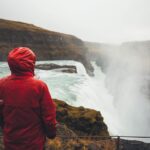
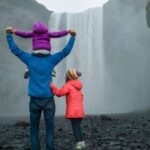
Then it’s Gullfoss Waterfall. It drops 32 meters in a double cascade, and on a sunny day a rainbow is likely thanks to the massive spray. Even when the sun doesn’t cooperate, Gullfoss is still force-forward.
Finally, you finish the day at Fridheimar, where you learn about Icelandic horses and visit a geothermal greenhouse. This is a good contrast after waterfalls and steam: it shows how people use heat in everyday life.
Lava Centre, Skógar Museum, and Reynisfjara: museums and black sand in one day
Day 5 is a busy day made for variety. You start at the Lava Centre, a multimedia, interactive exhibition about geology and active volcanoes. The value here is that it gives you vocabulary for what you’ve been seeing all week—lava textures, volcanic forces, and the logic behind Iceland’s terrain.
Then you head to Skógar Museum, described as one of Iceland’s finest folk museums. It focuses on farm and domestic artefacts from Iceland’s past, plus turf-built houses. This is the kind of stop that helps you understand why Icelandic life took the shapes it did, especially when winters are long and survival depends on how you build and store.
After that, you get a multimedia presentation tied to the Eyjafjallajökull eruption under the glacier (the 2010 event that caused major disruption to air traffic across Europe for a week). This stop helps you connect volcanic activity to real-world impact, not just dramatic scenery.
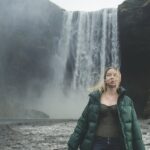
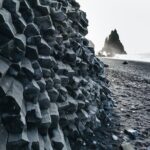
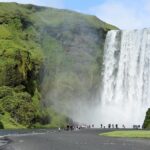
Then the day turns hard and coastal: Reynisfjara Black Sand Beach with bird cliffs and rock formations, including columnar basalt and caves. It’s scenic and atmospheric, but be ready for wind. After that you visit Skógafoss, a 60-meter waterfall in the Skógar village. Two totally different waterfall moods in one day.
If you like your days packed with different types of experiences—museum, science, coast—this is one of the strongest days for that.
Jökulsárlón icebergs and Diamond Beach: where the week goes Arctic
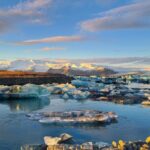
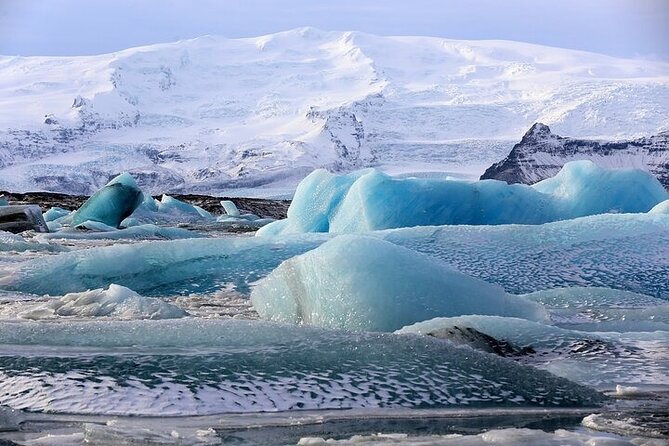
Day 6 is the glacier-and-ice heavyweight. You start at Jökulsárlón, a glacial lagoon full of floating icebergs. The tour includes time to explore the site, and there’s a chance to spot seals swimming in arctic waters.
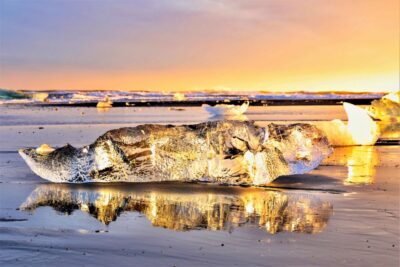
Across the road is Fellsfjara, the black sandy beach also called Diamond Beach. The icebergs from Jökulsárlón can get stranded here, which makes the shoreline look scattered with pale blocks against dark sand.
Then you stop at Hof, a tiny turf church built in 1883—listed as the youngest turf church in Iceland. It’s quick, but it adds a human scale to a day that’s mostly ice and geology.
Finally, you enter Vatnajökull National Park, described as Europe’s largest national park, with Iceland’s highest mountains, an alpine environment, and Europe’s largest glacier, Vatnajökull. This is the day that makes Iceland feel huge. Even if you don’t hike far, you’ll understand why the glacier is central to the country’s story.
Vík, Seljalandsfoss, and the Blue Lagoon soak you’ll want after a long week
Day 7 keeps the winter energy moving. You visit Vík, where you make a photo stop with views over a black lava beach and high bird cliffs. The stop is short, but the scenery is the kind that makes you stop talking and just look.
Then you go to Seljalandsfoss, described as a ribbon-like waterfall dropping from an overhanging lava cliff. You can walk behind it, but the tour notes that you should not expect to stay dry. That is honest—and it’s exactly why this stop is popular. You’ll feel the spray and hear the roar from an angle most visitors never get.
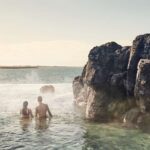
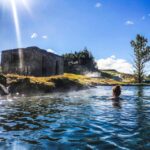
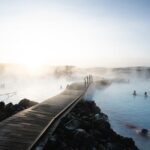
After all that outdoor time, you finish with the most relaxing stop on the schedule: the Blue Lagoon. The tour includes admission and a towel, and it’s described as a geothermal pool in a dramatic lava field, existing thanks to a nearby geothermal power plant.
One helpful real-world note from the trip feedback: in one case, the Blue Lagoon was closed due to volcanic activity, and the provider rebooked the group for Sky Lagoon, which worked out well. So if conditions force a change, there may still be a planned replacement rather than a total loss of your soak time.
Reykjavik farewell and how to use your last hours well
Day 8 ends with Reykjavik again, with about 4 hours of free time. This is a good moment to do the simple things you don’t want to schedule on a tour day: pick up snacks for your next leg, do one last walk along Laugavegur, or just grab a warm drink while you digest the week.
I like leaving a trip like this with one calm block at the end. It stops the post-tour feeling from becoming pure rush.
Who this tour is best for (and who should think twice)
This 8-day Northern Lights exploration tour is a strong fit if you want a guided, structured way to chase the aurora and you’d rather spend your brainpower on the sky than on routing around Iceland in winter.
You’ll probably like it most if:
- You want a mix of geothermal, waterfalls, and glacier ice in one trip
- You value the aurora program, not just the idea of seeing lights
- You’re okay with long driving days because the sights are spread out
The biggest reason to think twice is the same reason it’s effective: the itinerary covers a lot of ground. If you dislike being on the bus for hours, or you want a slower pace, you might find the schedule tight.
Should you book this Northern Lights tour?
If your priority is maximizing learning and getting into the mindset of aurora watching, I’d say this booking is worth considering. You get Northern Lights Academy instruction, you’re provided shoe spikes and a flashlight, and you still get major Iceland highlights—from Vatnshellir to Jökulsárlón and a final soak at the Blue Lagoon.
I’d book if you like structure, you want hotels handled for you, and you’re excited by the idea of turning nighttime hunting into an actual activity. I’d hesitate if you want a laid-back vacation with minimal driving, or if the trip cost feels hard to justify without flight and spending flexibility.
FAQ
How do the airport transfers work?
The tour includes arrival and departure airport transfer by FLYBUS Plus shuttle. It says there is no guide. You’ll get a Flybus voucher after booking, and the transfer takes about 45 minutes to the BSI bus station in Reykjavík, where you may be transferred to a smaller coach to reach your accommodation.
What time does the main guided portion start?
Your tour guide meets you at Hotel Klettur before the 09:00 departure time.
Is the Northern Lights hunting guided?
Yes. The Northern Lights Academy program includes a mix of presentations and film, plus Northern Lights searches. The tour also provides winter and Northern Lights equipment, including snow and ice grippers for your shoes and a flashlight.
What’s included in the cave visit?
The tour includes a guided visit into Vatnshellir Cave, taking you about 35 meters underground and around 200 meters into the lava tube under Snæfellsjökull.
What’s included on the Blue Lagoon day?
Blue Lagoon admission and a towel are included as part of the tour.
Is it possible to get a different lagoon if Blue Lagoon is closed?
The tour data states Blue Lagoon admission and towel are included. In one review example provided with this experience, Blue Lagoon was closed due to volcanic activity and the group was rebooked for Sky Lagoon instead.