REVIEW · REYKJAVIK
Reykjavik: 1-Hour Puffin Watching Tour
Book on GetYourGuide →Operated by Elding Adventure at Sea · Bookable on GetYourGuide
The puffins are right there, not far away. This short Reykjavik boat tour takes you toward puffin breeding islands like Lundey, Engey, or Akurey, with a naturalist guiding what you’re seeing and where to look. You’ll sail from the center of town, get practical wildlife viewing time, and learn seabird facts while the sea birds do their thing.
I love two parts: the free onboard binoculars (the difference between blobs and real birds) and the warm comfort setup, including overalls/raincoats/blankets so you can focus on spotting.
One thing to keep in mind is that weather and tide can affect how close the captain can get to the islands, so your puffin view may vary day to day.
In This Review
- Key points to know before you go
- Why This 1-Hour Puffin Tour Works in Reykjavík
- Timing, Tide, and Weather: Your Real Variables
- Starting at Ægisgarður 5: The Harbor Is Part of the Day
- The Yacht Portions: Short Sailing That Doesn’t Feel Like Wasted Time
- Reykjavík’s Puffin Islands: Lundey, Akurey, or Engey
- Wildlife Viewing Time: What You’ll Actually See
- Binoculars and Warm Gear: The Comfort Advantage
- How Close Is Close Enough for Photos?
- The Guide Factor: Stories That Make Bird Spotting Click
- Responsible Viewing: Up Close Without Rushing Them
- Who Should Book This Puffin Cruise (and Who Might Not)
- Price and Value at $66: What You Get for a Short Trip
- Should You Book This 1-Hour Puffin Tour?
- FAQ
- How long is the Reykjavík puffin watching tour?
- Where do I check in?
- Which islands will the boat visit?
- Are binoculars provided?
- What should I wear?
- Are refreshments included?
- Is the tour wheelchair accessible?
- Are large bags allowed?
- What is the weather-like setup onboard for staying warm?
- What are the rules for footwear?
Key points to know before you go
- Choose your island by tide and weather: Your route may be Akurey, Engey, or Lundey.
- Plan for real bird time: About 30 minutes is dedicated to wildlife viewing near the island.
- Binoculars are included: You’ll borrow them onboard, which matters because puffins are small.
- You might hear the birds: If conditions allow, the captain may shut off the engines to let you listen.
- Warm gear keeps the trip pleasant: Overalls/raincoats/blankets help even in cold drizzle.
- It’s built for responsible wildlife viewing: You’re close enough to watch without harassing birds.
Why This 1-Hour Puffin Tour Works in Reykjavík
If you’re short on time in Iceland’s capital, this is the kind of activity that fits. You don’t need a half-day drive or complicated logistics. Instead, you get a focused burst of seabird watching while you’re already in Reykjavík, which makes it ideal for cruise stopovers or a quick “one more Iceland thing” before dinner.
The other smart part is what you’re actually paying for. The $66 ticket isn’t just boat rides. It includes warm clothing and onboard binoculars, plus a naturalist guide who helps you spot birds that are easy to miss from a distance. That combination turns a cold, choppy harbor outing into something you can really interpret and enjoy.
The tour’s goal is also refreshingly practical: you’re watching puffins in their breeding area on nearby islands, and you’re doing it in a way meant to be environmentally friendly and responsible. The operators also note that ticket purchases support summer research and wildlife protection projects, which gives the experience a purpose beyond sightseeing.
You can also read our reviews of more tours and experiences in Reykjavik
Timing, Tide, and Weather: Your Real Variables
This tour is designed around the fact that the sea and the birds do not follow your schedule. Depending on tides and weather conditions, the captain heads to Akurey, Engey, or Lundey. Those factors also change how close you can get to the rocks where puffins are nesting.
In plain terms: if the tide works against you, the boat may not reach the exact spots you’d hoped for. You might still see lots of puffins flying around and in the water, but the most “up close on land” moments can be more limited. One good example from the tour’s feedback is advice to ask ahead which departures line up better with high tide, since that can affect closeness.
Weather is the other factor. Reykjavík in summer can still mean cold drizzle, wind, and gray skies. The good news is that the tour prepares you for that: warm overalls/raincoats/blankets help a lot. Still, if you’re going for photos, you’ll want to dress for conditions, because low light and rain can make your camera work harder.
Starting at Ægisgarður 5: The Harbor Is Part of the Day
Check in at the Elding ticket office at Ægisgarður 5, right in the center of Reykjavík. It’s only a short walk from downtown, which matters because Iceland days can move fast once you’re outside.
After you check in, you can look around the harbor area. There’s time to browse the Whale Watching Centre, watch videos, and see the exhibits like skeletons and information boards (plus gifts for sale if you want a small souvenir). This is a helpful wait strategy because you’re already warm and indoors before you step onto the boat in the cold air.
One practical tip: arrive early enough to feel unhurried. Parking can be tricky in central Reykjavík, and a calmer start helps when you’re also managing coats, gloves, and camera gear.
The Yacht Portions: Short Sailing That Doesn’t Feel Like Wasted Time
Even though the official duration is listed as 1 hour, the day’s shape makes sense once you’re on board. You’ll spend short stretches sailing out and back, with the key wildlife time focused on one island stop.
Expect a rhythm like:
- a brief departure segment out toward the islands
- about 30 minutes focused on wildlife viewing
- then the return sailing back to Reykjavík
Some departures run a bit longer in real life, often because of how long it takes to position the boat around harbor conditions. So I’d plan your schedule with a little buffer, especially if you’re catching a bus or meeting someone for dinner.
The boat setup also helps with viewing. Reviews from past departures mention boats that are comfortable and not packed, with enough space to move around and find a good viewing angle. If you get motion sick easily, note that some crews provide motion sickness pills—if it matters to you, it’s worth asking at check-in or on board.
Reykjavík’s Puffin Islands: Lundey, Akurey, or Engey
This tour targets the seabird breeding areas on the rocky islands near Reykjavík, and your route depends on tide and weather. You might visit:
- Lundey
- Engey
- Akurey
These islands are known for heavy bird activity. Puffins are the headline, but the tour also sets you up to spot other seabirds. You may see things like:
- eider ducks
- arctic terns
- guillemots
- cormorants
- fulmars
- geese
- oystercatchers
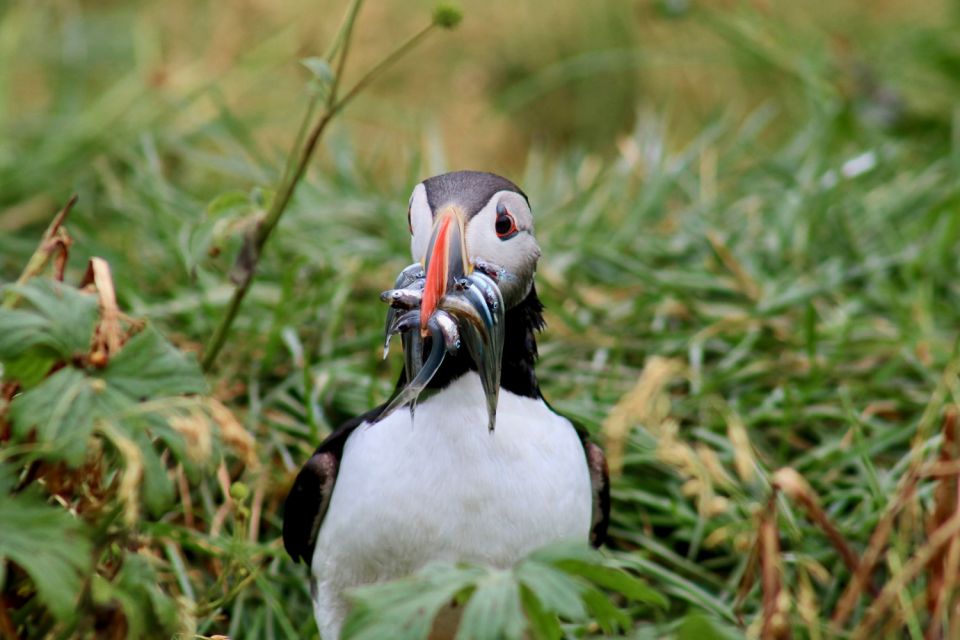
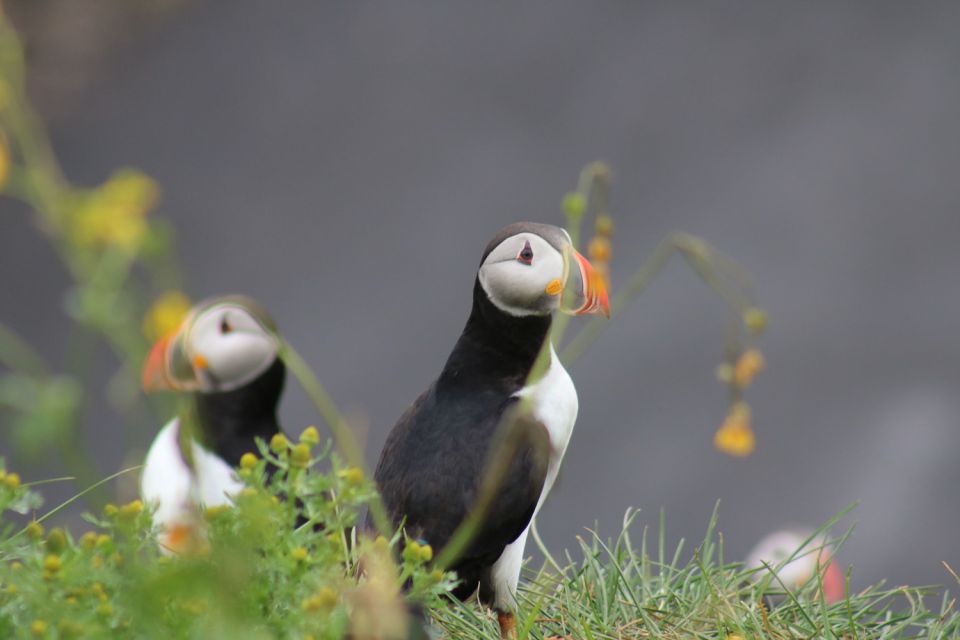
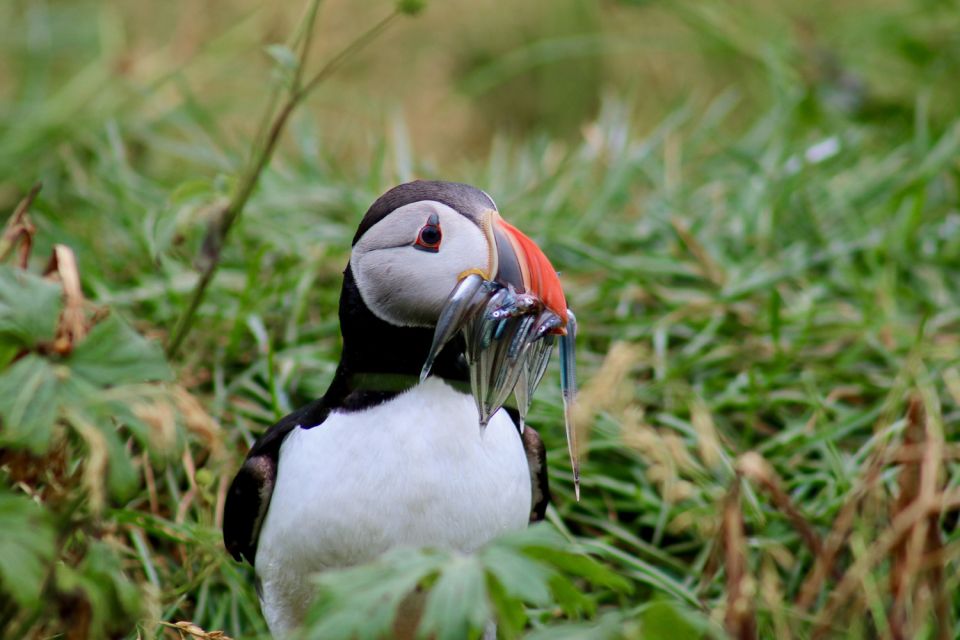
A key detail for your expectations: the shores are rocky, and puffins can be small at distance. That’s exactly why the tour includes binoculars. With the binoculars, you stop guessing and start recognizing behaviors—birds standing near burrows, birds flying in tight rhythms, and birds moving between water and landing spots.
If conditions are right, there’s even a chance the captain turns off the engines so you can hear the birds’ calls. That kind of quiet moment is a big part of why short tours still feel special.



Wildlife Viewing Time: What You’ll Actually See
Your strongest viewing block is about 30 minutes near the island. This is when puffins are most likely to be visible clearly—either on land near nesting areas or out on the water and in the air.
Here’s what I’d focus on when you’re on the island approach:
- Look for movement and clusters: puffins often appear in groups around the breeding area.
- Track flight patterns: when birds are flying close to the boat, you’ll get multiple chances at good viewing.
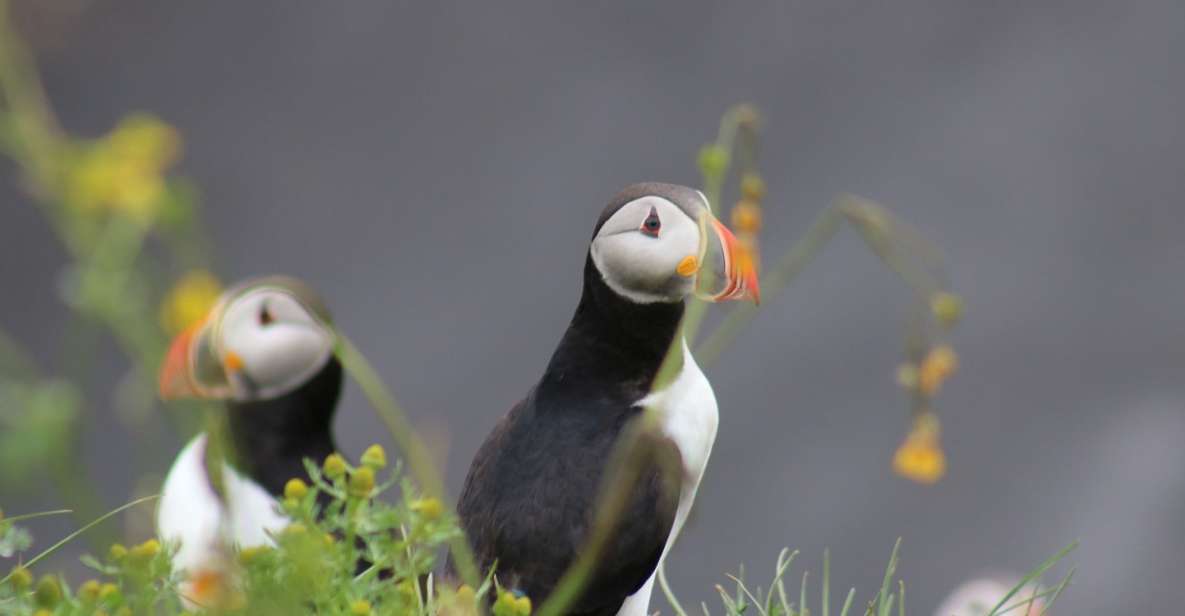
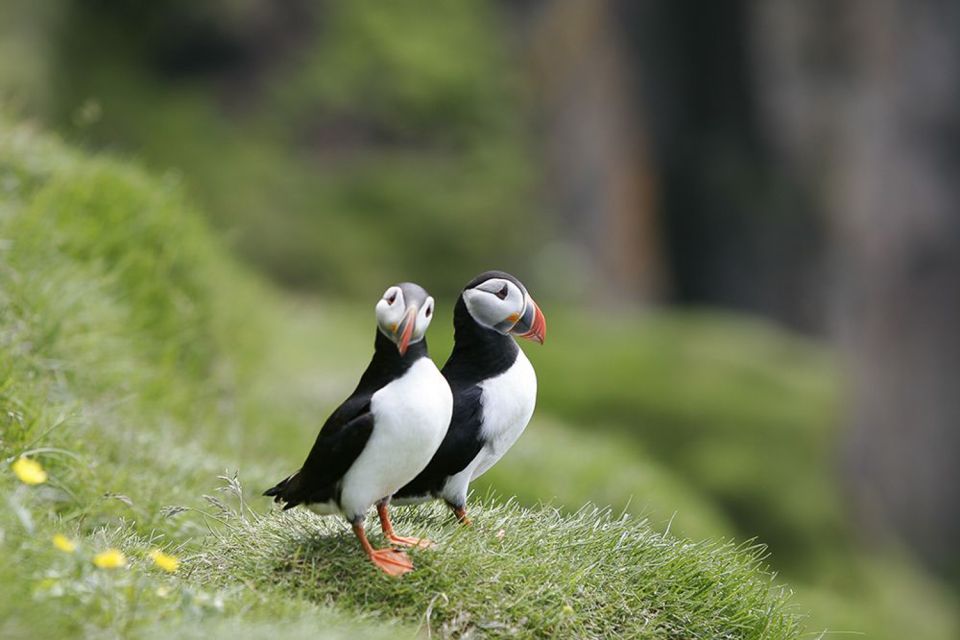
- Use binoculars for bill color and posture: puffins have distinctive features during breeding season, and the bright bill plus their piebald plumage makes identification easier once you’re close enough to see details.
On some days, you may also spot additional wildlife like seals mentioned in feedback. Even if you don’t, the bird variety on this route can still make the experience feel full.
Binoculars and Warm Gear: The Comfort Advantage
The tour includes what you need to make the birdwatching part work in Iceland weather. You get:
- warm overalls
- raincoats
- blankets onboard
- onboard binoculars to borrow
You’ll also likely have options to keep dry, like borrowing rain gear or jackets. That’s not fluff. Cold and wet can turn a great spotting session into a sprint to get warm. With the clothing provided, you’re more likely to stay focused on watching long enough to actually see behavior.
Also, onboard comforts matter for short tours. If you’re only spending an hour total, there’s no time to tough it out. This setup helps you wait out mist, wind, and sudden sea spray while still having a chance to spot birds clearly.
And yes, there can be small extras that make it feel warmer and more Iceland-like—some departures mention seaman’s coffee to sip onboard.
How Close Is Close Enough for Photos?
If your dream is ultra-tight close-up photos, you should calibrate expectations. Puffins are small, and the boat has to keep an appropriate distance from the nesting area. That doesn’t mean it’s disappointing. It means you’ll need the right tools.
Here’s the practical way to think about it:
- With binoculars, you’ll see puffins clearly enough to understand what you’re looking at.
- For photos, bring a camera you can handle in cold hands and keep steady during any wind.
- Use the binocular viewing to pick targets, then aim your camera when the birds move into better positions.
Also, watch for the “on land versus in flight” moments. Puffins may linger and give you repeated opportunities. When they fly past or land near the island edge, you can get better shots than when they’re static and far away.
One nice perk from some departures: guides may take photos during the tour and share them afterward by email. That’s not guaranteed for every departure, but it’s a real possibility based on what’s been shared before. If that matters to you, it’s worth asking your guide during the ride.
The Guide Factor: Stories That Make Bird Spotting Click
A good nature guide turns seeing birds into understanding them. This tour includes a naturalist guide, and that role shows up in the way the group learns what they’re seeing—how puffins behave during breeding season, what they eat, how they raise young, and how predators and surroundings shape the scene.
Some guides you might meet on different departures include people like Frida or Olivia, who have been specifically praised for explaining puffin life and sharing stories while you watch. Even if your guide’s style is different, the consistent promise is that you’re not left with just a boat and a hope.
If you like learning something quickly and applying it immediately, you’ll likely enjoy this structure. A fact gets taught, then you spot it on the water.
Responsible Viewing: Up Close Without Rushing Them
One of the quietly important points here is the tour’s framing: you’re seeking proximity while avoiding disturbance. That’s why the route follows tides and weather and why closeness isn’t the only goal. Puffins are breeding on these islands, and the best sightings happen when you observe without pushing.
The tour also notes your ticket supports research and wildlife protection projects. I like that because it gives me a reason to feel good about spending time on wildlife, not just collecting a photo.
Who Should Book This Puffin Cruise (and Who Might Not)
This is a good fit if you want:
- a short activity in Reykjavík with a high chance of puffin sightings
- warm gear and binoculars included
- a guided experience that helps you interpret what you’re seeing
It’s likely less of a fit if you have limited mobility needs. The tour explicitly notes it is not suitable for wheelchair users. If that affects you, you’ll need to look at other options.
Also, if you’re hoping for an all-day expedition, this won’t be that. This is compact and efficient. You’re there to watch, learn, and return—without turning it into a long slog.
Price and Value at $66: What You Get for a Short Trip
At $66 per person, this isn’t a budget throwaway. But it also isn’t trying to be one. For the price, you get a guided puffin-focused outing, with real viewing tools included.
Here’s why the value can work:
- Binoculars are included, so you don’t need to buy anything extra to see clearly.
- Warm overalls/raincoats/blankets are provided, which matters in Iceland more than most places.
- You’re traveling from central Reykjavík by water to islands where seabirds breed, which is hard to replicate on your own.
Could you find cheaper wildlife viewing in Iceland? Maybe. But it’s hard to beat the convenience of a short guided boat trip that’s set up for spotting. In feedback, people often call out that even though puffins are small and distance varies, the trip still delivers plenty of birds, with time to watch rather than just transit.
Should You Book This 1-Hour Puffin Tour?
Book it if you want an efficient puffin experience with the basics handled for you. You’ll have binoculars, warm gear, and a guide who helps you find the birds and understand their breeding behavior. If your time in Reykjavík is tight, this is one of the most practical ways to see puffins without planning a longer day.
Skip it (or at least adjust expectations) if your main goal is extreme close-up land photos. The boat has to keep appropriate distance, and tides/weather can affect how close you get. You may still see tons of puffins in flight and on the water, but the dream of bird-at-the-burrow shots depends on conditions.
If you go in knowing it’s a short, guided wildlife outing designed for viewing success—not a guarantee of perfect proximity—you’re likely to come away happy.
FAQ
How long is the Reykjavík puffin watching tour?
The activity is listed as 1 hour. The island cruise and the focused wildlife viewing time mean you’ll spend a chunk of that time on the water, with wildlife viewing around 30 minutes.
Where do I check in?
Check in at Elding’s ticket office at Ægisgarður 5, 101 Reykjavík, no more than about a 5-minute walk (under 300 meters) from downtown.
Which islands will the boat visit?
Depending on tide and weather, the tour heads to Akurey, Engey, or Lundey.
Are binoculars provided?
Yes. You can borrow onboard binoculars for the viewing.
What should I wear?
Bring weather-appropriate clothing. You’ll also be provided warm overalls/raincoats and blankets onboard.
Are refreshments included?
Refreshments are not included, though you can purchase them onboard.
Is the tour wheelchair accessible?
No. The tour is not suitable for wheelchair users.
Are large bags allowed?
Luggage or large bags are not allowed.
What is the weather-like setup onboard for staying warm?
You’ll have warm overalls, raincoats, and blankets, and there’s borrowing of rain gear mentioned for staying dry.
What are the rules for footwear?
High-heeled shoes are not allowed.
If you tell me your travel dates (and whether you’re arriving by cruise), I can also help you pick a departure time window that makes sense for tides and daylight.