REVIEW · REYKJAVIK
13-Day Iceland Geology Adventure Guided Tour from Reykjavík
Book on Viator →Operated by Iceland Geology Tours- Adventure Geology Tours · Bookable on Viator
Iceland’s rocks talk here. This 13-day guided geology adventure takes you across the island to connect tectonic plates, volcanism, and glacial shaping, guided by Dr. Jovanelly’s field-guide approach and real-world expertise from long research in Iceland. You’ll pair big-name sights with hands-on moments that explain what you’re seeing as you’re standing in it.
What I like most is the small-group size (max 16), which makes it easier to ask questions and actually get time at the interesting spots. I also like that excursion fees are included in the price, so the itinerary doesn’t turn into a stop-and-start budgeting exercise every day.
One thing to consider: this trip is weather-dependent, and the experience notes that it requires good conditions to run as planned. If weather shuts things down, you’ll be offered a different date or a full refund, but the trip itself is non-refundable if you cancel.
In This Review
- Key highlights that matter (and why)
- Geology teaching that feels like fieldwork: Dr. Jovanelly and Joe Cook
- How the day structure works: a 7:00 am start and real time outside
- Days 1 to 4: Reykjavík setup, geothermal first hits, and classic plate tectonics
- Day 1: Reykjavik orientation and group dinner
- Day 2: Blue Lagoon plus Fagradalsfjall Volcano
- Day 3: Hellisheidi geothermal power, the Bridge Between Continents, and scoria
- Day 4: Þingvellir, Gullfoss, and Geysir
- Days 5 to 7: Hekla, a glacier-top hike, and iceberg lagoon contrasts
- Day 5: Lava Centre and Volcano Hekla
- Day 6: Skaftafell glacier-top hike plus wine and cheese
- Day 7: Fjallsárlón, Diamond Beach, and Jökulsárlón
- Days 8 to 9: Dettifoss basalt columns and the rift-zone crater story
- Day 8: Dettifoss and columnar basalt
- Day 9: Hverfjall, pseudo-craters, and Dimmuborgir’s debated origin
- Day 10 to 12: Akureyri freedom, the Water Museum in Stykkishólmur, and West Iceland’s ice reach
- Day 10: A free day in Akureyri
- Day 11: Stykkishólmur and the Water Museum installation
- Day 12: Snæfellsnes views, Vatnshellir lava cave, and Snæfellsjökull National Park
- Day 13: Reykjavík wrap-up and packing for Iceland’s reality
- Price and value: what $9,200 buys you (and what it doesn’t say)
- Who this tour fits best
- Should you book this Iceland Geology Adventure?
- FAQ
- How long is the tour?
- What’s the starting time and where is the meeting point?
- Who leads the geology instruction?
- Do I need a background in geology to join?
- Are excursion fees included in the price?
- Is there a ticket for entry to activities?
- What happens if the weather doesn’t cooperate?
Key highlights that matter (and why)
- Guided by Dr. Jovanelly and Joe Cook: academic geology meets practical field teaching, using her book as a field guide.
- Active exploration built in: not just scenic pull-offs, you get hikes and guided visits (including a glacier-top hike).
- Geothermal learning that’s more than trivia: you’ll see geothermal power, Geysir activity, and relax at Blue Lagoon in the same storyline.
- Big ice days with multiple angles: iceberg lagoons, black-sand beaches where ice meets shore, and time for seals and birding.
- Even the offbeat geology gets airtime: scoria crater fields, pseudo-craters, and debated origins at Dimmuborgir.
- A real break built into the schedule: you get a free day in Akureyri instead of squeezing every hour.
Geology teaching that feels like fieldwork: Dr. Jovanelly and Joe Cook
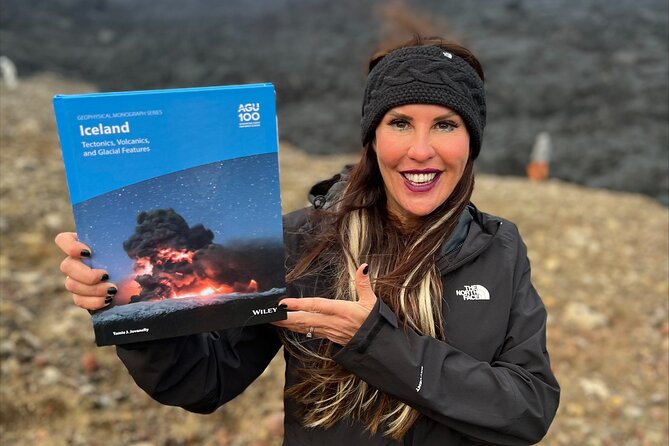
This tour’s main advantage is the way it teaches. Dr. Jovanelly wrote Iceland: Tectonics, Volcanics, and Glacial Features (Wiley, 2020), and she uses that book as a field guide while you travel. That matters because you’re not just hearing a generic “volcanoes are cool” pitch. You’re learning the specific processes behind the scenery you’re looking at.
Her husband, Joe Cook, co-leads the experience, and the combination shows. The tour is described as active exploration with enthusiastic geologists, and the schedule supports that. Morning explanations and guided stops help you keep the story straight: Iceland isn’t only a volcanic island, it’s also a place where plate motion, rift zones, geothermal systems, and glacier change show up in layers.
If you’re new to geology, you’re not on the outside looking in. The materials and pace are built for learning on the move, and the itinerary keeps revisiting core themes (plates, heat, ice) from multiple angles.
You can also read our reviews of more guided tours in Reykjavik
How the day structure works: a 7:00 am start and real time outside
The tour starts at 7:00 am from Gistiheimilið SunnaÞórsgata 26, 101 Reykjavík. That early start is not just for convenience. It’s a strategy for getting to geology sites while you still have good daylight and before crowds or changing weather shift the conditions.
The group size is capped at 16, so you’re not trapped in a crowded bus with a guide speaking into the back row. Smaller groups usually mean more flexibility at stops and more chances to compare what you see with what the guide is explaining.
Also, this tour includes a mix of ticketed admissions (for example Blue Lagoon and several museums/attractions) and free-entry stops. That mix is helpful: you’re getting paid-for access when it truly matters, and you’re not paying admission again and again for basic viewpoint pull-offs.
Days 1 to 4: Reykjavík setup, geothermal first hits, and classic plate tectonics
Day 1: Reykjavik orientation and group dinner
You’ll explore Reykjavík on your own at first, then meet up for a walk and a meet-and-greet. The day ends with a group dinner together. That’s a simple but smart way to start a learning-focused trip: you get oriented, you meet the people who will be with you for 13 days, and you’re not guessing where to be before the real geology begins.
Day 2: Blue Lagoon plus Fagradalsfjall Volcano
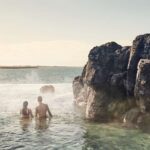
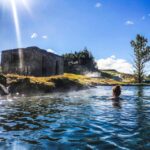
Day 2 is a two-part emotional warm-up. First, you get the afternoon at Blue Lagoon, with admission included. Jet lag and Icelandic weather can both hit hard, so having a relaxation block early is practical.
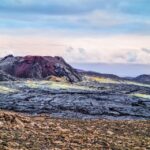
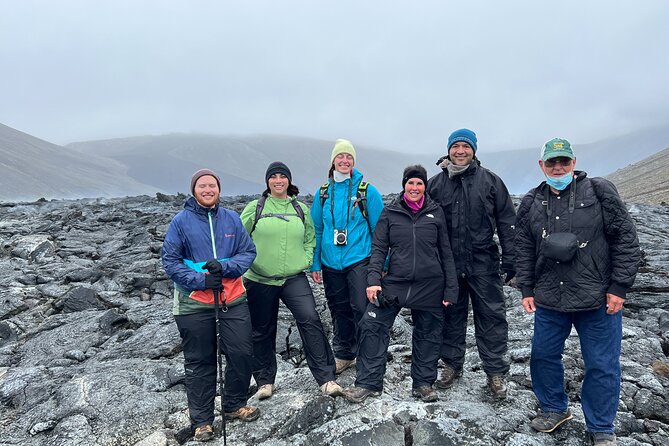
Then you head to Fagradalsfjall Volcano. This is the kind of stop that makes geology feel immediate. You’re seeing relatively recent volcanic activity, and the guide’s job is to help you connect the landscape you see now with the processes that created it.
Day 3: Hellisheidi geothermal power, the Bridge Between Continents, and scoria
Day 3 is where the tour turns from “wow” into “oh, I get it.” You visit the Hellisheidi Power Plant to learn about geothermal energy and carbon capture projects, with admission included. It’s a good reminder that Iceland’s geology isn’t only something you admire. It’s something Iceland engineers use.
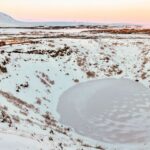
Next comes the Bridge Between Continents, where you can visually understand the separation of the North American and Eurasian plates. Then you get Stampar, a scoria crater field that the itinerary flags as unlike other places you’ll see. The tour also includes a stop at a very large, deep Icelandic lake that sits along a fissure. The fissure detail matters: it signals the rift-related ground story even when you’re not staring at lava.
A day like this can feel packed, but it’s also efficient learning. You’re not repeating the same concept; you’re seeing it at different scales.
Day 4: Þingvellir, Gullfoss, and Geysir
Day 4 hits three big “science meets spectacle” moments.
At Thingvellir National Park, you learn how plates are spreading apart and how that tectonic setting influenced Viking settlement. That’s a valuable connection, because it teaches you to look at geology as more than scenery.
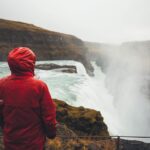
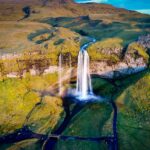
Then you get Gullfoss Falls, one of Europe’s largest waterfalls. Even if you’ve seen waterfalls elsewhere, guides can usually tie water flow back to underlying geology and fault structure, which makes it more than just a photo stop.
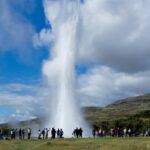
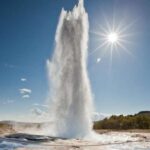
Finally, you visit Geysir, tied to geothermal activity. The itinerary frames it as the idea that where geothermal energy exists, geysers often follow. You’ll experience the heat from boiling hot spots, and the goal is to connect visible eruptions/boiling with the underground heat engine.
Days 5 to 7: Hekla, a glacier-top hike, and iceberg lagoon contrasts
Day 5: Lava Centre and Volcano Hekla
Day 5 begins with Lava Centre, with admission included. This is your interactive “how to read volcanoes” museum stop. Even if you don’t remember every term, you’ll usually leave with mental models you can apply later when you’re looking at vents, flows, and volcanic rock textures.
Then you head to Volcano Hekla, described as active in recent time. Sitting in the shadows of Hekla (even just in a viewpoint setting) is one of those moments that helps you understand why Icelanders take volcano risk seriously. The guide’s role here is to explain what “active” means and how Iceland’s eruption pattern fits into the bigger tectonic picture.
Day 6: Skaftafell glacier-top hike plus wine and cheese
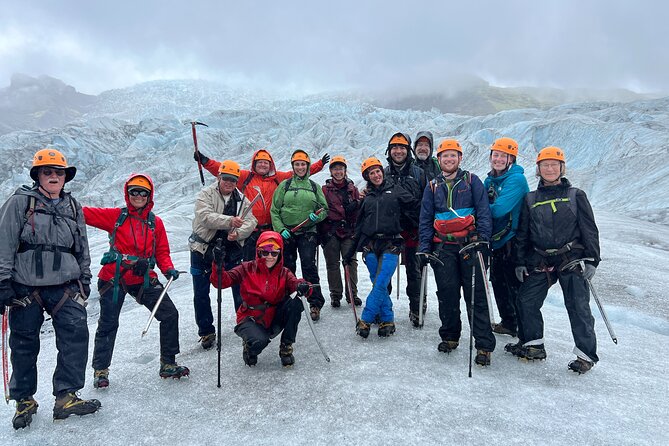
Day 6 is one of the most action-heavy days on the itinerary. You’ll do a guided hike on top of a glacier from Skaftafell National Park, with a 3-hour guided component and admission included.
This is where “active exploration” becomes real. Walking on glacier-top terrain is a different kind of understanding compared to standing at a viewpoint. You’re experiencing the physical surface that ice has helped shape, and the guide can point out clues tied to glacial processes.
After the hike, there’s a wine and cheese reception waiting for you. That’s not just a nice extra. It’s a practical reward after cold-weather movement, and it gives the group time to talk through what you learned while the terrain is still fresh in your mind.
Day 7: Fjallsárlón, Diamond Beach, and Jökulsárlón
Day 7 is all about ice, but with changing vantage points.
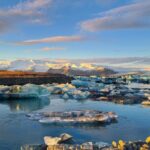
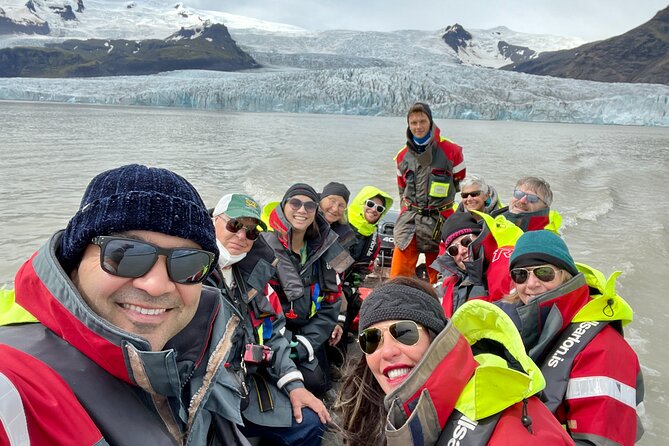
- Fjallsárlón Iceberg Lagoon gives you a water-level perspective, with admission included.
- Diamond Beach shows where icebergs land before carrying out to sea, also included.
- Jökulsárlón adds stunning icebergs plus seal viewing and a stop that’s good for birders. Food vendors are available, so you can grab something hot (the itinerary even suggests a hot dog).
The value here is contrast. You’re not only seeing icebergs, you’re seeing how they move through the system: lagoon to shore to open water. Pair that with earlier geothermal days and you get a full-spectrum understanding of how heat and cold work across Iceland.
Days 8 to 9: Dettifoss basalt columns and the rift-zone crater story
Day 8: Dettifoss and columnar basalt
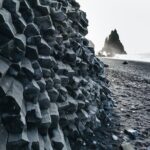
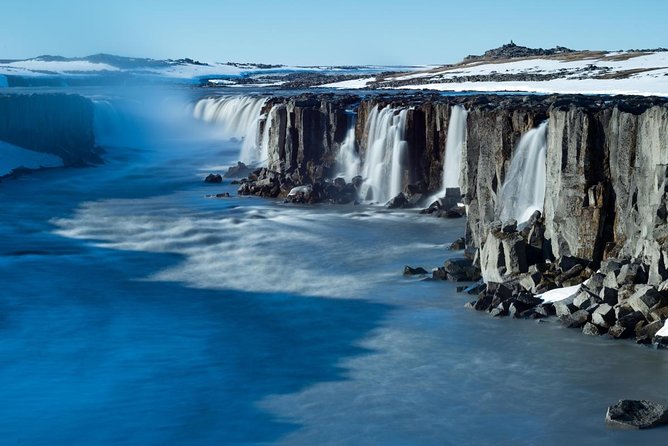
Dettifoss is massive, and the itinerary calls out columnar basalt. Columnar basalt tends to draw geologists in fast because it’s a visible record of how cooling fractures rock into repeating columns. In a guided context, you can usually connect that texture back to magma history and cooling conditions.
This is also a reminder: the tour isn’t only focused on volcanoes that erupt in dramatic bursts. It also helps you read the igneous rock record that eruptions leave behind.
Day 9: Hverfjall, pseudo-craters, and Dimmuborgir’s debated origin
Day 9 is a trio of crater and lava-form question marks.
Hverfjall is described as an impressive explosion crater. Then you go to Skútustaðagígar to learn about pseudo craters and how they impacted Vikings. Pseudo-craters can be confusing without a guide, because they form from different interactions than typical explosion craters. A guided explanation helps you sort what you’re seeing.
Finally, Dimmuborgir Lava Formations comes with a guided tour and a note about debated origin. That’s a subtle but important feature of a strong science trip: you don’t just hear “the” answer. You learn that some sites have multiple plausible interpretations, and you see what guides look for when they try to explain the rock features in front of them.
Day 10 to 12: Akureyri freedom, the Water Museum in Stykkishólmur, and West Iceland’s ice reach
Day 10: A free day in Akureyri
Day 10 is a free day in Akureyri. This is a smart break in an otherwise packed itinerary. You can rest, shop, go whale watching, birding, or do other activities on your own.
This free time also helps you recover from the physical days: glacier hiking, long drives, and cold winds can stack up. Having a day where you choose the pace is a real value add.
Day 11: Stykkishólmur and the Water Museum installation
Day 11 includes a visit in Stykkishólmur to an art installation at the Water Museum that pays respect to glaciers past and present. This is one of those stops that broadens the trip beyond pure rock description. It’s still tied to geology, but it uses art to help you feel the human side of ice change.
Admission details here are listed as free, and the stop is short, but the goal is clear: give you context while keeping the pace manageable.
Day 12: Snæfellsnes views, Vatnshellir lava cave, and Snæfellsjökull National Park
Day 12 gives you West Iceland. If skies cooperate, you’ll get views of this stratovolcano area, with Snæfellsnes set as a stop that’s weather-sensitive (“clear skies” are mentioned).
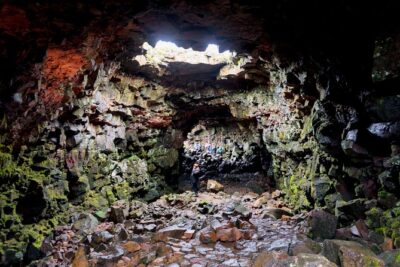
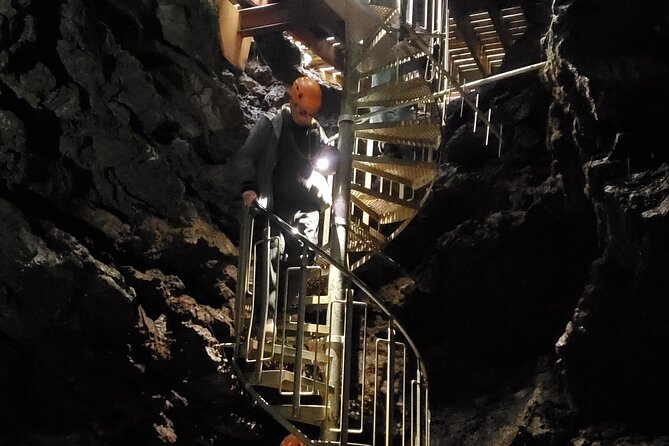
Then you explore Vatnshellir Lava Cave with admission included. A lava tube is a different kind of geology lesson because it’s about underground pathways and how lava moved before it hardened. You’ll walk inside and connect the “hidden” part of volcanism to the surface you’ve been seeing.
The final stop for Day 12 is Snæfellsjökull National Park & Glacier, also included. This rounds out the “ice and fire” theme in a part of Iceland that often feels more storybook than the south coasts, and it’s a strong lead-in to your last day in Reykjavík.
Day 13: Reykjavík wrap-up and packing for Iceland’s reality
Day 13 returns you to Reykjavík for one last look around before departure, back to the meeting point.
A practical note for any trip like this: the itinerary requires good weather. Iceland weather can shift quickly, so pack for layers and wind, and plan to keep your day-to-day flexibility. The tour is designed for active outdoor stops, so comfortable footwear and weather protection aren’t optional.
Also, this experience is non-refundable and cannot be changed for any reason if you cancel. That’s not unique to this tour, but with a tour priced at $9,200 per person, you’ll want to be sure your dates and health are solid before you lock it in.
Price and value: what $9,200 buys you (and what it doesn’t say)
$9,200 per person is a serious price tag for a 13-day trip. The value case here comes from the combination of:
- A small group capped at 16, led by a specialist (Dr. Jovanelly) and co-leader (Joe Cook).
- Excursion fees included across many core stops, which reduces surprise add-ons.
- A schedule that includes active learning time, not just a sightseeing drive-by.
What the data doesn’t confirm is what’s included beyond excursions and tickets (for example, lodging meals beyond the noted receptions/dinner, or any transport details). So you should treat the cost as premium guided fieldwork, not a bargain bus tour.
In exchange, you’re paying for interpretation: geology becomes understandable, not just photogenic. If you care about why Iceland looks the way it does, this is the kind of trip that can reorganize how you think about plates, heat, and ice.
Who this tour fits best
This tour is built for people who want to learn how Iceland’s unique landforms formed. You do not need a geology background to join, and the teaching is presented as accessible.
I think it’s especially good for:
- Science-minded travelers who like explanations tied to real sites.
- People who want active days (hikes, guided exploration) paired with expert context.
- Travelers who hate logistics days and prefer a plan where entrance fees and key stops are handled.
If you only want easy sightseeing with minimal walking, it might feel like a lot. But if you’re the type who enjoys standing still long enough to understand what you’re looking at, you’ll likely appreciate the structure.
Should you book this Iceland Geology Adventure?
Book it if you want Iceland explained by someone who has studied the tectonics, volcanics, and glacial features in depth, and you’re excited by active field-style learning. The combination of Dr. Jovanelly’s field guide approach, Joe Cook’s co-leadership, and the “excursion fees included” approach is where the trip earns its premium price.
Hold off if you’re very weather-sensitive, you can’t commit to outdoor days, or the idea of a 7:00 am start doesn’t work for you. Also, because it’s non-refundable and can’t be changed after cancellation, only book when you’re confident your dates are solid.
If you want Iceland as a science story you can physically trace with your feet, this is a strong choice.
FAQ
How long is the tour?
It’s a 13-day guided tour of Iceland, starting in Reykjavík and ending back at the meeting point in Reykjavík.
What’s the starting time and where is the meeting point?
The tour starts at 7:00 am at Gistiheimilið SunnaÞórsgata 26, 101 Reykjavík, Iceland.
Who leads the geology instruction?
The tours are led by Dr. Jovanelly and her husband Joe Cook through Iceland Geology Tours (Adventure Geology Tours).
Do I need a background in geology to join?
No background is required. The trip is designed so you can learn geology concepts as you go.
Are excursion fees included in the price?
Yes. The itinerary notes that excursion fees are included in the price.
Is there a ticket for entry to activities?
You’ll receive a mobile ticket.
What happens if the weather doesn’t cooperate?
The experience requires good weather. If it’s canceled due to poor weather, you’ll be offered a different date or a full refund.