REVIEW · REYKJAVIK
Dive the Divide: Silfra Fissure Scuba Tour | Reykjavik Pickup
Book on Viator →Operated by Arctic Adventures · Bookable on Viator
Two continents, one crystal-clear underwater corridor. In Iceland, that means the Silfra fissure inside Þingvellir National Park, where you follow a guided route through caves, cracks, and museum-grade visibility. It’s built for people who already know how to manage a dry suit, because the cold and the weights are part of the real story.
I really like two things about this tour. First, the day runs with small-group attention, with guides focused on keeping you on track and comfortable. Second, the water clarity is the star—people describe visibility around 100m-plus, and in water at about 2–3°C that kind of visibility turns scenery into something you can’t fake.
One consideration: it’s physically demanding beyond just being in cold water. You carry heavy kit to the platform and then do a return walk (about 300m) after the session, and if you’re not used to dry-suit buoyancy and weight, you’ll feel it.
Small-group cap (max 3 people) means you get closer guidance, not a herd mentality.
Þingvellir UNESCO setting gives you geology and Iceland history before you even touch the water.
Dry-suit experience is required (card or logbook proof), so this is not for first-timers.
Route through four sections: Deep Crack, Hall, Cathedral (up to 22m), then Lagoon.
Hot chocolate and cookies keep the cold day civilized, even when food isn’t included.
In This Review
- Scuba Between the Continents in Þingvellir’s Silfra Fissure
- Timing, Pickup, and the Reykjavík-to-Þingvellir Rhythm
- Þingvellir Stop: UNESCO Plates, Lava Fields, and Ancient Parliament Grounds
- Gear-Up for Cold-Water Comfort: Dry Suits, Weights, and Vision Rules
- The Underwater Route: Deep Crack, Hall, Cathedral at 22m, and Silfra Lagoon
- Guides and Small-Group Attention: What Quality Looks Like
- Water Clarity, Photo Moments, and the Reality of Crowds
- Price and Value: Why This Costs $344.67 and When It’s a Good Fit
- Safety, Fitness, and Dry-Suit Rules You Should Not Ignore
- Should You Book the Silfra Fissure Scuba Tour?
- FAQ
- What do I need to bring for the Silfra scuba tour?
- How deep does the underwater route go?
- Is food included in the price?
- How long is the experience, and will I get picked up?
- What if the weather is bad?
- How many people are in the group?
Scuba Between the Continents in Þingvellir’s Silfra Fissure
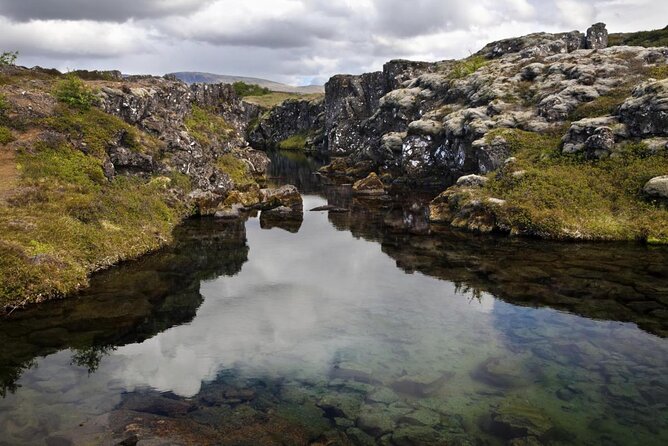
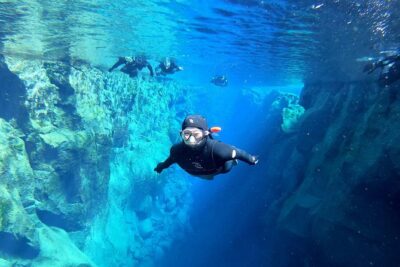
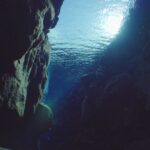
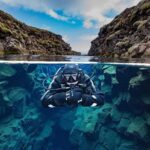
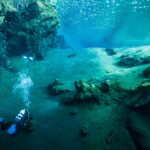
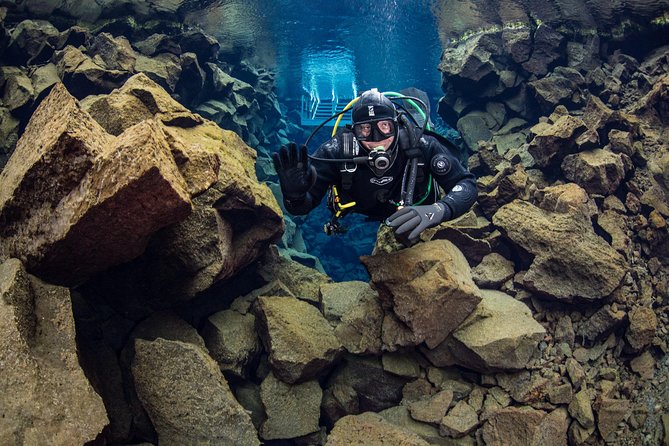
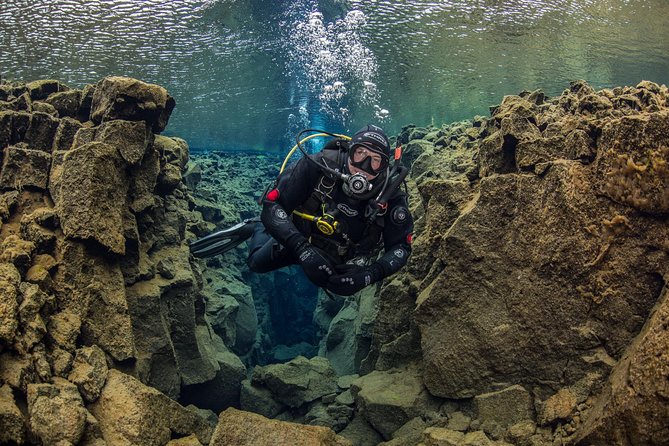
Silfra sits in Þingvellir National Park, in a place where the North American and Eurasian tectonic plates are splitting. The result is a glacial fissure filled with crystal-clear water, so you can see the rock formations with a kind of clarity that feels unreal—especially because there’s almost zero life to distract you. That’s a big part of why the whole experience works: you’re looking at geology, not fish.
What you’re aiming for underwater is a route through the crack system. The tour includes multiple sections so you don’t just drop in and out once—you follow a progression from narrow passage to wider chambers, then back toward the exit.
This is also an experience where cold is not a side note. Water temps are extremely low, and the warmth comes from your thermal undersuit plus a dry suit and proper layering. If you’re the type who gets cold easily, plan to take the preparation seriously.
Timing, Pickup, and the Reykjavík-to-Þingvellir Rhythm
The day starts with pickup from selected Reykjavík hotels and accommodations. The pickup window can take up to 30 minutes, so don’t plan a tight connection right after the tour ends.
Once everyone’s in the vehicle, you head to Þingvellir National Park. The schedule is set up so that the park time and the underwater route feel like one continuous day, not two separate activities.
Expect about 6 hours total including transport and the water session. You’ll also get a safety briefing before suiting up—this is where your guide will set expectations and check your readiness.
You can also read our reviews of more scuba diving tours in Reykjavik
Þingvellir Stop: UNESCO Plates, Lava Fields, and Ancient Parliament Grounds
Your first major stop is Þingvellir National Park, a UNESCO World Heritage Site. You’ll spend time here before the underwater session so you can orient yourself in a place that already feels special on land.
The geology is the big attraction. You’ll see lava fields and the Þingvallavatn lake area, but the key idea is the visible proof of plate separation. The park’s history adds another layer: Iceland’s first parliament, the Alþingi, dates back to 930 AD.
Practical tip: wear something warm for this stop. Even when it’s bright out, you’re heading toward a cold-water environment, and the “wait around while people gear up” part can make the air feel sharper than it looks.
Gear-Up for Cold-Water Comfort: Dry Suits, Weights, and Vision Rules
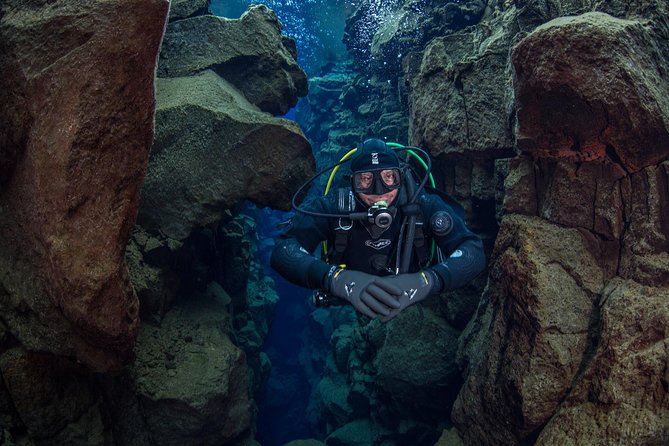
The tour includes gear: a thermal undersuit, drysuit, BCD, regulator, weights, tank, hood and gloves, mask, and fins. You’ll also have help getting set up, and guides will assist during entry and exit so you aren’t wrestling everything alone.
But this tour comes with real rules around eyewear. Since you’ll use a mask with a seal, you can’t wear glasses underneath. That means no frames sticking under the seal; you’ll need contact lenses or prescription goggles you bring yourself.
Weight and buoyancy matter here. Dry-suit diving changes how you float compared with neoprene wetsuits, and you’ll likely need more weight than you expect. The tour data also calls this a challenging setup: you must be able to carry heavy equipment for a long trek (up to 400m).
So the best approach is simple: treat the equipment walk as part of the workout. Don’t save your energy only for being underwater, because the hardest moments often show up before the water.
The Underwater Route: Deep Crack, Hall, Cathedral at 22m, and Silfra Lagoon
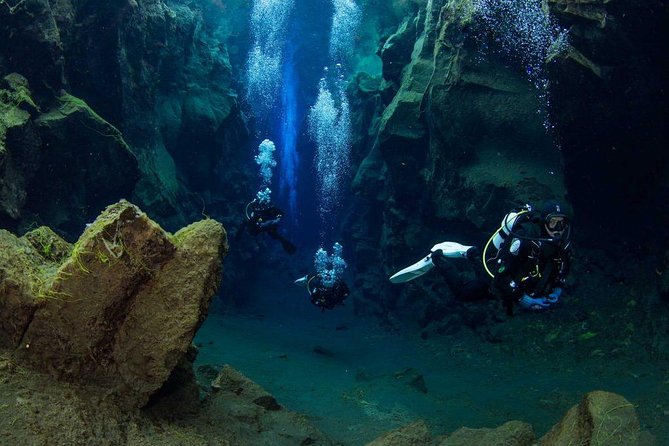
The water session is structured to follow four key sections of Silfra, starting with the Silfra Deep Crack. This part is narrow near the entrance, so you get that classic fissure feeling early.
From there you move into Silfra Hall, where the crack opens up a bit. This is the stage where visibility really starts doing its job: you can look around and read the shapes of lava formations without the water stealing your clarity.
Then comes Silfra Cathedral, described as the deepest point at 22 meters (72 feet). The tour guide leads the route and keeps you moving through the system, so you don’t have to make the decisions underwater.
After that, you head into Silfra Lagoon, which is the final section before exit. Exit happens at an on-site platform, and then you do a short walk—about 300 meters—back toward the car park. If you need it, the team can help remove weights or gear to make that walk easier, and there’s an option to rest at the visitor entrance.
From the reviews, I also like that the approach isn’t just one straight-line route for everyone. Some people describe two different routes/options depending on conditions and group pace, which helps keep the experience from feeling like a factory assembly line.
Guides and Small-Group Attention: What Quality Looks Like
This is one of those tours where the guide quality affects how much you enjoy the day. Arctic Adventures runs small groups (maximum 3 people), which naturally improves the ratio of attention to participants.
In the reviews, guides like Maciek, Arturo, and Julian are singled out for being attentive, patient, and helpful. One review even notes an easy first-time dry-suit introduction, which matters because dry-suit buoyancy can take a bit of muscle memory.
That said, not every experience is perfect. A couple of accounts mention situations where a guide didn’t slow down enough during issues with weights, and another mentions the guide moving ahead rather than checking in. This doesn’t mean the system is unsafe, but it does mean you should speak up fast if something feels off—especially about balance and weight reach.
Your best move: listen to the briefing, ask questions before entry, and don’t wait until you’re underwater to ask for help. In cold water, small problems can become big problems quickly.
Water Clarity, Photo Moments, and the Reality of Crowds
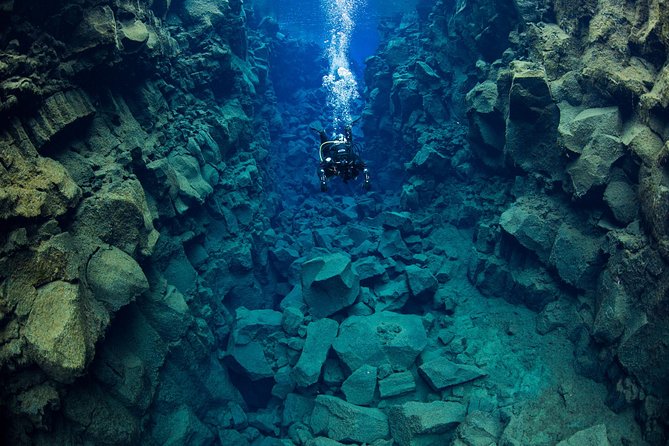
Silfra is famous for its clarity. People report seeing a long way—often with visibility described around 100m-plus. That kind of visibility makes the rock formations feel like they’re right there next to you, and it makes underwater photos look dramatically different than most cold-water dives.
The tradeoff is crowds. The most common complaint pattern is simple: busy times can mean delays before you get in the water. If your schedule is tight, it helps to be flexible and show up ready.
Also, the fissure is an active social place: snorkeling groups and scuba groups can overlap around entry points. It usually doesn’t ruin the visibility, but it can change how quickly you start and how much room you have around ramps and platforms.
Photo tip: plan to communicate clearly with your guide if you want an iconic picture at the rift. Some people value those stops, and having your expectations aligned before you enter the water prevents frustration later.
Price and Value: Why This Costs $344.67 and When It’s a Good Fit
At $344.67 per person (about a 6-hour day), you’re not just paying for a location. You’re paying for the dry-suit setup, the cold-water logistics, the guide leadership, and the transport.
What’s included is a big deal for value:
- Round-trip transport from select Reykjavík pickups
- Thingvellir National Park admission
- Full scuba gear (thermal undersuit through hood, gloves, mask, fins)
- Hot chocolate and cookies
- A PADI-certified leadership team (as stated in the tour details)
Food and drinks aren’t included, so budget for that on your own. Still, hot chocolate and cookies are a nice touch after exposure, and it’s often what stops the day from feeling like a long, cold commute.
Where the value gets even better: this is a once-in-a-lifetime kind of site. If you’re truly set on experiencing tectonic-plate splitting from underwater, you’re paying for the full package that makes it possible safely and comfortably.
Safety, Fitness, and Dry-Suit Rules You Should Not Ignore
This is not a casual try-it-once activity. The tour requires a strong physical fitness level and minimum age 18.
Most importantly, you must have prior dry-suit certification experience. The guide may ask to see your dry-suit certification card or proof in a logbook showing at least 10 dry-suit dives. One review also mentions a paperwork mismatch taking time when a logbook wasn’t accepted as proof, so make sure your documentation matches the tour’s expectations before you show up.
Medical screening is also part of the deal. You may need a signed doctor’s note if required, and there’s a participant medical questionnaire plus a diving handbook with medical conditions that exclude participation. If you have any health concerns, handle that paperwork early so the day doesn’t become stressful.
Finally, the tour data includes a common aviation caution: it’s strongly advised to wait 24 hours after diving to fly. Plan your flight schedule with that in mind.
Should You Book the Silfra Fissure Scuba Tour?
I’d book this if you meet the core requirements: you already have dry-suit experience, you can handle cold-water gear and weights, and you want the rare experience of swimming through Silfra’s geology with very high visibility.
I’d think twice if any of these apply:
- You’re new to dry suits or unsure about how buoyancy will feel.
- You don’t want a physically demanding day with carrying kit and a return walk.
- Your schedule is rigid, because pickup timing can vary and busy entry times can cause delays.
If you’re prepared and you value a small group with strong guiding, this is the kind of Iceland experience that sticks. Silfra’s water clarity and the plate-splitting setting are the whole point—and the tour structure does a good job of getting you there, safely and efficiently.
FAQ
What do I need to bring for the Silfra scuba tour?
You’ll need to have the required dry suit experience documentation (a dry suit certification card or logbook proof). You should also plan for eyewear rules: glasses can’t be worn under the mask seal, so contact lenses or your own prescription goggles are needed. Divers must also supply their suit sizes when booking.
How deep does the underwater route go?
The tour’s deepest point is listed as 22 meters (72 feet) at Silfra Cathedral.
Is food included in the price?
No. The tour includes hot chocolate and cookies, but it does not include food and drinks.
How long is the experience, and will I get picked up?
The duration is about 6 hours. Pickup is offered from select Reykjavík hotels and accommodations, and the pickup process can take up to 30 minutes.
What if the weather is bad?
The experience requires good weather. If it’s canceled due to poor weather, you’ll be offered a different date or a full refund.
How many people are in the group?
This activity has a maximum group size of 3 travelers.