REVIEW · REYKJAVIK
Dive the Divide: Silfra Fissure Scuba Tour | Meet at Thingvellir
Book on Viator →Operated by Arctic Adventures · Bookable on Viator
Silfra can make you forget you’re in Iceland. This small-group scuba tour takes you under the surface to see crystal-clear water and the famous fissure formations. I love how the water is unbelievably clean that you’ll even hear it’s safe to taste, and I like the very small group size that keeps the whole outing calm and controlled.
The best part for me is the focused dry-suit setup and gear briefing, because this trip is about cold-water technique as much as it is about scenery. You’ll get all specialized equipment, plus a hot chocolate and cookies recharge after you surface.
The main drawback is the effort level. You’re carrying heavy equipment for about 400 meters, and you need true dry-suit experience and the right certification, not just enthusiasm for cold water.
In This Review
- Key highlights worth your attention
- Silfra’s otherworldly clarity (and why it feels different)
- Where you start in Thingvellir and what the first hour really involves
- Getting your dry suit right: the rule-set you should actually care about
- The underwater route: Deep Crack, Hall, Cathedral area, and Lagoon
- Cold-water reality check: timing, duration, and effort level
- Small-group control, and what good guiding feels like
- Gear and included extras: what you get for your $296
- Who should book this Silfra fissure scuba tour
- Quick practical checklist for your day
- Should you book this one?
- FAQ
- How long is the Silfra Fissure scuba tour?
- Where do I meet for this tour?
- Is pickup from Reykjavik included?
- What equipment is provided?
- How many underwater sessions do I get, and how long are they?
- What are the dry-suit certification requirements?
- What about glasses or prescription eyewear under the mask?
Key highlights worth your attention
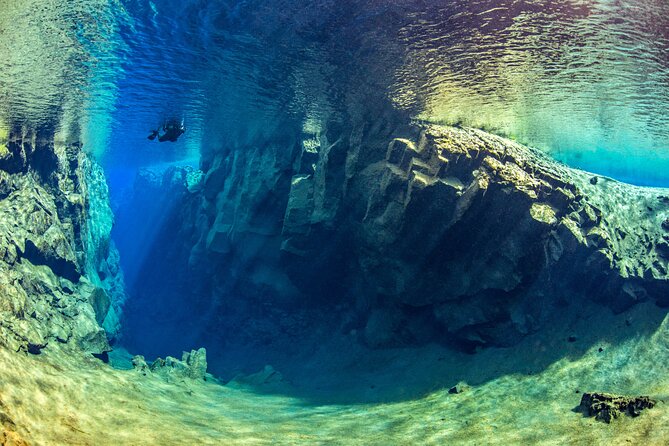
- Thingvellir start point: meet at the Silfra parking area in the national park, then gear up before going down the ladder
- Visibility that’s hard to believe: visibility can reach 100+ meters, with electric-blue water
- Route through major fissure zones: Deep Crack, Hall, Cathedral area, then Lagoon
- Cold-water timing changes by season: two shorter swims in summer, one longer one in winter if conditions allow
- Tiny group (max 3): easier control, more coaching, less waiting around
- Clear rules for eyewear: no glasses under the mask; bring contacts or prescription goggles
Silfra’s otherworldly clarity (and why it feels different)
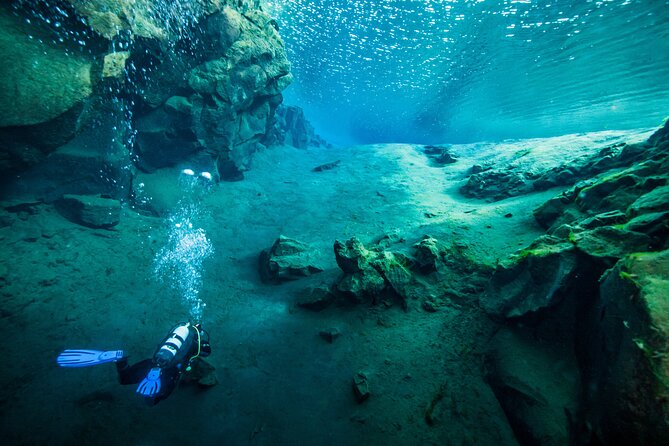
If you’re picturing clear water, forget the picture. Silfra’s fissure water is so clear that it gives everything a clean, blue glow, almost like you’re underwater inside a snow globe made of light. Even on a standard route, you’ll pass through sections people talk about for their shapes: narrow gaps that open into bigger chambers, then back into wide open water at the end.
What makes this experience special isn’t just that it looks cool. It’s how it changes your sense of space. When you’re underwater in a place like Silfra, you’re not relying on rocks or sand as landmarks. You’re reading the fissure walls, depth cues, and your guide’s hand signals. That makes the whole tour feel like controlled exploration, not a casual swim.
And yes, you’ll hear it’s possible to taste the water. You’re not doing anything weird; it’s simply part of the unique “this is truly glacially clean water” story that guides like to share at the start of the experience.
You can also read our reviews of more scuba diving tours in Reykjavik
Where you start in Thingvellir and what the first hour really involves
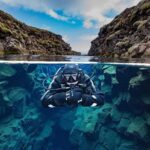
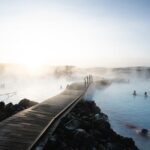
This tour begins in Thingvellir National Park at the Silfra parking meeting point (the activity ends back there). There’s no pickup included from Reykjavik, so plan to arrive on your own. Also, the national park has a parking fee (500 ISK for a private car), so factor that into your day.
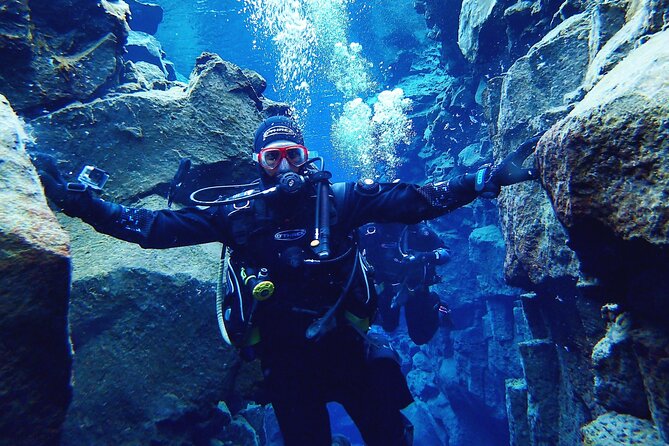
Once you meet your instructor, you’ll get a thorough briefing. It’s not fluff. It covers park rules, diving procedures, and the hand signals you’ll need once you’re underwater. Then you’ll get acquainted with your setup: dry suit, mask, thermal undersuit, weights, and the full scuba gear kit.
Expect a slow, careful rhythm. Before you go far, you’ll descend a ladder to a submerged metal platform and acclimatize in waist-deep water. That in-between stage matters. It helps your breathing settle and lets you confirm your kit fits. You’ll also do required weight and safety checks before starting the route—this is where the trip earns its “challenging” label.
Tip I’d treat as non-negotiable: wear warm undergarments (fleece or wool) and warm socks. Cold water trips succeed or fail on insulation and comfort before you ever hit the water.
Getting your dry suit right: the rule-set you should actually care about
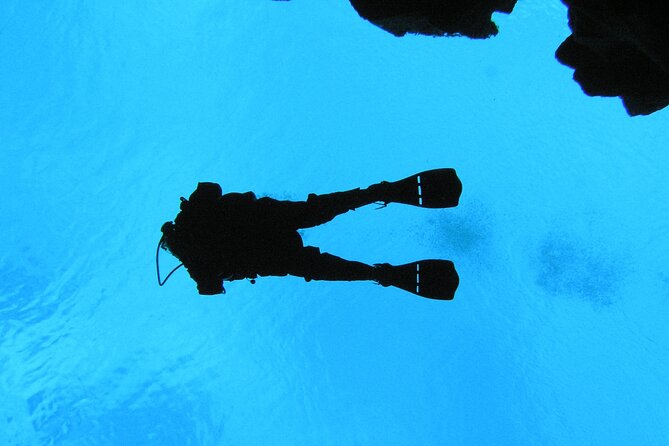
This is a dry-suit experience with strict entry requirements. You need to be PADI-certified and you must have dry-suit certification or experience. The operator requires proof: your dry suit certification card or a logbook showing at least 10 previous dry-suit sessions signed by a dive professional. You also need dry-suit experience within the last two years so you can handle the kit confidently.
Why does this matter to you? Because Silfra isn’t just cold—it’s also physically demanding. When your body is tense from cold, small mistakes grow. A well-trained dry-suit workflow helps you stay calm, stay stable, and enjoy the route instead of fighting your gear.
Also, pay attention to the eyewear rule: there can be nothing blocking the seal of the mask, so you cannot wear glasses underneath. If you need prescription vision correction, plan for contacts or bring your own prescription goggles.
Bring a change of clothing too. Even with a dry suit, you should treat the experience as not perfectly dry. Having dry clothes ready when you surface is part of making the day feel good instead of miserable.
The underwater route: Deep Crack, Hall, Cathedral area, and Lagoon
The route is paced around distinct “zones,” and each one has a different feel.
You’ll follow your guide through the Silfra Deep Crack, where two continental plates lie close together. The gap can feel tight, and as you move, it can widen into bigger spaces. That shift—narrow to open—changes how you orient yourself and how you experience depth.
From there, you’ll move into Silfra Hall. This is a larger cavern space, and the walls have a dramatic look with lava textures around the fissure. Then you continue into the Cathedral area, which is listed as reaching Silfra’s deepest point around 72 feet (22 meters). At the same time, your experience is described as limiting planned depth to about 59 feet (18 meters). In practical terms, you can think of it as a route that reaches the cathedral section but keeps within your guided depth limits.
Finally, you’ll finish at Silfra Lagoon. This is where the water feels endless. The blue light keeps stretching into the distance because the visibility can exceed 100 meters. When you’re done with the planned swim segment, you ascend and start stripping down the gear—fins and other heavy items come off so you can walk back to the parking area.
What I like about this structure is that you don’t just see one view. You get progression: crack navigation, cavern exploration, then open-water calm at the end.
Cold-water reality check: timing, duration, and effort level
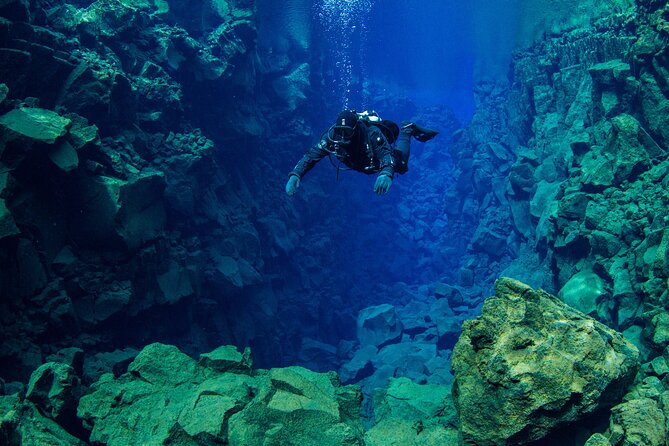
You’re signing up for a challenging underwater outing. The physical demands are baked into the experience: you’ll carry heavy equipment for about 400 meters (about 1,312 feet). That may not sound long on paper, but with a full kit on, it’s enough to make your body pay attention.
Depth is limited to about 59 feet (18 meters), but even staying in that range can feel intense when you factor in cold, buoyancy control, and the need to follow your guide precisely.
Timing depends on season:
- Summer: you may do two 30-minute underwater sessions.
- Winter: if water conditions are below freezing, you may do one session around 45 minutes (and the instructor may shorten to just one session if temperatures drop further for safety).
The tour overall runs about 4 hours.
Here’s the big value point: you’re not just paying for views. You’re paying for the workflow that makes cold-water travel safer and more comfortable. That includes gear support, briefing, controlled entry and exit, and the snack-and-warm-drink reset after you surface.



Small-group control, and what good guiding feels like
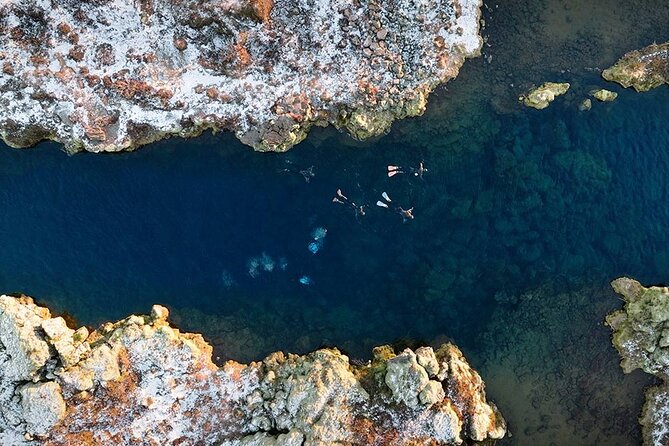
This outing caps at three participants, and that changes the whole vibe. Less rushing. Fewer people to manage. More time for check-ins.
The biggest praise I’d connect to this kind of experience is the quality of instruction and comfort-building. In one standout case, the guide Franceska was described as calm and supportive, taking extra steps like warming gloves and helping with dry-suit setup so the group could focus on the water. That kind of hands-on care matters in Silfra because cold makes everything harder if you start tense.
A good instructor also runs the experience like a team operation. You’ll follow signals, move at the right pace, and get help fast if anything feels off. In a tight environment like a fissure, that support is the difference between a stressful outing and a memorable one.
Gear and included extras: what you get for your $296
The price is listed at $296.41 per person for about 4 hours. On the face of it, that’s not cheap. But what makes it feel more reasonable is what’s included.
You’ll get:
- all specialized dive equipment (dry suit, mask, fins, thermal undersuit, tanks, weights, regulator)
- a guided scuba tour with a certified PADI divemaster
- hot chocolate and cookies after you surface
- a small-group experience
What’s not included:
- pickup from Reykjavik
- food and drinks beyond the hot drink/snack
So the value equation is mostly about convenience and safety. You’re not renting random gear and hoping it fits. You’re using a full setup built for this environment, with coaching for how to use it. And the hot drink at the end isn’t just a treat—it’s part of recovery.
One more practical note: this experience is often booked ahead. The average booking window is about 41 days, so if Silfra is on your must-do list, don’t wait for a last-minute miracle.
Who should book this Silfra fissure scuba tour
This is best for you if:
- you already have dry-suit experience and can show the required certification/logbook proof
- you’re comfortable carrying heavy gear and staying focused in cold conditions
- you want a high-clarity, formation-focused underwater route rather than a shallow sightseeing swim
- you prefer small-group guidance with a lot of briefing and control
It may not be the right fit if:
- you don’t meet the dry-suit requirement or your last cold-water experience is long ago
- you’re sensitive to cold and haven’t built a dry-suit routine
- you rely on glasses and don’t have a plan for the mask seal rule
Quick practical checklist for your day
I’d show up thinking in layers and systems:
- Wear fleece/wool base layers and warm socks
- Bring a change of clothing (dry clothes really help)
- Plan vision correction: contacts or prescription goggles, since glasses can’t be worn under the mask
- Arrive ready to meet at the Silfra parking meeting point in Thingvellir (no Reykjavik pickup)
- If it’s winter, be ready for possible one-session timing changes based on temperatures
Should you book this one?
Book it if you want the Silfra experience for what it truly is: a structured, cold-water formation route with strict safety standards, full gear provided, and excellent small-group guidance. The payoff is the clarity and the fissure shapes—plus the fact that you finish warm with snacks instead of freezing in silence.
Skip or rethink it if you’re missing the dry-suit experience requirement, don’t have a plan for cold comfort, or aren’t ready for the physical gear carry. Silfra doesn’t reward casual preparation.
If you meet the requirements, this is one of those Iceland activities that feels like a technical adventure, not a tourist checklist.
FAQ
How long is the Silfra Fissure scuba tour?
The experience runs about 4 hours on average.
Where do I meet for this tour?
You meet your dive instructor at the Silfra meeting point at Vallarvegur, 806, Iceland. The meeting and the end of the activity are at the same location.
Is pickup from Reykjavik included?
No. Pickup service from Reykjavik is not included.
What equipment is provided?
All specialized scuba equipment is included, including dry suit, mask, fins, thermal undersuit, tanks, weights, and regulator.
How many underwater sessions do I get, and how long are they?
In summer you may do two 30-minute underwater sessions. In winter, if conditions are below freezing, the plan is typically one session of about 45 minutes (and the instructor may shorten to one session for safety if temperatures fall below -0°C).
What are the dry-suit certification requirements?
You must have previous dry-suit diving experience. You’ll need to show your dry suit certification card or a logbook proving at least 10 previous dry-suit sessions signed by a dive professional, and you must have dived in a dry suit within the last two years.
What about glasses or prescription eyewear under the mask?
Glasses cannot be worn underneath the mask because they would block the seal. You’ll need contacts or bring your own prescription goggles.