REVIEW · REYKJAVIK
From Reykjavik: Raufarhólshellir Lava Tunnel by Bus
Book on GetYourGuide →Operated by ICELANDIA · Bookable on GetYourGuide
You walk into ancient lava, not a showroom. On this Raufarhólshellir day-trip-style outing, you take a bus from Reykjavik and walk part of the Leitahraun lava flow from about 5,200 years ago. I love the helmet-and-flashlight setup and the way the guide turns a dark cave walk into an easy, story-driven experience. I also love the wall colors and textures from different minerals. The one thing to plan around: the cave paths can be uneven and slippery, so you’ll want sturdy footwear and steady feet.
The trip is built for people who want a big Iceland “wow” without committing to a full day. You’ll ride about 30 minutes each way, with climate-controlled comfort and complimentary WiFi on the bus, then get about an hour inside the tunnel. Near the entrance, collapsed ceiling sections create dramatic columns of light, and the darker stretches get so pitch-black you’ll feel it fast.
In This Review
- Key highlights to look for
- The 30-minute bus ride from Reykjavik is part of the experience
- Gear up: helmet, flashlight, and the cold reality inside
- Entering Raufarhólshellir: columns of light and mineral color
- Walking the Leitahraun lava route from 5,200 years ago
- Hearing the cave and experiencing the real darkness
- Movie fans: a brief Noah connection
- $129 value: what you’re really paying for
- Practical tips to stay warm, dry, and steady
- Who this tour suits best
- Should you book this Reykjavik-to-Raufarhólshellir tour?
- FAQ
- How long is the whole trip from Reykjavik?
- Where do I meet for the bus to Raufarhólshellir?
- What’s included in the tour price?
- Do I get picked up from my hotel?
- Is the tour guide available in English?
- What should I wear?
- Does the bus have WiFi?
Key highlights to look for
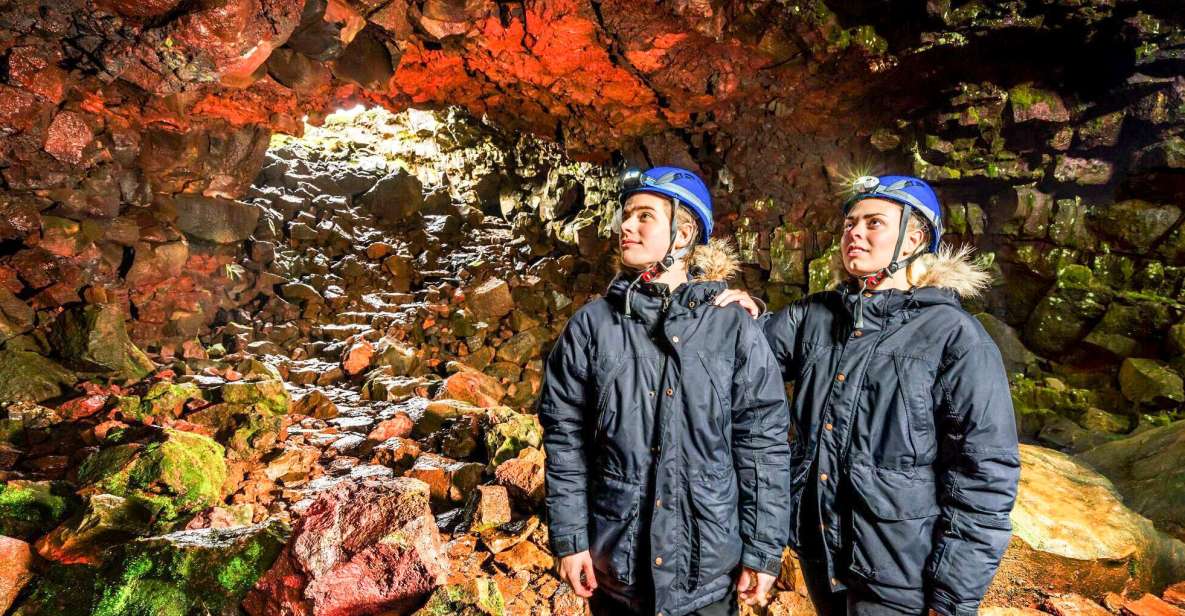
- One of Iceland’s largest lava tubes, with an easy one-hour guided walk
- Helmet and high-quality flashlight to see rock textures up close
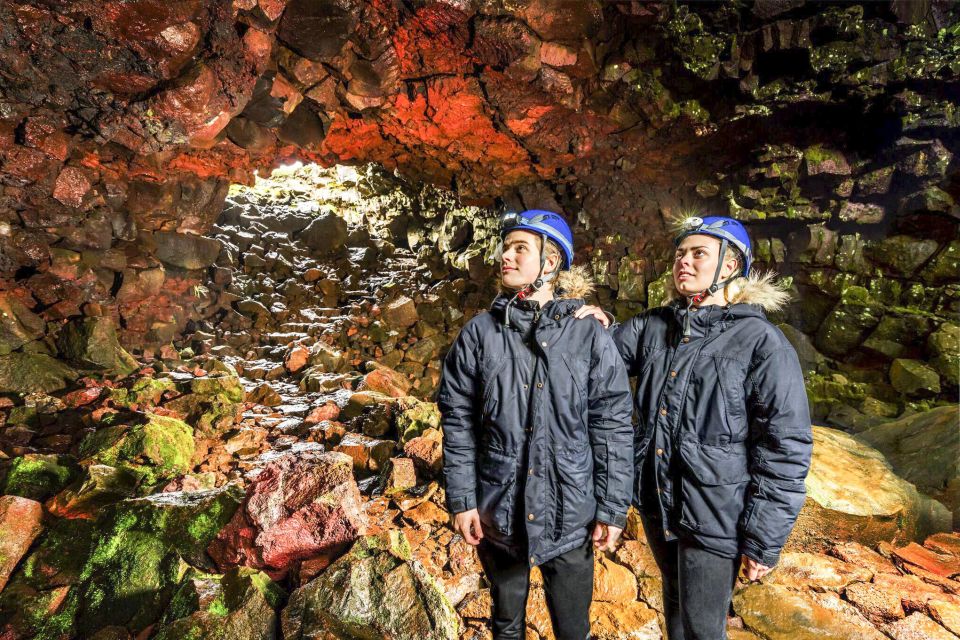
- Color range on the walls, caused by different mineral types
- Columns of light near the entrance where the ceiling caved in
- A controlled moment of darkness that makes the scale feel real
- Movie-location factor at a site that was used for Noah
The 30-minute bus ride from Reykjavik is part of the experience
This tour keeps things simple. You meet at BSI Bus Terminal and head out from Reykjavik for about 30 minutes to the lava tunnel area. The bus is described as climate-controlled, and you get complimentary WiFi onboard—handy if you want to send a quick message, look up photos on your phone, or just stay entertained while you’re waiting for the cold to start.
The best part of going by bus is that you don’t have to think about timing, parking, or driving on unfamiliar roads. You just show up, get on, and focus on the one job that matters: getting to the cave in time to wear the gear and enjoy the walk.
You’ll also get a cleaner start if you arrive early. The instructions say to be ready 15 minutes prior to departure at BSI, and that buffer matters when the group is heading straight into helmets and lights. If you’re cutting it close, you’ll feel rushed right before you get suited up.
You can also read our reviews of more tours and experiences in Reykjavik.


Gear up: helmet, flashlight, and the cold reality inside
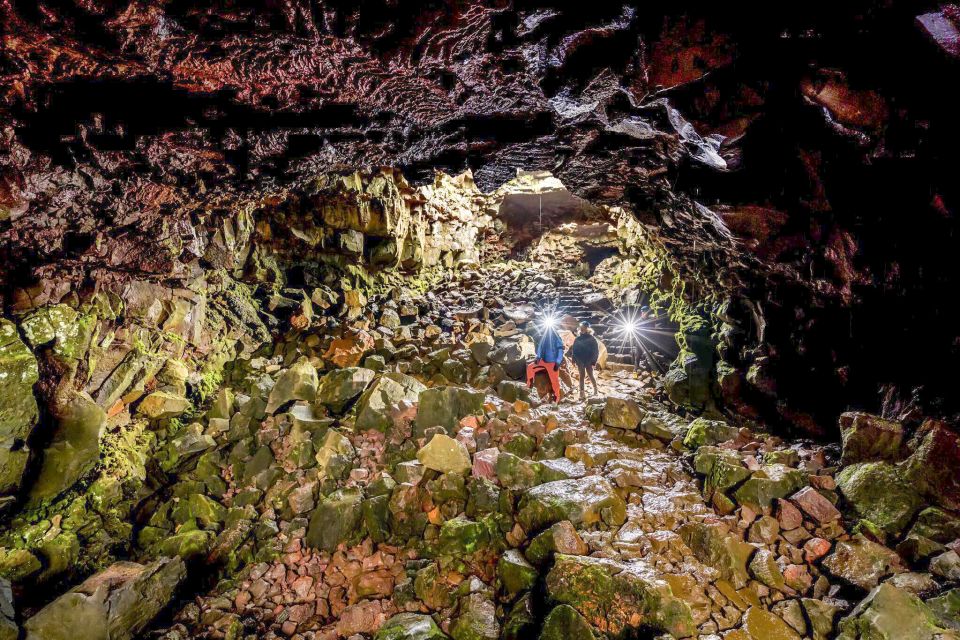
Once you reach the site, you get your cave equipment. Included are a helmet and a flashlight, and you go into the tunnel with a guided group. In practice, many visitors find the cave floor and footing require extra grip. Several people noted getting shoe spikes/crampons and even walking poles depending on the conditions and how you manage your balance. Since that’s not listed in the core inclusions, treat it as a possibility rather than a guarantee—but either way, plan to have the right footwear.
Here’s what I think matters most for your comfort:
- Warm layers beat just a big coat. The tunnel gets cold as you go deeper. Even in summer, you might feel the drop quickly.
- Water drips from the ceiling. A waterproof layer can keep you from getting chilled by damp clothing.
- Wear sturdy footwear with grip. People specifically mentioned slippery rock sections and recommended trekking soles.
Inside the cave, you’ll be moving on real rock, not a polished walkway. The tour includes raised metal walkways in many areas, but there can also be stretches where you step on uneven surfaces. If you’re unsure about your footing, this is where your footwear choice makes the difference between a fun hike and a careful slog.
Entering Raufarhólshellir: columns of light and mineral color
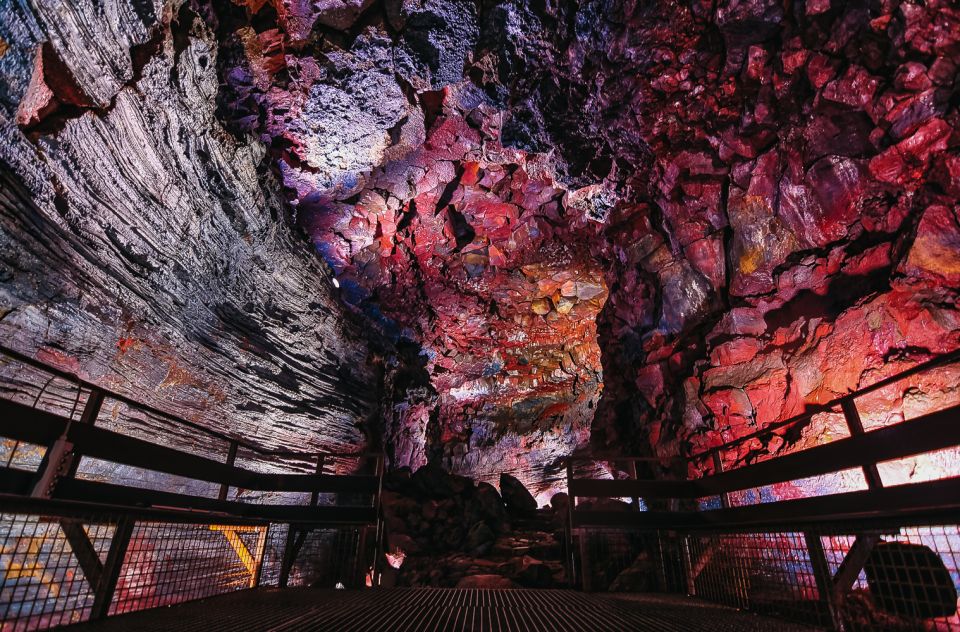
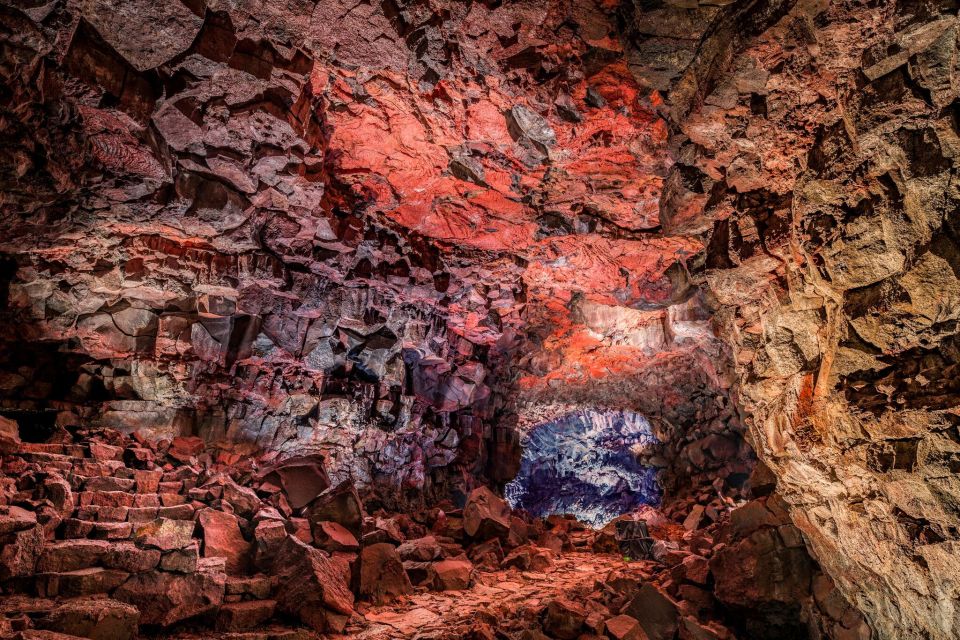
Raufarhólshellir is the kind of place where the first few minutes rewrite your expectations. Near the entrance, you can see where the tunnel’s ceiling collapsed in places, creating columns of light—bright shafts that fall into the cave and make the whole entrance feel like it’s lit from another world.
Then comes the wall color. The tunnel walls show a range of colors because lava cooled with different mineral content, leaving behind different tones as the rock solidified. This is one of those rare geology experiences where you don’t need to understand the science to enjoy it. You can just look and notice: some sections are darker, some are pale, some show warmer hues, and the textures vary in a way that feels almost sculpted.
This is also where a good guide earns their spot. The tour is built around a guided explanation as you walk, so you’re not just passing by cool rocks—you’re learning what you’re looking at while it’s fresh in front of you. Guides mentioned in the experience include Dimitri, Juan, and Alex, and a consistent theme in that praise is humor paired with clear explanations.
Walking the Leitahraun lava route from 5,200 years ago
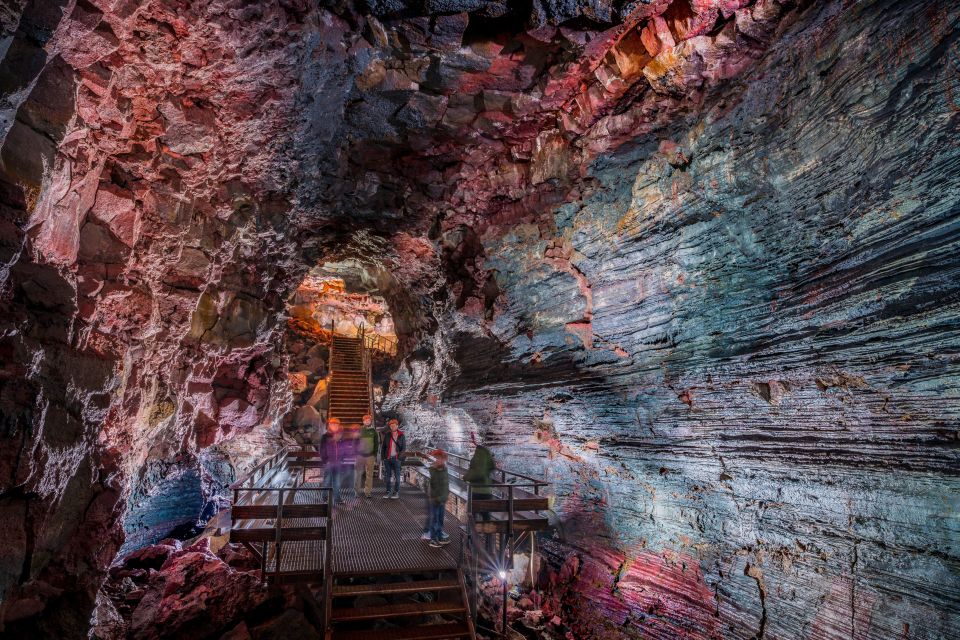
The tunnel isn’t just a random cave. You’re walking in the path of a real lava flow. The experience points to the Leitahraun eruption, dated to about 5,200 years ago, and you move through formations created by that cooling process.
Why that matters for you: a lava tube is like a time capsule. The “roof” you see wasn’t meant to be a roof—it formed when the surface lava cooled and hardened while molten lava continued moving inside. As the eruption slowed and the lava drained away, a hollow tube remained. That’s why you feel like you’re walking through an empty shell of something once moving fast.
You get an hour-long guided cave tour once you’re in. People also describe a fairly short walking distance (around 500 meters), which is great if you want the full thrill without turning it into a long trek. It’s a good length for most visitors because it balances time to learn, time to look, and time to take photos.
Still, don’t treat it like a stroll. Uneven surfaces mean you’ll go slower than your normal walking pace, especially if you stop often to look at colors, cracks, and texture changes. If you have limited mobility or you’re worried about balance, this is the part to consider carefully. A couple of notes from participants mentioned older visitors turning back due to insecurities with uneven climbing.
Hearing the cave and experiencing the real darkness
The most memorable moments in this tunnel are sensory. You’re not just looking. The experience describes a sensory angle: you’ll hear the cave “talk,” which likely comes from echoes and the way sound behaves in a stone tunnel.
Then there’s the darkness moment. One highlight people singled out is experiencing the cave when the lights go off. That pitch-black feeling is hard to capture in photos, and it’s exactly why the tour includes a flashlight for the walk. You use the beam to see details, then you get reminded how quickly your eyes lose orientation once there’s no light.
This does two things for your brain:
- It makes the scale more real. Without light, you can’t “fill in” the cave with imagination.
- It makes the guided structure more meaningful. When the guide points out a formation, it lands harder because you previously experienced how difficult it is to see anything at all.
A practical tip: if you’re the person who hates being without light, you’ll still be okay. You’re not left helpless—you’re in a guided group with a flashlight and safety-focused route planning. But do expect the tour to include moments where darkness is part of the point.

Movie fans: a brief Noah connection
If you like fun trivia, here’s a good one. The site was selected as a filming location for Noah, starring Anthony Hopkins. It’s not the center of the tour, but it gives the place an extra layer of curiosity while you’re underground—especially when you’re staring at rock formations that feel almost too dramatic to be real.
$129 value: what you’re really paying for
At $129 per person, you’re paying for more than a ticket to a tunnel. You’re buying a packaged experience that includes:
- Bus fare from Reykjavik (so you don’t need to plan driving)
- A guided 1-hour cave tour once you arrive
- A helmet and flashlight
- Complimentary WiFi on the bus
In Iceland terms, the value logic is straightforward: transport plus equipment plus a guide is what usually adds up fast if you try to piece it together. Here, those components are bundled, and the total time commitment stays manageable at about 3 hours including travel.
Is it a bargain? If you’re comparing it to a free walk outside, obviously not. But if you compare it to paying for separate transportation, gear rental, and a paid guide, it starts looking more reasonable. The real question is fit: if you want a short, high-impact geology experience, $129 isn’t just a price tag—it buys you convenience and access.
If your goal is maximum cave time or you’re the type who loves crawling farther and longer, you might feel the hour is short. But if you want something you can enjoy even after a busy day, this duration is a strength.
Practical tips to stay warm, dry, and steady
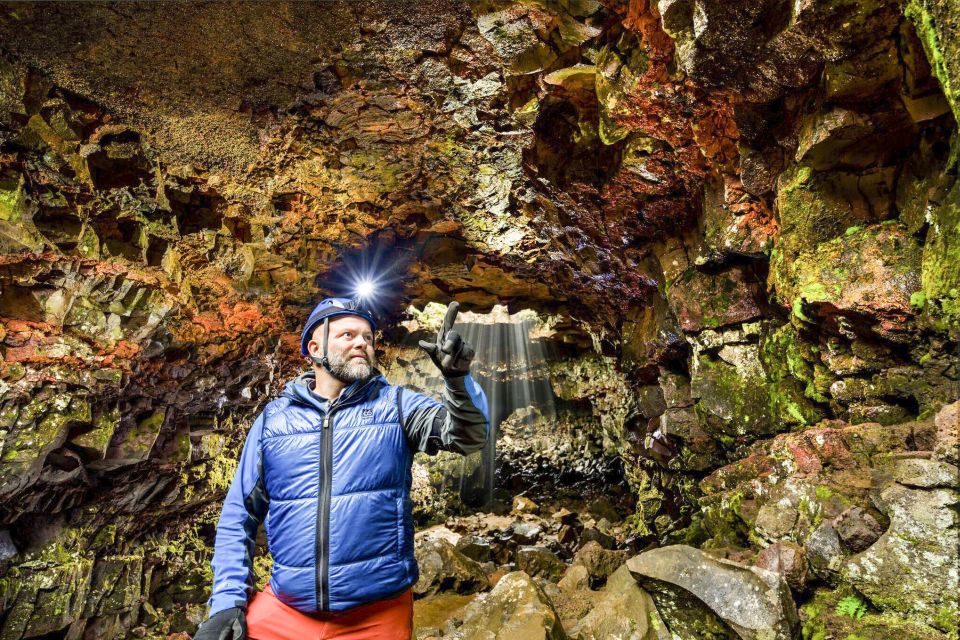
This is the part that keeps the experience fun. The tour instructions say dress warmly and wear sturdy footwear, and the on-site reality backs that up.
Here’s my short checklist based on what’s repeatedly helpful in the tunnel:
- Bring a warm waterproof layer. Water drips from the ceiling.
- Wear gloves. Your hands can get cold fast when you’re standing still for photos.
- Choose grippy shoes. The rock can be slick. Even when there are metal walkways, you’ll still step off them at times.
- Expect uneven footing. Raised platforms help, but you should be ready for real rock.
- Go slow on stairs and rocky bits. The people who love this tour tend to be the ones who treat it like a careful walk, not a race.
If you’re traveling with kids, this can still work well because it’s short and structured, but you need to watch their footing. If someone in your group is nervous about uneven ground, decide ahead of time how strict you want to be about staying with the group and following the guide’s route decisions.
Who this tour suits best
I’d book this if you want Iceland’s volcano story in a compact format. It’s a strong fit for:
- Geology and volcano fans who want to understand lava tubes without committing to a full day
- People who want an easy half-day plan with a clear start and end
- Anyone who likes guided explanation plus photo-worthy visuals like columns of light and colored mineral walls
- Visitors who don’t want to drive and park in Iceland’s more rural areas
It’s less ideal if you have serious balance issues or you’re expecting a fully flat, easy walk. The route can be uneven and slippery in sections, and that’s not a complaint—it’s just the nature of walking through a real lava tube.
Should you book this Reykjavik-to-Raufarhólshellir tour?
If you’re choosing between doing something “big” and doing something “easy,” this leans big without becoming exhausting. The combination of transport, gear, and a guided hour inside one of Iceland’s notable lava tunnels makes it a smart use of time. The visuals—entrance light columns and mineral colors—are the kind you’ll remember even weeks later, and the darkness moment helps the whole experience land.
I’d book it if you can handle cold, uneven ground, and a short walk where footing matters. If that sounds doable, this is one of the simplest ways to get a real sense of how volcanic landscapes form, all within a manageable 3-hour window.
FAQ
How long is the whole trip from Reykjavik?
The total experience lasts about 3 hours, including travel time. The guided cave tour inside is 1 hour.
Where do I meet for the bus to Raufarhólshellir?
You meet at the BSI Bus Terminal. Plan to be there 15 minutes before the departure time.
What’s included in the tour price?
The price includes bus fare, a guided 1-hour cave tour, a flashlight, a protective helmet, and free WiFi on board the bus.
Do I get picked up from my hotel?
Hotel pickup is not included. You’ll start at the BSI Bus Terminal meeting point.
Is the tour guide available in English?
Yes, the live tour guide is listed as English.
What should I wear?
You should dress warmly and wear sturdy footwear suitable for rocky, slippery conditions.
Does the bus have WiFi?
Yes. The tour includes complimentary WiFi on the climate-controlled bus from Reykjavik to the cave.