REVIEW · REYKJAVIK
Reykjavik: 45-Minute Volcano Sightseeing Helicopter Tour
Book on GetYourGuide →Operated by Atlantsflug / Flightseeing · Bookable on GetYourGuide
A helicopter ride over live lava country feels unreal. On this 45-minute tour, you fly from Reykjavik over the Reykjanes Peninsula to Iceland’s newest eruption zone, with a chance to spot flowing lava if conditions line up.
I love two things most: the close-up volcano spotting from above, and the way the pilots narrate what you’re seeing so the flight feels like more than just sightseeing.
One consideration: the whole plan is weather-dependent, and there’s no promise of visible lava on the day you go.
Key highlights worth your attention
- Small group (up to 5) means less crowding and better viewing from the aircraft
- English live guidance helps you connect the craters and lava fields to real volcanic events
- March 2024 Sundhnúkahraun is the main target, with possible flowing lava
- Old lava fields plus 2021 to 2022 eruptions give you real context for how this region changes
- Bessastaðir sighting window: you might spot the President’s home from the air on the route back
In This Review
- First, You Get to Reykjavik Airport Fast
- The Takeoff and Capital Views: Reykjavik From Above
- Reykjanes Peninsula: Where Sundhnúkahraun Takes Center Stage
- Older Eruptions and Volcanic Craters: Understanding What You See
- Bessastaðir on the Way Back: A Scenic Bonus
- What the 45 Minutes Feel Like in Real Life
- Price and Value: Why $624 Can Make Sense Here
- Weather, Lava, and Expectation Setting
- Small Detours, Like a Locked Door: A Practical Tip
- Who This Helicopter Tour Fits Best
- Should You Book This Tour?
- FAQ
- How long is the Reykjavik volcano sightseeing helicopter tour?
- Where do I meet for the tour?
- How many people are in the group?
- Is the tour conducted in English?
- Is the flight dependent on weather?
- Can I guarantee I will see flowing lava?
- What volcanic sites does the flight focus on?
- What’s included in the price?
- Can I cancel and get a refund?
First, You Get to Reykjavik Airport Fast
This tour is built around one big idea: keep the travel time tight and spend your minutes where the drama is. You meet at the Reykjavik FBO at Reykjavik Domestic Airport, a short hop from the city center, then you get a quick route briefing before takeoff. You’re not stuck on a long coach ride. You’re in the air.
I also like the setup because it’s straightforward and time-efficient. Reykjavik Domestic Airport is close to town, and the flight window is short enough that the whole experience stays focused. It’s the kind of outing that works even if you’ve already got a busy day planned.
Small group matters here, too. When the group is limited to just a handful of passengers, you tend to feel more “in on it” during the pilot’s explanations, and it’s easier to rotate your view without shoulder-to-shoulder crowding.
The Takeoff and Capital Views: Reykjavik From Above
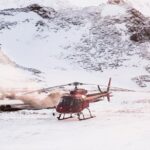
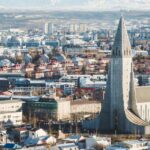
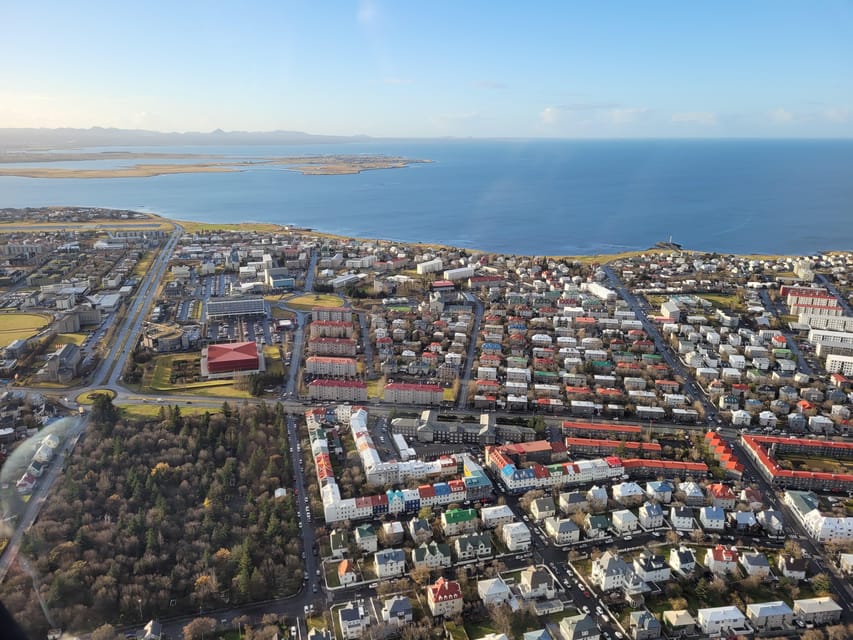
After a short briefing, the helicopter lifts off and heads toward the Reykjanes Peninsula. Early on, you get a slice of the capital area from the air, which is a good mental warm-up. From up high, Reykjavik’s layout and coastline context snap into place fast, and you’ll likely notice how quickly the city edges give way to rugged terrain.
This part is brief, but it’s useful. It sets a baseline for orientation so that when the volcanic scenery starts to dominate, you understand what you’re looking at. It also helps you settle in—helicopter passengers usually need a minute to adjust to the sound and the motion, and this gives you that adjustment before you get to the main event.
If you’re the type who likes photos, this is also the time to start shooting, because the lighting and angles can be better over open areas before the helicopter starts working around the volcanic field. Keep your camera accessible during this segment; you’ll want it ready later.
You can also read our reviews of more tours and experiences in Reykjavik
Reykjanes Peninsula: Where Sundhnúkahraun Takes Center Stage
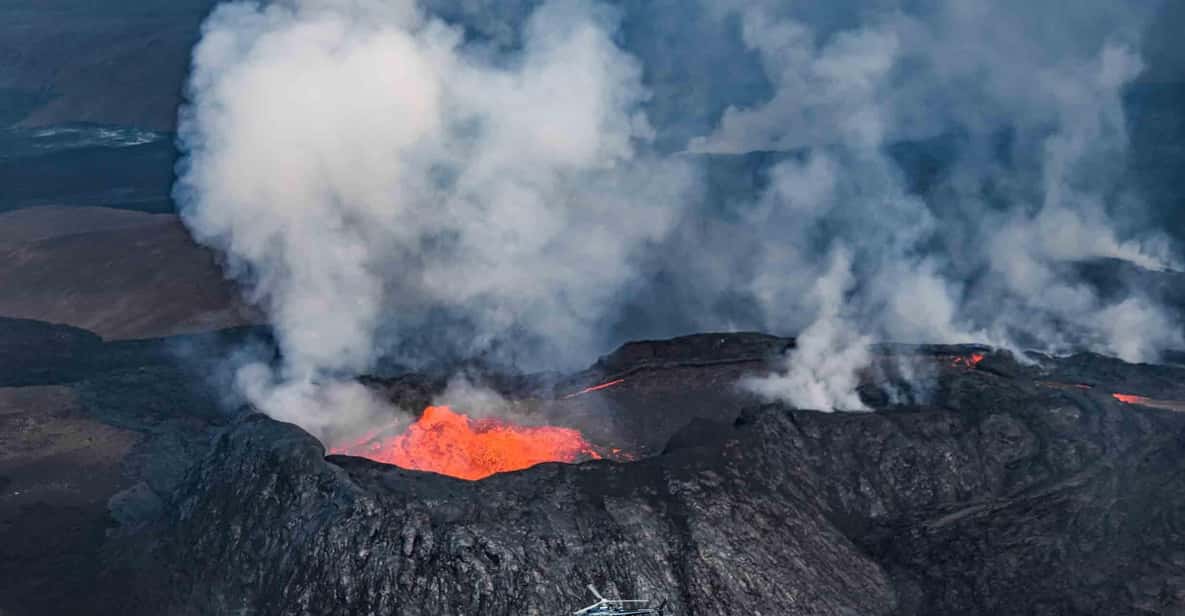
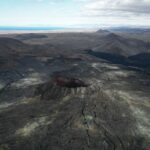
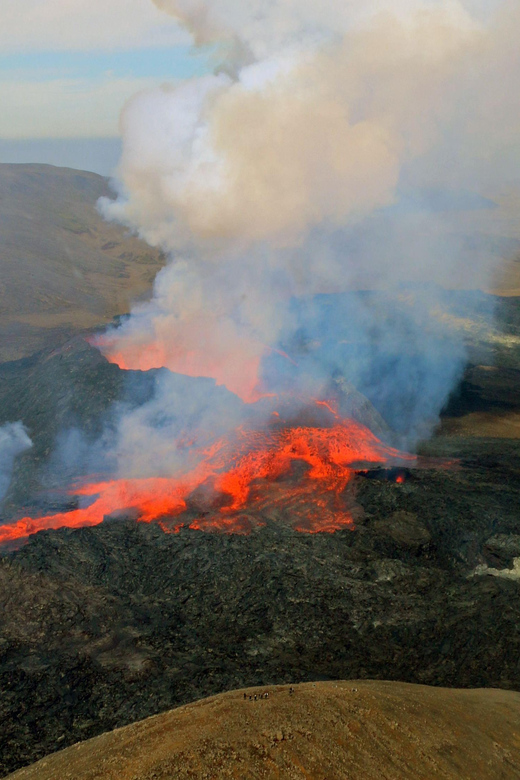
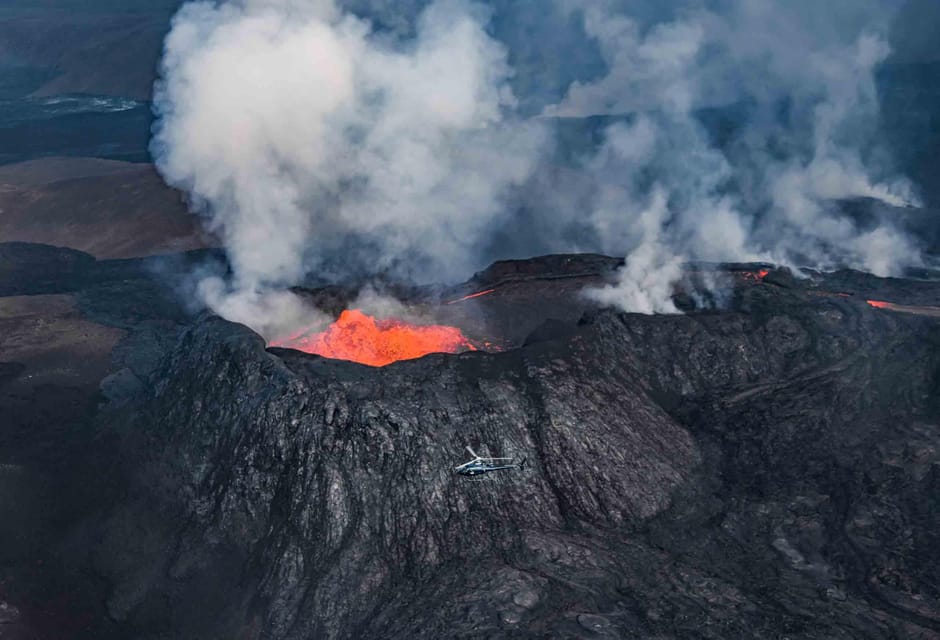
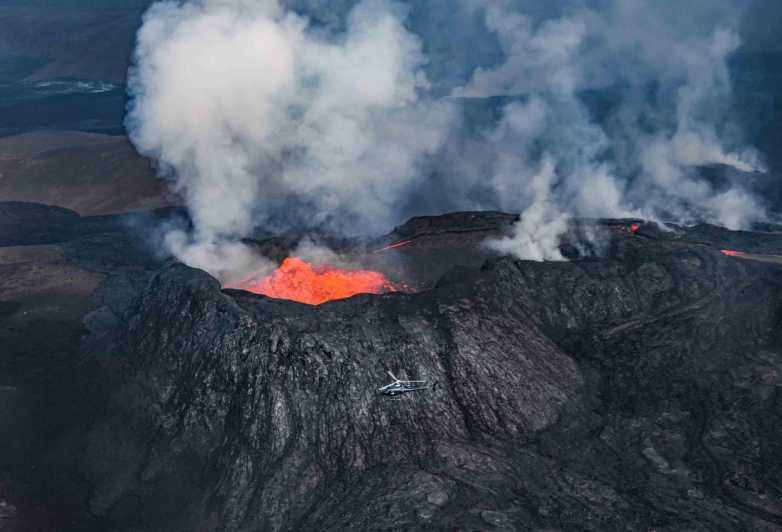
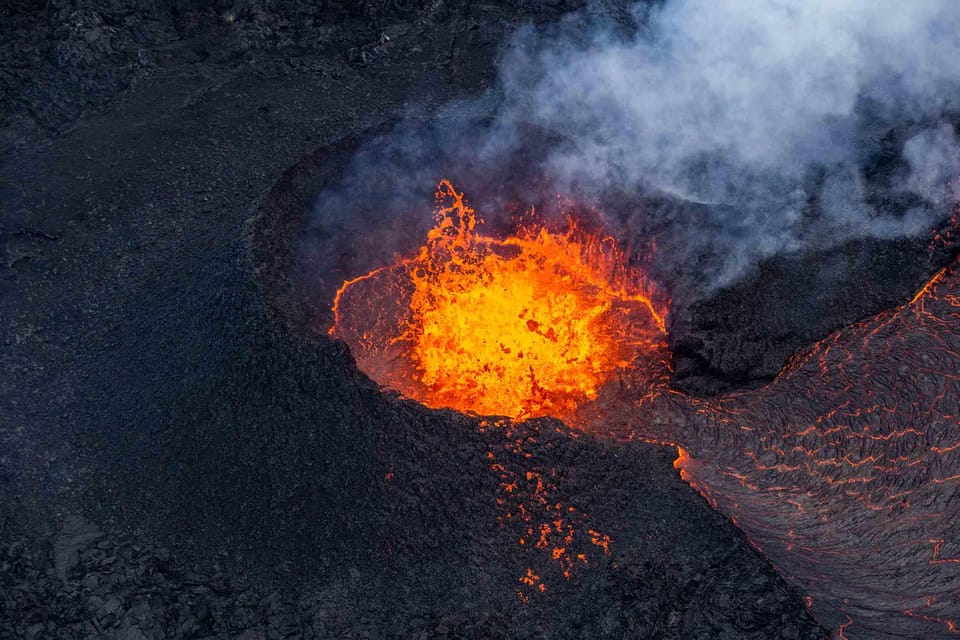
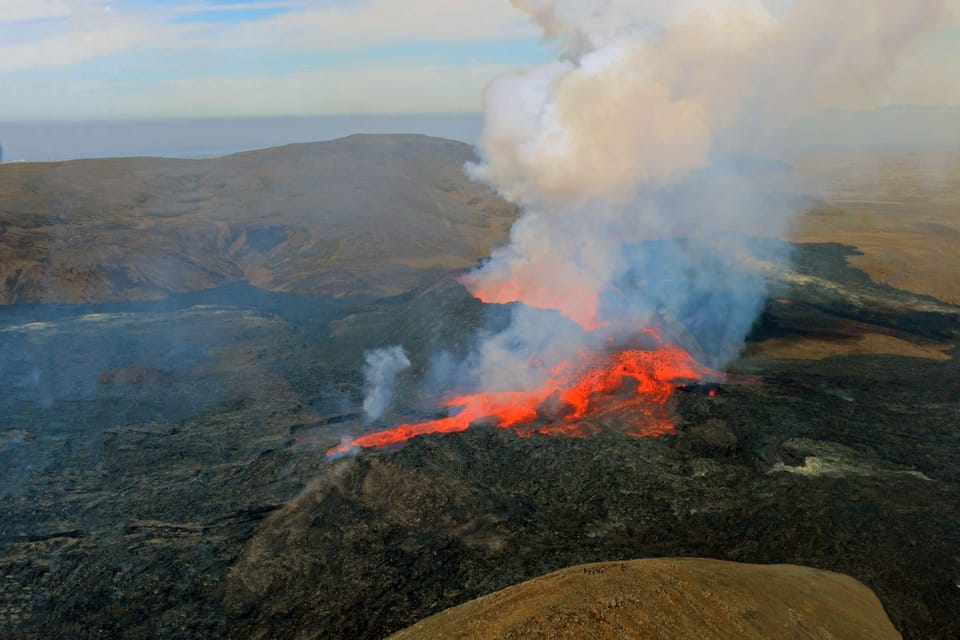
Once you’re over the Reykjanes Peninsula, the flight starts to feel like a front-row seat. This is the heart of the tour: a longer window focused on the volcanic area, where you fly over older lava fields first and then work toward the most recent eruption site, Sundhnúkahraun from March 2024.
What makes this compelling is the way it’s presented as a continuing story instead of a single dot on a map. You’re not only aiming at one eruption. You’re comparing what’s been laid down before—lava fields that date back hundreds of years—with what’s happening more recently. From the air, those differences can show up as variations in texture, pattern, and where the terrain looks freshly cut or rearranged.
And yes, you’re also chasing one of the big visual rewards of Iceland volcano watching: flowing lava. The tour can’t guarantee it, but the operator’s pitch is clear—if conditions allow and the volcano is active enough to be visible from above, you may see lava moving through the field.
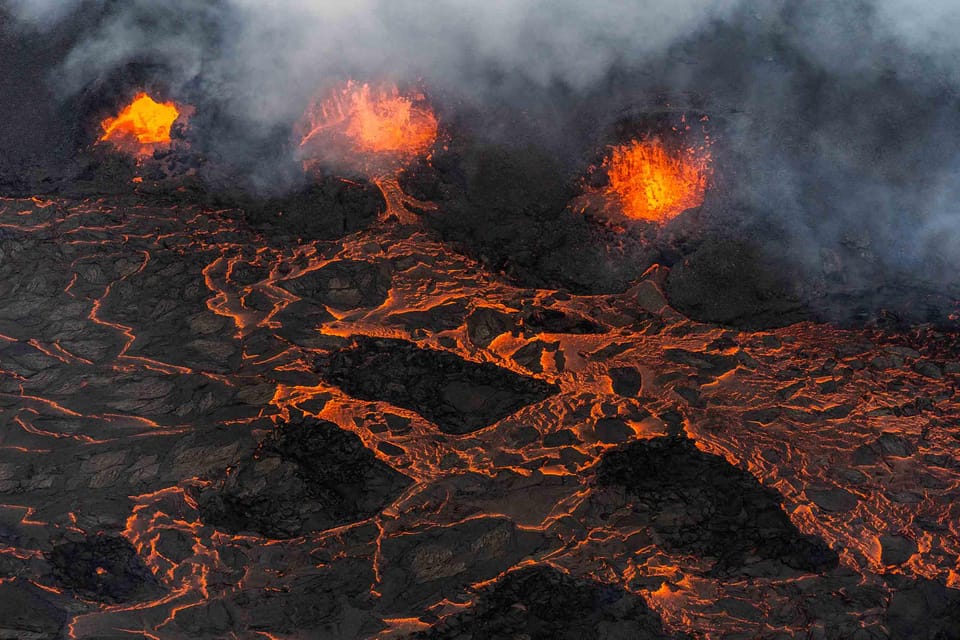
Even without active flow, you can still get something valuable. Lava country from the sky often looks like a map drawn in dark ink—channels, spreads, and scarred ground lines that are hard to interpret at street level. The air perspective turns “volcanic scenery” into a readable pattern.
Older Eruptions and Volcanic Craters: Understanding What You See
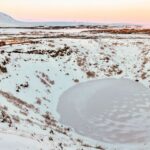
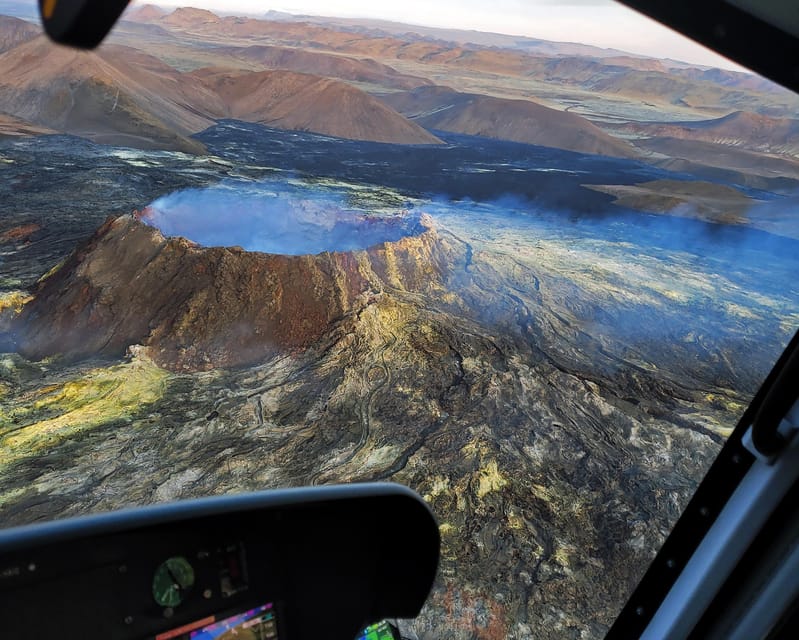
The pilot’s narration is part of the value. As you move through the volcanic zone, you get context tied to specific eruption periods—especially the Fagradalsfjall/Geldingadalir eruptions from 2021 and 2022. The flight takes you from the big crater areas formed during those events toward the newer Sundhnúkahraun site.
This matters because the Reykjanes Peninsula isn’t just a place where volcanoes happen. It’s a place where eruptions can follow one another in time, leaving behind physical clues. From above, you can look for where lava spread, where craters created new shapes, and how the terrain reads differently as the ground ages.
A couple of details that stand out from passenger experiences: the helicopter route is often adjusted to give multiple angles around the active area, and the pilot may position the aircraft so you can see more than one feature—active ground, older flows, and several craters linked to earlier episodes. That kind of “approach and reposition” is one of the reasons helicopter viewing often beats flat, ground-based lookouts: you’re not stuck with one angle.
If you care about taking meaningful photos, this is the section where your shots can improve a lot. From the air, you can capture the scale of the lava field, then zoom your attention to features the ground hides. Keep expectations flexible, but aim to treat this as a guided viewing session, not a quick pass.
Bessastaðir on the Way Back: A Scenic Bonus
On the return route, you may get a short aerial moment around Bessastaðir, the President’s home. It’s a quick look, but it adds a fun, slightly surreal contrast: modern Icelandic leadership on one side, raw geologic change on the other.
This kind of stop is really about rhythm. You get the main volcanic focus, then a final glide that keeps the flight feeling varied. It also gives you another round to check your photos and enjoy one last wide view before landing back at the base.
Not every flight will line up perfectly for sightings, but the route is planned with this possibility in mind. If you like collecting small “only-in-Iceland” moments, this is an easy bonus.
What the 45 Minutes Feel Like in Real Life
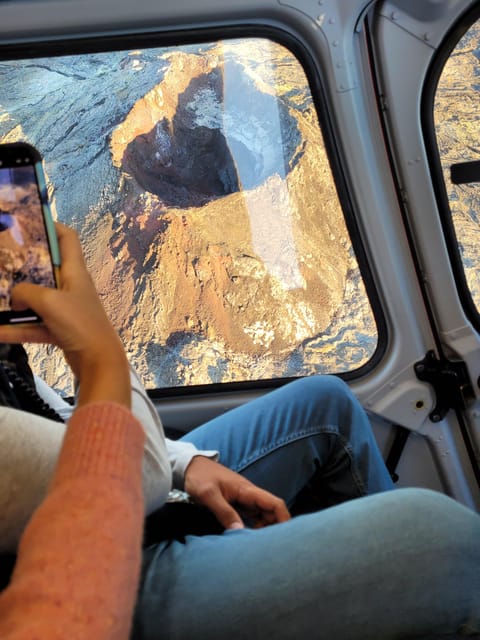
Forty-five minutes sounds short, and it is. But in helicopter time, that’s enough to (1) get airborne quickly, (2) see the city and coastline context, (3) spend a longer block over the Reykjanes Peninsula, and (4) come back without wasting a minute.
The way the timing is structured tends to work well for most people:
- You don’t lose the whole day waiting around.
- You get a clear concentration of time over the eruption area.
- You still leave room to appreciate the return scenery and wrap up calmly.
The biggest “feel” factor is group size and pilot control. When the aircraft carries only a handful of passengers and the pilot is actively guiding you, the flight often feels coordinated rather than chaotic. It’s also the kind of trip where you’ll probably want both moments: a second to look with your eyes, then a second to shoot, without trying to do everything at once.
Price and Value: Why $624 Can Make Sense Here
At $624 per person, this is not a casual budget activity. The price is high for one reason: helicopters cost real money to operate, and you’re paying for a close, aerial view of a place that’s hard to understand from the ground.
Where the value comes from is the specific targeting. This isn’t a generic “volcano tour” with vague viewpoints. It’s focused on a named, recent eruption target—Sundhnúkahraun (March 2024)—plus the broader eruption context of 2021 to 2022. You also get a guide style that’s built into the flight, with English live narration to connect what you’re seeing to volcanic history and craters you can recognize from above.
Another value angle: taxes and airport fees are included. That’s not glamorous, but it reduces the end-of-booking surprise factor. Finally, the small group size helps justify the premium. You’re not paying top dollar and then sitting in a packed cabin where half the people can’t see.
If you’re choosing between this and a ground excursion, think like this:
- Choose the helicopter when you want scale, angles, and the best chance at a true “lava from above” view.
- Choose ground when you want longer time walking and soaking in the area without paying for flight time.
Weather, Lava, and Expectation Setting
This is where you need to be a smart shopper. The operator clearly flags that flights are weather dependent and subject to civil protection and emergency management rules. That means your departure and viewing results aren’t purely in your control.
More importantly: even when the flight happens, lava visibility is not guaranteed. Iceland volcanoes are dynamic. Sometimes the best you’ll see is the recent terrain changes; sometimes you’ll see flow; sometimes visibility is limited by conditions even if activity is present.
I like how this is handled as a reality check rather than a promise. If you go in knowing that, you’ll enjoy the flight for what it always delivers: a bird’s-eye view of volcanic terrain and a narrated tour through the region’s eruption timeline.
Small Detours, Like a Locked Door: A Practical Tip
One real-world detail that came up for someone in the group: the meeting building door was locked at the start, and there was a long wait before reception fully sorted things out. That doesn’t mean it’s common, but it is a good reminder.
If you’re driving or arriving on your own, plan to show up early enough to handle small hiccups. Stand near the marked building with the provider’s sign next to Berjaya hotel, and don’t assume you’ll be greeted instantly at the first minute. In a helicopter tour, your timeline is tight—your job is to be early so you don’t have to stress.
Who This Helicopter Tour Fits Best
This tour is a strong fit if you:
- want the fastest path from Reykjavik to the most recent lava area
- enjoy aerial photos and want views that ground viewpoints rarely match
- like your sightseeing with real context, tied to specific eruptions and crater zones
- prefer a small group with more individualized pilot attention
It’s also a good “one splurge” choice. If you’re choosing one premium activity in Iceland, this is the kind of experience that can feel like a whole day compressed into 45 minutes.
If you’re traveling with very young kids, note that it’s not suitable for children under 2 years. Also, if weather tends to stress you out, remember the entire plan hinges on conditions. This can still be worth it, but you’ll want flexibility.
Should You Book This Tour?
Yes, you should book it if you’re chasing a specific goal: seeing the newest eruption area at Sundhnúkahraun from above, with narration that makes the crater and lava patterns actually understandable. The small group size, the short and focused flight time, and the potential for flowing lava are exactly what justify the premium price.
I’d skip it if your ideal Iceland day is slow, walking-based, and forgiving. This is a flight experience. It rewards people who can handle the weather reality and who enjoy looking from the sky.
If you want one clear decision rule: pick this when the airplane window view is the main reason you’re coming to Reykjanes. If you mainly want time on the ground, choose a land-based option instead.
FAQ
How long is the Reykjavik volcano sightseeing helicopter tour?
The flight time is 45 minutes.
Where do I meet for the tour?
You meet at Reykjavik FBO, the building marked with their sign next to Berjaya hotel.
How many people are in the group?
It’s a small group limited to 5 participants.
Is the tour conducted in English?
Yes. There is a live tour guide in English.
Is the flight dependent on weather?
Yes. All flights are weather dependent and must follow rules set by the Department of Civil Protection and Emergency Management.
Can I guarantee I will see flowing lava?
No. Eruptions may or may not be active during your visit, so visible lava is not guaranteed.
What volcanic sites does the flight focus on?
The tour highlights the most recent eruption site, Sundhnúkahraun from March 2024, and it also covers the Fagradalsfjall/Geldingadalir eruption areas from 2021 and 2022.
What’s included in the price?
All taxes and airport fees are included.
Can I cancel and get a refund?
Yes. Free cancellation is available up to 24 hours in advance for a full refund.